Best Cat Foods for Indoor Cats (2026 Guide)
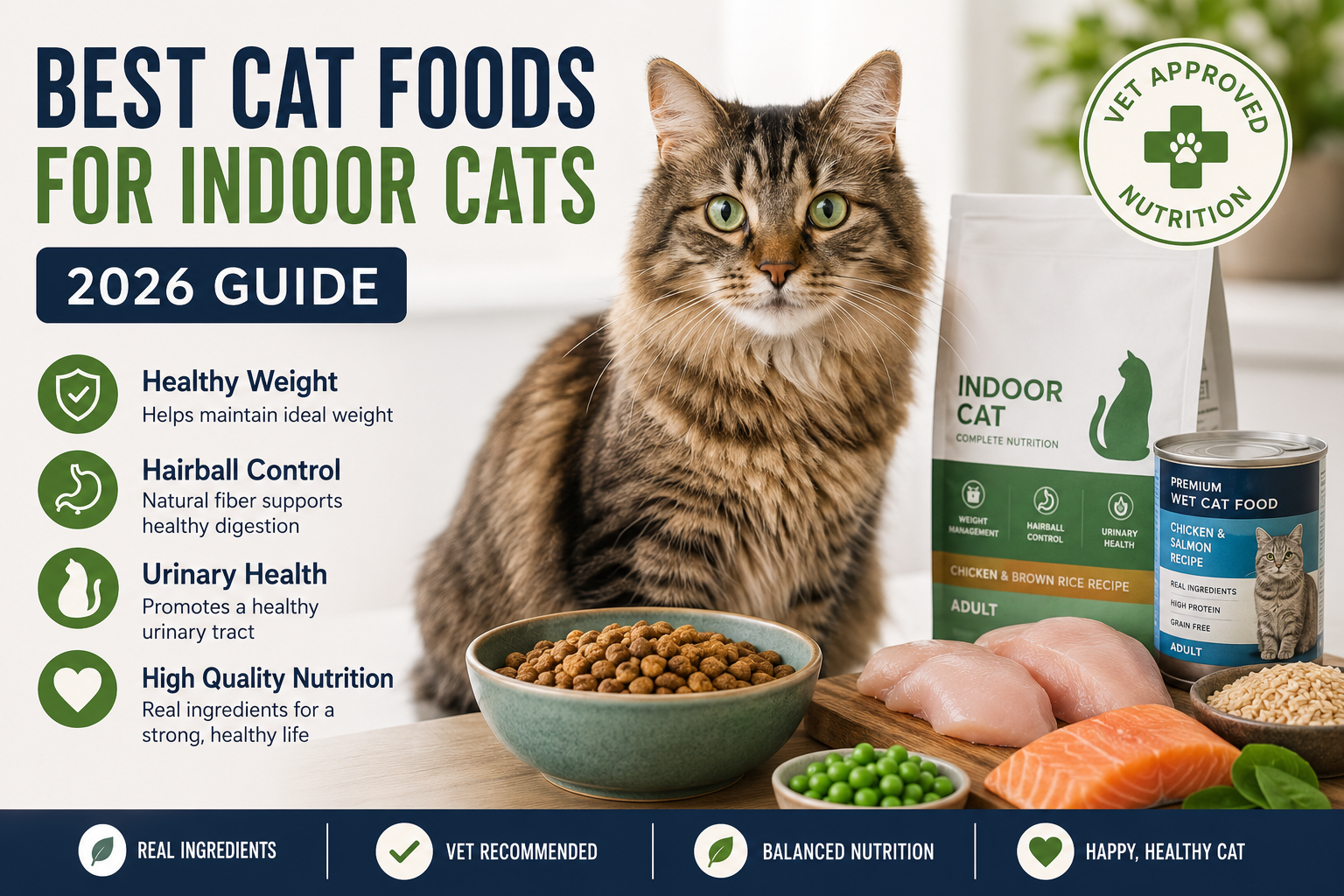
Best Cat Foods for Indoor Cats (2026 Guide)
If you’ve ever stood in the pet food aisle staring at dozens of cat food options, wondering which one is actually best for your indoor cat, you’re not alone. The choice can feel overwhelming—especially when marketing claims promise everything from “grain-free nutrition” to “scientifically formulated wellness.” The truth is, choosing the right food for an indoor cat is simpler than the packaging suggests, but it does require understanding what your cat actually needs.
Indoor cats have different nutritional requirements than their outdoor counterparts. They’re less active, more prone to weight gain, and face unique health challenges like hairballs and urinary issues. What worked for your neighbor’s outdoor Maine Coon might not work for your apartment-dwelling tabby. The good news? Once you know what to look for, finding the best food becomes straightforward.
In this guide, I’ll walk you through everything you need to know about selecting quality nutrition for your indoor cat. You’ll learn why indoor cats need specific nutrients, how to read cat food labels like a pro, and which foods actually deliver on their promises. I’ll also share the top 10 products recommended by nutritionists and vets, along with practical tips for transitioning your cat to new food without upset stomachs. By the end, you’ll have the confidence to make a choice that keeps your cat healthy, maintains a lean weight, and fits your lifestyle.
Let’s start with the basics: understanding why indoor cats eat differently.
Why Indoor Cats Need Different Nutrition
Your indoor cat spends most of her day napping on the couch, lounging in sunny windowsills, and making short trips to the food bowl. This lifestyle is drastically different from outdoor cats, who burn calories through hunting, climbing, and territorial roaming. That difference matters when it comes to nutrition.
Lower Activity Levels and Weight Management
Indoor cats burn significantly fewer calories than outdoor cats. A typical indoor cat might expend only 150 to 250 calories daily, depending on size and activity level, while an active outdoor cat can burn 300 to 400. This means indoor cats are prone to weight gain if they eat the same portions or calorie-dense foods as outdoor cats.
Obesity in indoor cats isn’t just a cosmetic issue. Excess weight puts strain on joints, increases the risk of diabetes, and complicates liver and heart health. This is why feeding an appropriate amount of nutrient-dense food matters far more than simply choosing a “weight management” formula.
Hairball Problems
Indoor cats groom themselves frequently and swallow more fur than outdoor cats simply because they’re indoors constantly. Without the rougher diet of outdoor hunting and more varied movement, that ingested hair can accumulate in the stomach and intestines. Quality nutrition with adequate fiber helps move hair through the digestive tract naturally, reducing hairball episodes.
Urinary and Digestive Health
Indoor cats are at higher risk for urinary tract infections and issues like feline lower urinary tract disease (FLUTD). Diet plays a critical role here. The mineral content, moisture level, and pH of food can either support or compromise urinary health. Additionally, indoor cats often experience digestive sensitivities because they’re not exposed to the variety of foods and digestive stimulation that outdoor cats encounter.
The Importance of Hydration
Indoor cats often don’t drink enough water. In the wild, cats obtain much of their water from prey. Domestic indoor cats sometimes rely primarily on their food’s moisture content for hydration. This is one reason wet food can be valuable for indoor cats—it provides water intake that supports kidney function and urinary tract health.
What Makes a High-Quality Cat Food?
Not all cat foods are created equal. Understanding what separates premium nutrition from marketing hype helps you make an informed choice.
High-Quality Protein
Cats are obligate carnivores, meaning they’re designed to eat meat. Their bodies require amino acids found primarily in animal protein, especially taurine—an amino acid cats cannot synthesize and must obtain from food. Look for foods where the first ingredient is a named meat source like chicken, turkey, or fish, rather than meat by-products or plant-based proteins.
Named Meat Ingredients
When a label says “chicken meal” or “turkey meat,” you know what you’re getting. Vague terms like “meat by-products” or “animal by-products” can include low-quality scraps. Named ingredients demonstrate transparency and quality sourcing.
Healthy Fats and Omega Fatty Acids
Omega-3 and omega-6 fatty acids support skin health, cognitive function, and immune response. Fish-based foods or those containing fish oil provide omega-3s, while chicken and certain plant oils provide omega-6s. The balance between these fats matters for overall health, particularly for aging cats.
Essential Micronutrients
Taurine is non-negotiable for cats. A deficiency can lead to heart disease, vision problems, and reproductive issues. Quality cat foods contain at least 0.1% taurine for adult cats and 0.2% for kittens and pregnant females. Additionally, cats need appropriate levels of vitamins A, D, and B vitamins, along with minerals like phosphorus, calcium, and magnesium.
Fiber for Digestive Health
While cats don’t require high fiber levels like humans do, moderate fiber supports healthy digestion and helps manage hairballs. Natural fiber sources like pumpkin, beet pulp, or cellulose work well. However, excessive fiber can interfere with nutrient absorption, so balance is key.
Probiotics and Digestive Enzymes
Some quality foods include probiotics and digestive enzymes to support gut health. While cats’ digestive systems differ from humans’, research suggests beneficial bacteria can support immune function and reduce digestive upset.
Moisture Content
Dry food contains 10% moisture; wet food contains 70–80%. For indoor cats, the higher moisture content in wet food supports hydration and can help prevent urinary issues and kidney disease. Many vets recommend a combination of both dry and wet food for optimal health.
AAFCO Certification
The Association of American Feed Control Officials (AAFCO) sets nutritional standards for pet food. Look for a statement on the package confirming the food is “complete and balanced” according to AAFCO standards for your cat’s life stage (kitten, adult, or senior). This ensures the food contains all necessary nutrients.
Dry Food vs Wet Food for Indoor Cats
The dry-versus-wet debate is one of the most common questions indoor cat owners ask. The reality? Both have advantages, and many cats benefit from a combination.
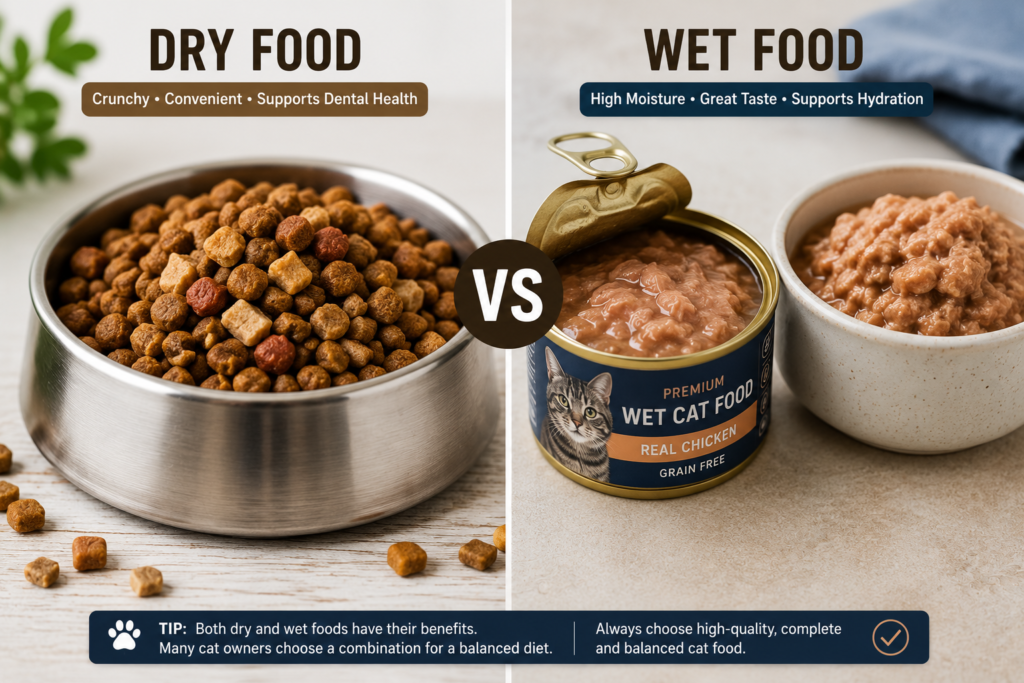
| Factor | Dry Food | Wet Food |
|---|---|---|
| Moisture | ~10% | 70–80% |
| Calories (per cup) | 400–500 | 80–150 |
| Protein Content | Often 30–40% | Often 8–12% (diluted by moisture) |
| Water Intake | Lower | Higher |
| Dental Health | Some mechanical benefit | Minimal benefit |
| Cost | Lower per serving | Higher per serving |
| Storage | Shelf-stable, easy | Requires refrigeration |
| Urinary Health | Less supportive | More supportive |
| Digestive Ease | Varies by formula | Often easier for sensitive cats |
Dry Food Advantages
Dry kibble is convenient. It doesn’t require refrigeration, stays fresh longer after opening, and costs less per calorie than wet food. Some believe the chewing action provides minimal dental benefits, though research on this is mixed. Dry food also allows portion control since you’re feeding a concentrated nutrient source.
Dry food works well for cats without urinary issues, those with strong appetites, and owners who prefer the convenience factor. High-quality dry foods formulated specifically for indoor cats often include added fiber for hairball control and adjusted calorie levels for less-active cats.
Wet Food Advantages
Wet food’s primary advantage is hydration. For cats prone to urinary tract issues, kidney disease, or those who simply don’t drink enough water, wet food can be genuinely therapeutic. It also tends to be more palatable to many cats, making it useful if your cat is a picky eater.
Wet food’s higher moisture means fewer calories per volume, making it valuable for weight management. A cat feels satisfied by the amount of food despite consuming fewer calories. Additionally, wet food is often easier to digest and causes less digestive upset in cats with sensitive stomachs.
The Best Approach for Indoor Cats
Rather than choosing exclusively dry or wet, many veterinarians recommend a mixed feeding approach. You might feed wet food in the morning and evening, with dry kibble available during the day. This strategy maximizes hydration while providing the convenience and cost-effectiveness of dry food.
For indoor cats specifically, this combination addresses their tendency toward dehydration while preventing the excessive calorie intake that pure wet food diets can sometimes cause if portions aren’t carefully measured.
10 Best Cat Foods for Indoor Cats (2026)
These 10 foods represent quality options across different price points and nutritional focuses. Each has been selected based on ingredient quality, veterinary recommendations, and real-world results from cat owners.
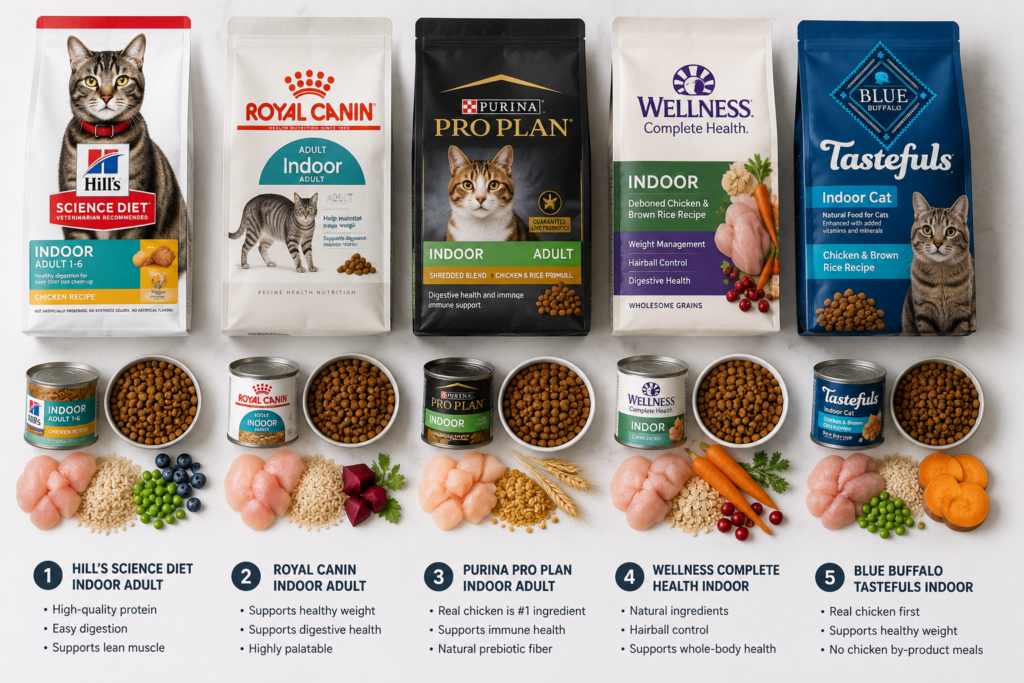
1. Hill’s Science Diet Adult Indoor Cat
Best For: General indoor cat nutrition, weight management
Main Ingredients: Chicken, soybean oil, corn gluten meal, animal fat, poultry by-products
Guaranteed Analysis: 11% crude protein (dry basis), 6% crude fat, 1.8% crude fiber
Pros:
- Formulated specifically for indoor cats’ lower activity levels
- Includes controlled calories and fiber for weight management
- AAFCO certified and veterinarian-developed
- Digestible carbohydrates reduce hairballs
- Balanced mineral content supports urinary health
Cons:
- Contains corn gluten meal, which some owners prefer to avoid
- Lower protein percentage than some premium options
- Not grain-free
Approximate Price: $45–55 for a 7.5-lb bag
Why Veterinarians Recommend It: Developed by veterinary nutritionists with decades of research backing. The formula balances complete nutrition with portion control, addressing obesity—the most common issue in indoor cats.
Overall Rating: 8.5/10
2. Royal Canin Indoor Adult
Best For: Finicky eaters, cats with digestive sensitivities
Main Ingredients: Chicken meal, brown rice, corn gluten meal, chicken fat, fish oil
Guaranteed Analysis: 12.5% crude protein, 9% crude fat, 1.3% crude fiber
Pros:
- Highly digestible formula
- Supports coat health with omega fatty acids
- Fiber level targets hairball control
- Portion-controlled calories for weight management
- Excellent palatability for picky cats
Cons:
- Higher price point
- Contains grain and corn products
- Fish oil can create strong odor on cat’s breath
Approximate Price: $50–65 for a 7-lb bag
Why Veterinarians Recommend It: Royal Canin conducts extensive research on feline nutrition. Their formulas are specifically engineered for different life stages and health conditions. Many vets recommend this brand for cats with sensitive stomachs.
Overall Rating: 8.5/10
3. Purina Pro Plan Indoor Care
Best For: Budget-conscious owners seeking veterinarian-approved nutrition
Main Ingredients: Chicken, chicken by-products, corn gluten meal, beef fat, soybean oil
Guaranteed Analysis: 13% crude protein, 8% crude fat, 1.5% crude fiber
Pros:
- Affordable for a veterinary-recommended brand
- High digestibility rate
- Contains probiotics and natural prebiotic fiber
- Supports healthy weight and reduced hairballs
- Widely available at most pet stores
Cons:
- Contains by-products and corn ingredients
- Lower protein than some premium options
- Some cats may experience digestive adjustment
Approximate Price: $35–45 for an 8-lb bag
Why Veterinarians Recommend It: Purina invests heavily in nutritional research. This formula provides clinically proven benefits for weight management and digestive health at an accessible price point.
Overall Rating: 8/10
4. Wellness Complete Health Indoor
Best For: Owners prioritizing natural ingredients, cats over 1 year old
Main Ingredients: Chicken, chicken meal, ground brown rice, chicken fat, fish meal
Guaranteed Analysis: 13% crude protein, 9% crude fat, 3% crude fiber
Pros:
- No artificial preservatives, colors, or flavors
- Named meat as first ingredient
- Higher fiber supports hairball control
- Omega fatty acids for skin and coat
- No corn, wheat, or soy
- Good palatability
Cons:
- Higher price than mass-market options
- Slightly lower protein than some grain-free foods
- Not specifically formulated for weight management
Approximate Price: $40–55 for a 6-lb bag
Why Veterinarians Recommend It: Many cats thrive on Wellness formulas. The natural ingredient profile appeals to owners, and the quality is consistent. It strikes a good balance between premium ingredients and reasonable cost.
Overall Rating: 8.5/10
5. Blue Buffalo Tastefuls Indoor
Best For: Owners seeking premium ingredients with strong brand recognition
Main Ingredients: Chicken, chicken meal, ground brown rice, chicken fat, fish meal
Guaranteed Analysis: 12% crude protein, 9% crude fat, 2% crude fiber
Pros:
- Lifesource Bits with antioxidants and vitamins
- No corn, wheat, soy, or by-products
- Higher-quality ingredient sourcing than mainstream brands
- Good protein-to-calorie ratio for indoor cats
- Attractive for nutrition-conscious owners
Cons:
- Premium pricing
- Some formulas use artificial vitamins rather than whole-food sources
- Not specifically designed for sensitive digestive systems
Approximate Price: $45–60 for a 6-lb bag
Why Veterinarians Recommend It: While Blue Buffalo has faced some criticism, their ingredient quality is generally solid. Many vets recommend it for health-conscious owners willing to invest in premium nutrition.
Overall Rating: 8/10
6. Instinct Original Grain-Free
Best For: Grain-free preference, high-protein diet
Main Ingredients: Chicken, chicken meal, potatoes, peas, chicken fat
Guaranteed Analysis: 40% crude protein, 18% crude fat, 4% crude fiber
Pros:
- Exceptionally high protein content
- No grains or artificial ingredients
- Freeze-dried raw pieces provide variety in texture
- Strong meat content aligns with feline carnivore needs
- Supports lean muscle mass
Cons:
- Very high price point
- High protein and fat may not suit weight-management needs
- Richer formula can cause digestive upset in sensitive cats
- Freeze-dried components can be wasteful for some cats
Approximate Price: $60–80 for a 4.5-lb bag
Why Veterinarians Recommend It: For healthy adult cats without weight issues or digestive sensitivities, the high meat protein supports feline physiology. However, vets typically reserve this for specific cases rather than general recommendations.
Overall Rating: 8/10
7. Iams ProActive Health Indoor
Best For: Budget-friendly complete nutrition, all life stages
Main Ingredients: Chicken, chicken meal, corn gluten meal, animal fat, fish meal
Guaranteed Analysis: 13% crude protein, 8% crude fat, 1.8% crude fiber
Pros:
- Extremely affordable
- Calorie-controlled formula for indoor cats
- Contains ActivBiome+ for digestive health
- Hairball control formula
- Available everywhere
- Familiar to many long-time cat owners
Cons:
- Contains corn gluten and wheat
- Lower ingredient quality than premium brands
- May cause digestive upset in cats with sensitivities
- Minimal research backing ingredient selection
Approximate Price: $20–30 for a 7-lb bag
Why Veterinarians Recommend It: Budget isn’t always the primary factor, but many cat owners prioritize cost. Iams provides basic complete nutrition at a lower price, though not as ideal as premium options.
Overall Rating: 7/10
8. Open Farm Homestead Turkey
Best For: Novel protein diets, food-allergic cats, organic preference
Main Ingredients: Turkey, turkey meal, peas, lentils, organic sunflower oil
Guaranteed Analysis: 13% crude protein, 9% crude fat, 2.5% crude fiber
Pros:
- Certified organic ingredients
- Turkey as novel protein alternative to chicken
- Excellent for cats with chicken allergies
- No grain, corn, wheat, or soy
- Non-GMO verification
- Ethical sourcing appeals to conscious consumers
Cons:
- Most expensive option on this list
- Limited flavor variety
- May not appeal to cats used to chicken-based foods
- Harder to find than mainstream brands
Approximate Price: $55–70 for a 5-lb bag
Why Veterinarians Recommend It: For cats with documented chicken allergies or those responding poorly to conventional foods, Open Farm’s novel protein and organic formulation can be transformative. It’s worth the cost for the right cat.
Overall Rating: 8.5/10
9. Orijen Original Cat
Best For: Biologically appropriate diet, high-performance cats
Main Ingredients: Chicken, turkey, chicken meal, herring meal, chicken fat
Guaranteed Analysis: 42% crude protein, 20% crude fat, 2% crude fiber
Pros:
- Extremely high protein and fat mimic feline prey diet
- Meat-first formulation with 85% animal ingredients
- No grain or potatoes
- Supports lean muscle despite lower activity
- Air-dried preservation maintains nutrient density
- Premium quality across all ingredients
Cons:
- Very expensive ($70–90 for 4.5 lbs)
- Excessive for most sedentary indoor cats
- High fat and calories can cause weight gain if portions aren’t carefully controlled
- May cause digestive upset if introduced too quickly
Approximate Price: $70–90 for a 4.5-lb bag
Why Veterinarians Recommend It: For healthy adult cats without weight concerns and owners committed to premium nutrition, Orijen delivers exceptional quality. It’s not the best value for typical indoor cats, but it’s an excellent choice for specific situations.
Overall Rating: 8.5/10
10. Nulo Freestyle Indoor Cat
Best For: Weight management, sensitive digestion, active cats
Main Ingredients: Chicken, turkey meal, potatoes, peas, chicken fat
Guaranteed Analysis: 13% crude protein, 8% crude fat, 3% crude fiber
Pros:
- Formulated specifically for indoor cats
- High fiber supports digestive health and hairballs
- Low carbohydrate content reduces blood sugar spikes
- BC30 probiotics aid digestion
- No grain, corn, wheat, or artificial ingredients
- Good ingredient quality at mid-premium price point
Cons:
- Less widely available than mainstream brands
- Moderate protein may not satisfy all cats
- Slightly more expensive than economy options
Approximate Price: $45–55 for a 6-lb bag
Why Veterinarians Recommend It: Nulo understands indoor cat needs. The fiber level, probiotic content, and digestive support make this an excellent choice for cats prone to hairballs or weight issues.
Overall Rating: 8.5/10
Best Cat Food by Life Stage
Your cat’s nutritional needs change throughout her life. A growing kitten requires different nutrition than a senior cat, and these transitions matter.
Best Food for Kittens
Kittens require higher protein and calorie levels to support growth and development. Look for foods labeled for “growth” or “all life stages” with at least 30% crude protein. Hill’s Science Diet Kitten, Royal Canin Kitten, and Purina Pro Plan Kitten are all veterinarian-recommended options that support healthy growth.
Kittens should eat 3–4 small meals daily until 6 months, then twice daily. Choose high-quality kitten formula and transition to adult food around 1 year old. Many behavioral problems in young cats stem from insufficient nutrition or feeding schedule issues, so getting this right matters for long-term health and behavior.
Best Food for Adult Cats (1–7 Years)
Adult cats thrive on foods with 12–15% crude protein and appropriate calorie levels. For indoor cats specifically, weight management formulas like Hill’s Science Diet Indoor, Royal Canin Indoor Adult, or Wellness Indoor help prevent obesity. Feed adult indoor cats once or twice daily, depending on your schedule and the cat’s response.
At this life stage, consistency matters. Many cats develop digestive sensitivities if you’re constantly switching foods, so choose a high-quality option and stick with it unless a veterinarian recommends a change.
Best Food for Senior Cats (7+ Years)
Senior cats often experience dental issues, reduced metabolism, and digestive sensitivity. Look for softly textured foods or wet formulas that are easier to eat. Many senior cats also develop chronic kidney disease, so quality protein that’s easy to digest matters more than quantity.
Foods like Hill’s Science Diet Senior, Royal Canin Senior, or Purina Pro Plan Senior are formulated with reduced phosphorus and sodium to support aging kidneys. Senior cats may also benefit from joint-supporting ingredients like glucosamine, though research on efficacy is mixed.
Best Food for Pregnant and Nursing Cats
Pregnant and nursing cats require increased calories and protein—similar to kitten formulas with 30%+ crude protein. These cats need multiple meals daily to maintain energy. Royal Canin Mother & Babycat or Hill’s Science Diet Kitten works well for pregnant and nursing females. Consult your vet for specific recommendations based on litter size and the mother cat’s condition.
Best Cat Food by Health Need
Beyond life stage, specific health conditions require targeted nutrition.
Weight Management
Indoor cats are prone to obesity, which complicates nearly every other health issue. For weight management, choose foods with:
- Lower calorie density (fewer calories per cup)
- Higher fiber (3%+ crude fiber) to increase satiety
- Moderate-to-high protein to preserve muscle mass
- Limited treats and consistent portion control
Top Picks: Hill’s Science Diet Adult Indoor, Royal Canin Indoor Adult, Purina Pro Plan Indoor Care
Hairball Control
Hairballs form when cats swallow fur during grooming. Indoor cats groom constantly and lack the rougher diet that helps outdoor cats naturally move hair through their systems. Solutions include:
- Increased fiber (2.5%–4% crude fiber)
- Adequate moisture and hydration
- Regular brushing to reduce ingested fur
- Occasional use of hairball remedies
Top Picks: Hill’s Science Diet Indoor, Royal Canin Indoor Adult, Wellness Indoor with added fiber
Sensitive Stomach
Some cats experience vomiting, diarrhea, or digestive upset with certain foods. If your cat has a sensitive stomach:
- Choose highly digestible proteins (chicken, turkey, fish)
- Avoid foods with corn gluten, wheat, or excessive fillers
- Look for probiotics and digestive enzymes
- Transition slowly to new foods
Top Picks: Royal Canin Digestive Care, Purina Pro Plan Sensitive Skin & Stomach, Wellness Simple Limited Ingredient Diet
Urinary Health
Indoor cats face higher risk of urinary tract disease. Supportive nutrition includes:
- Adequate moisture and hydration (wet food is superior)
- Balanced mineral content, particularly magnesium
- Appropriate pH to prevent crystal formation
- Proper potassium and sodium levels
Top Picks: Hill’s Science Diet c/d (for urinary disease), Royal Canin Urinary Care, Purina Pro Plan Urinary Tract Health
Food Allergies
True food allergies in cats are rare but cause itching, vomiting, or diarrhea. If allergies are suspected:
- Avoid the problematic ingredient (usually chicken, beef, or dairy)
- Choose a limited-ingredient diet with a novel protein
- Work with your vet to identify the culprit
- Introduce new foods very gradually
Top Picks: Open Farm Homestead Turkey, Royal Canin Hydrolyzed Protein, Hill’s Science Diet z/d (prescription hydrolyzed protein)
Kidney Support
As cats age, kidney disease becomes increasingly common. Supportive nutrition includes:
- Moderate protein that’s high-quality and highly digestible
- Reduced phosphorus
- Lower sodium
- Increased omega-3 fatty acids
Top Picks: Hill’s Science Diet k/d (prescription), Royal Canin Renal Support (prescription), Purina Pro Plan Kidney Function (prescription)
Dental Health
Dental disease affects most indoor cats by age 3. While kibble provides minimal mechanical benefit, you can support dental health through:
- Regular brushing (ideal daily)
- Crunchy texture foods for minor mechanical benefit
- Avoiding sticky treats
- Professional dental cleanings as recommended by your vet
Top Picks: Any high-quality kibble combined with regular brushing; prescription dental diets if your vet recommends
Ingredients to Look For
Understanding beneficial ingredients helps you evaluate cat foods critically.
High-Quality Protein Sources
Chicken is the most common and affordable source. It’s digestible and contains all essential amino acids. Turkey offers similar benefits with a leaner profile. Fish, particularly salmon and herring, provides omega-3 fatty acids alongside protein. Duck and venison are novel proteins useful for cats with chicken sensitivities.
Eggs are an excellent complete protein with high digestibility. You’ll see them in premium formulas because they’re expensive but worth it nutritionally.
Healthy Fats and Omega Fatty Acids
Fish oil provides EPA and DHA, omega-3 fatty acids that support cognitive function, joint health, and coat quality. Chicken fat is rich in omega-6 fatty acids, supporting skin and coat health. The balance between these matters—look for formulas with visible fish oil inclusion.
Fiber and Digestive Support
Pumpkin aids digestive health naturally and supports hairball passage. Beet pulp provides soluble fiber without excessive bulk. Cellulose is an indigestible fiber that promotes healthy bowel movements. Probiotics, particularly the BC30 strain, support beneficial gut bacteria.
Vegetables and Carbohydrates
Sweet potato and brown rice provide complex carbohydrates and fiber. While cats don’t require carbohydrates, moderate levels in quality foods support digestive health. Avoid foods with excessive corn or wheat, which provide empty calories without nutritional benefit.
Key Vitamins and Minerals
Look for specific inclusions of taurine (stated on the label), vitamin E (antioxidant), and vitamin A. These are non-negotiable for feline health. Zinc and copper support immune function and coat health.
Ingredients to Avoid
Just as important as knowing what to look for is recognizing problematic ingredients.
Artificial Colors and Preservatives
Artificial colors like Yellow 5 or Red 40 offer no nutritional benefit and have been associated with behavioral and health issues in some animals. BHA, BHT, and ethoxyquin are artificial preservatives linked to potential health concerns. Choose foods preserved with vitamin E or mixed tocopherols instead.
Low-Quality Meat By-Products
Vague terms like “meat by-products” or “animal by-products” can include low-quality scraps, feathers, or organs. Named meat sources—”chicken,” “turkey meal,” or “fish meal”—indicate transparency and quality. If you can’t identify the source, question the quality.
Corn Syrup and Sugar
Cats don’t taste sweetness the way humans do, so added sugar serves only to addict them to the food. Corn syrup and sugar provide empty calories and can contribute to obesity and dental disease. Avoid any food with these listed in the top ingredients.
Excessive Carbohydrates
While moderate carbohydrates aren’t inherently harmful, excessive amounts (over 40% of calories) shift food from carnivore-appropriate nutrition. High-carb diets can contribute to obesity and diabetes in sedentary indoor cats.
Artificial Flavors
If a food requires artificial flavoring to entice cats, it likely contains lower-quality ingredients. High-quality foods rely on actual meat content for palatability.
How Much Should You Feed an Indoor Cat?
Portion control is arguably more important than which specific food you choose. Many indoor cats are overweight simply because they’re overfed.
Daily Calorie Requirements by Weight
| Cat Weight | Sedentary Indoor | Moderately Active |
|---|---|---|
| 5 lbs | 150–200 calories | 180–230 calories |
| 8 lbs | 220–280 calories | 260–340 calories |
| 10 lbs | 260–330 calories | 310–405 calories |
| 12 lbs | 310–390 calories | 370–485 calories |
These are approximations; individual cats vary based on metabolism, age, and activity level. Your veterinarian can calculate specific needs for your cat.
Feeding Schedules
Most adult indoor cats thrive on twice-daily feeding—breakfast and dinner. Some owners prefer once-daily feeding, which works if your cat maintains a healthy weight. Kittens require 3–4 meals daily until 6 months, then 2–3 until 1 year.
Measure portions using a kitchen scale or measuring cup, not intuition. Many owners overestimate portion sizes. If feeding both wet and dry food, account for both when calculating total daily calories.
Reading Food Labels for Calories
Dry food typically contains 350–500 calories per cup. Wet food contains 80–150 calories per container (varies significantly by brand and formula). Check the nutrition panel for “kilocalories per cup” or “kcal per container” to calculate your cat’s portion accurately.
Treating Obesity
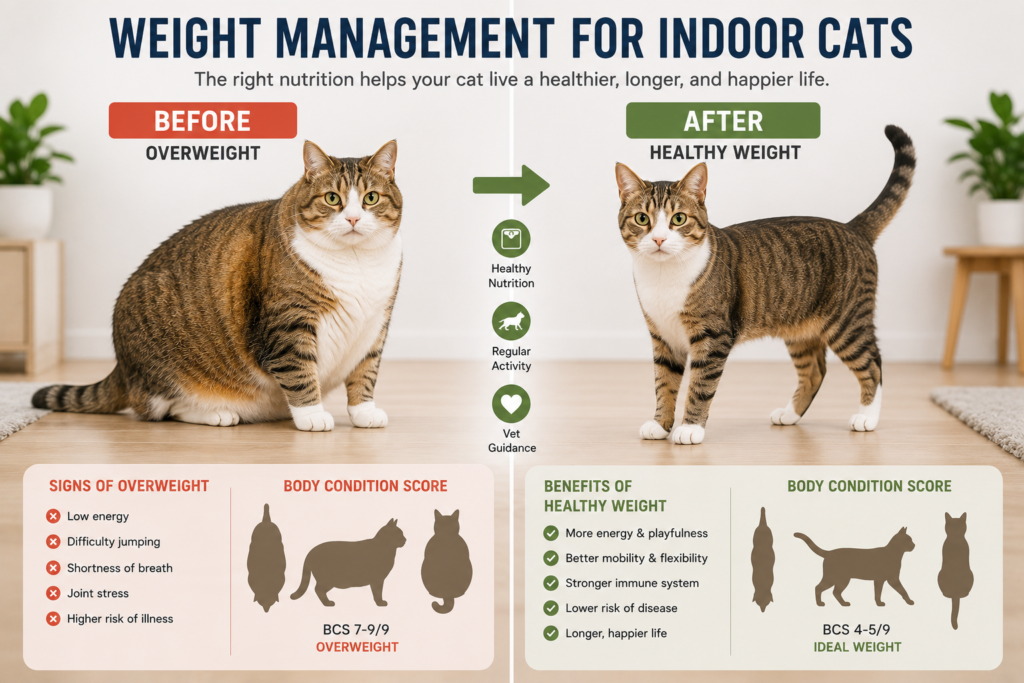
If your cat is overweight, a gradual reduction in portion size combined with increased activity and play works better than dramatic diet changes. Aim for 1–2% body weight loss per week. Rapid weight loss can cause hepatic lipidosis (fatty liver disease), a serious condition in cats.
Consider scheduling feeding times rather than leaving food available all day. Scheduled feeding gives you control and helps maintain consistent energy levels for your cat.
How to Switch Cat Food Safely
Sudden food changes upset many cats’ digestive systems, causing vomiting or diarrhea. A gradual 7-day transition minimizes digestive upset.
7-Day Transition Schedule
| Days | Old Food % | New Food % |
|---|---|---|
| 1–2 | 75% | 25% |
| 3–4 | 50% | 50% |
| 5–6 | 25% | 75% |
| 7+ | 0% | 100% |
Mix the old and new food together, adjusting percentages daily. Some cats with sensitive stomachs may need a slower transition over 10–14 days. If your cat develops diarrhea or vomiting, extend the transition phase.
Transition Tips
Mix foods thoroughly so your cat can’t pick around the new food. If your cat refuses the mixture, separate the foods slightly and gradually move them closer together as your cat adjusts. Be patient—forced transitions often backfire, creating cats that refuse meals entirely.
If your cat doesn’t adjust well after a full 7-day transition, return to the original food and try a different option. Not every food works for every cat, and forcing a bad fit creates unnecessary stress.
Common Feeding Mistakes
Understanding what not to do helps prevent costly health issues.
Overfeeding
The most common mistake is feeding too much. Your cat doesn’t need to eat until full; she needs to eat the amount that maintains a healthy weight. At a healthy weight, you should feel your cat’s ribs with light pressure but not see them prominently.
Too Many Treats
Treats should comprise no more than 10% of daily calories. A single commercial treat often contains 40–50 calories—significant for a cat eating 200–300 daily. If you give treats, reduce the main meal portion accordingly.
Ignoring Calorie Content
Two foods can look similar nutritionally but differ significantly in calorie density. Dry food containing 450 calories per cup adds up quickly compared to dry food containing 350 calories per cup. Always check the nutrition label.
Sudden Food Changes Without Transition
Switching foods abruptly causes digestive upset and can sometimes trigger refusal to eat. Even if your current food upsets your cat’s stomach, transition gradually to the new option.
Not Providing Adequate Water
Indoor cats sometimes don’t drink enough water, leading to urinary and kidney issues. Provide multiple water bowls, consider a fountain (many cats prefer moving water), and ensure water is fresh and available constantly. Wet food helps but isn’t a complete solution.
Leaving Food Out All Day
Free-feeding (leaving food available constantly) makes portion control impossible. Scheduled meals let you monitor intake and maintain a healthy weight. Additionally, food left out can become contaminated or spoil, particularly wet food.
Feeding Human Foods
While sharing a bit of cooked chicken is harmless, many human foods are toxic to cats. Onions, garlic, chocolate, avocado, grapes, and foods containing xylitol cause serious harm. Keep your cat on species-appropriate nutrition.
Frequently Asked Questions
What Is the Healthiest Indoor Cat Food?
There’s no single “healthiest” food—it depends on your individual cat. The best food is one that keeps your cat at a healthy weight, supports their specific health needs, and your cat actually enjoys eating. Hill’s Science Diet, Royal Canin, and Purina Pro Plan are all veterinarian-developed options with solid research backing. For cats with no specific health issues, any of the top-10 foods listed above works well.
Should Indoor Cats Eat Wet Food Every Day?
There’s no reason indoor cats can’t eat wet food daily. In fact, many vets recommend it for the hydration benefits. However, wet food can be expensive and less convenient than dry kibble. A mixed approach—wet food once daily and dry kibble otherwise—balances hydration support with practicality.
Is Grain-Free Cat Food Better?
Grain-free doesn’t automatically mean better nutrition. While some cats thrive on grain-free formulas, there’s no scientific evidence that grains are inherently harmful for cats. The concern about grain-free diets contributing to heart disease (dilated cardiomyopathy) in dogs has no established link in cats. Choose based on your cat’s health needs, not marketing claims.
How Often Should I Feed My Indoor Cat?
Adult indoor cats do well with twice-daily feeding. Some thrive on once-daily feeding if they maintain a healthy weight. Kittens require more frequent meals (3–4 times daily) until 6 months old. Senior cats sometimes benefit from three smaller meals rather than two large ones.
Can Indoor Cats Eat Kitten Food?
Adult cats can safely eat kitten food, but it’s not ideal for weight management since kitten formulas contain higher calories and protein to support growth. If your adult cat is underweight or not eating well, kitten food can help. For most adult cats, age-appropriate formulas work better.
How Do I Know If My Cat Likes Its Food?
A cat that’s happy with her food eats it eagerly, maintains a healthy weight, has a shiny coat, and has good energy levels. If your cat leaves food uneaten, seems lethargic, or has dull coat quality, the food may not be working. Give any new food at least 2–3 weeks to see results; some cats need time to adjust.
What Foods Should Cats Never Eat?
Onions, garlic, chives, chocolate, avocado, grapes, raisins, foods containing xylitol (artificial sweetener), and raw dough or yeast are all toxic to cats. Additionally, avoid excessive salt, excessive fat, and any food moldy or spoiled. When in doubt, consult your vet or the ASPCA Animal Poison Control Center.
Is Expensive Cat Food Worth It?
Sometimes. A premium food with high-quality ingredients often costs more upfront but may result in smaller portions needed for satiety and nutrient absorption. However, expensive doesn’t always mean better. A mid-range veterinary brand often outperforms premium grocery-store options. Consider your cat’s health, not just the price tag.
How Much Protein Does an Indoor Cat Need?
Cats require approximately 12–18% crude protein. Indoor cats don’t need exceptional protein levels like high-performance outdoor cats do, but they still need high-quality, digestible protein. Focus on protein quality over quantity; a 13% crude protein from named meat sources beats 30% protein from low-quality by-products.
How Can I Prevent Obesity in My Indoor Cat?
Prevent obesity through portion control, scheduled feeding (rather than free-feeding), regular play to increase activity, and limiting treats to 10% of daily calories. Measure portions using scales or measuring cups rather than eyeballing. Increase playtime gradually—even 10 minutes twice daily of interactive play helps.
Should I Mix Wet and Dry Food?
Mixing wet and dry food is fine and actually recommended by many vets for indoor cats. It combines the hydration benefits of wet food with the convenience and portion control of dry kibble. When mixing, measure both portions to accurately calculate total daily calories.
What Do Veterinarians Recommend Most?
Hill’s Science Diet, Royal Canin, and Purina Pro Plan are the three brands veterinarians recommend most frequently. These brands invest heavily in nutritional research and formulate foods specifically for different life stages and health conditions. Your individual vet may have specific preferences based on their experiences with clients’ cats.
Veterinarian Buying Tips
Shopping for cat food doesn’t have to be complicated. Follow these tips to make informed choices.
Reading Ingredient Lists
Ingredients are listed by weight, so the first ingredient makes up the largest portion. Look for a named meat source (chicken, turkey, fish) as the first ingredient. The second and third ingredients matter too—ideally additional meat or meat meals rather than fillers.
Be skeptical of ingredient splitting, where manufacturers list different grains separately to push meat higher on the list. For example, “chicken, corn, corn meal, corn gluten” contains more corn overall than the ingredient list suggests.
Understanding AAFCO Certification
The AAFCO statement confirms food is “complete and balanced” for your cat’s life stage. It means the food has been formulated to meet minimum nutritional standards or passed feeding trials proving nutritional adequacy. Not all premium foods carry AAFCO certification, but if they don’t, question why.
Comparing Guaranteed Analysis
The guaranteed analysis shows crude protein, crude fat, crude fiber, and moisture percentages. To compare dry foods fairly, convert wet food analysis to dry-matter basis (remove moisture percentage first). A 10% crude protein wet food with 75% moisture actually contains roughly 40% protein on a dry-matter basis.
Portion Size Recommendations
Check the back of the package for feeding guidelines. Most provide portion recommendations by cat weight. Use these as a starting point, then adjust based on your cat’s weight, activity level, and metabolism. Some cats need more, others less.
Checking for Recalls
Before buying a new food, check the FDA’s pet food recall database. Established brands have fewer recalls, but accidents happen. Knowing a brand’s safety record gives you confidence.
Considering Your Cat’s Individual Needs
The best food for your neighbor’s cat might not work for yours. Consider your cat’s age, weight, activity level, and any health issues. Discuss options with your vet before making major changes. A vet can recommend foods tailored to your cat’s specific situation.
Conclusion
Choosing the best food for your indoor cat might seem daunting initially, but it really comes down to a few key principles. Look for high-quality protein sources, appropriate calorie levels for your cat’s activity, and ingredients you recognize. Avoid marketing hype about “revolutionary” formulas or exotic ingredients—the fundamentals matter most.
Your indoor cat’s nutritional needs are different from outdoor cats. She requires fewer calories, more fiber for hairballs, and adequate hydration support for urinary health. Whether you choose dry food, wet food, or a combination, the goal is the same: keeping her at a healthy weight, supporting her specific health needs, and feeding her food she actually enjoys.
The top brands mentioned in this guide—Hill’s Science Diet, Royal Canin, and Purina Pro Plan—represent solid choices backed by veterinary research. But premium doesn’t mean perfect for every cat. Some cats thrive on Wellness or Open Farm, while others do best on budget-friendly options. Your individual cat is the ultimate judge.
Before making major dietary changes, consult your veterinarian. They know your cat’s health history and can identify any underlying conditions that might benefit from specialized nutrition. A vet can also help you transition gradually if you’re switching foods, ensuring your cat’s digestive system adjusts smoothly.
The investment you make in quality nutrition pays dividends in your cat’s health, energy levels, and longevity. A healthy weight reduces the risk of diabetes, joint problems, and heart disease. Proper nutrition supports a shiny coat, clear eyes, and the kind of vitality that makes cat ownership rewarding. Take your time choosing, monitor your cat’s response, and remember that the best food is one that keeps your cat thriving.
Link to “Best Cat Treats for Indoor Cats” guide
Link to “Indoor Cat Exercise and Enrichment Guide“
Link to “Cat Weight Loss Program: Nutrition and Exercise“
0 Comments