Best Dog Food for Sensitive Stomach: What to Look For and What to Avoid
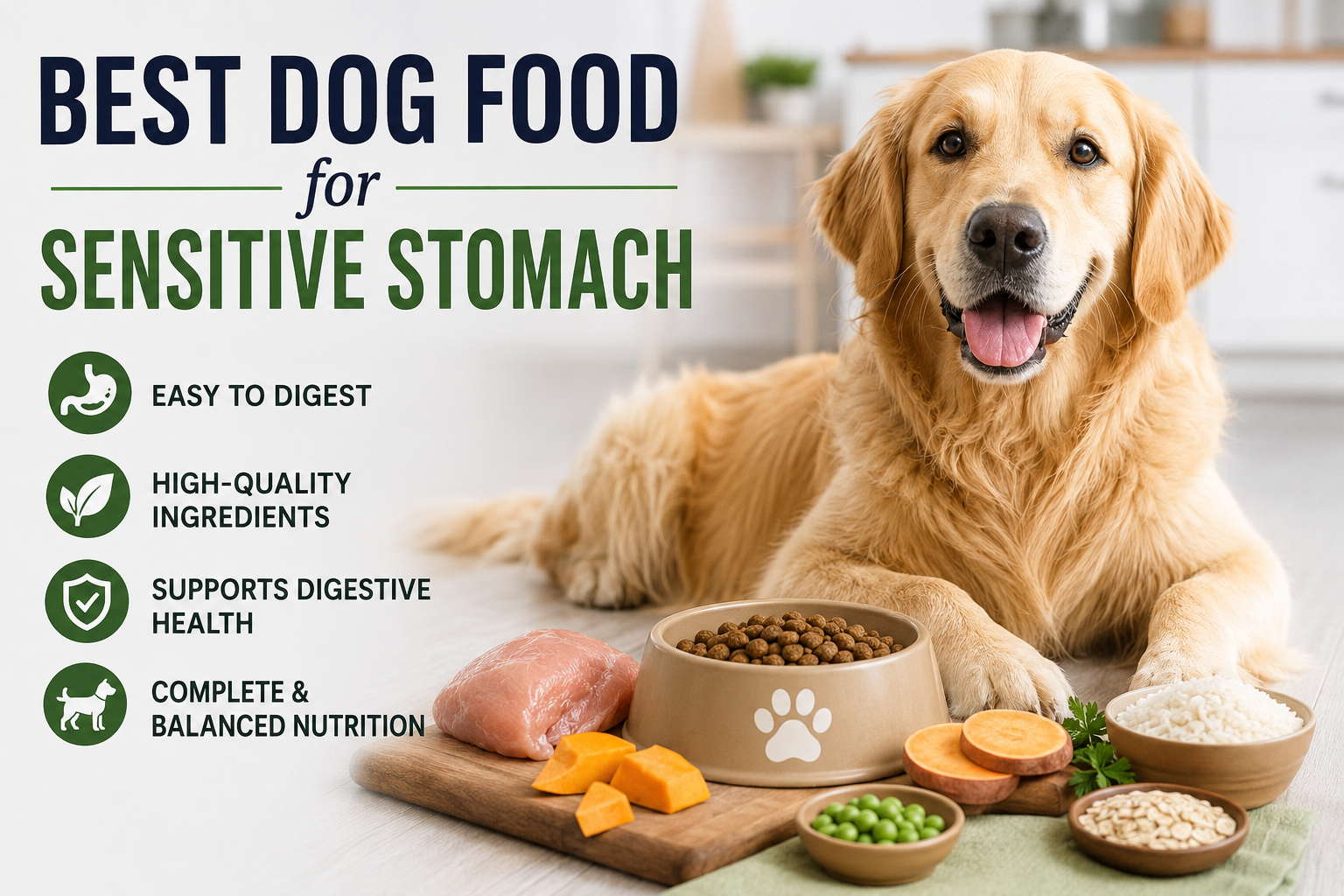
Best Dog Food for Sensitive Stomach
If your dog’s stomach seems to react to just about everything (a new treat, a change in brands, even a rich meal from the holidays), you’ve probably already searched for a food labeled “sensitive stomach” and wondered whether it would actually help. The label alone doesn’t tell you much. Two products can carry nearly identical marketing language and still differ enormously in digestibility, ingredient sourcing, and how a specific dog tolerates them.
Choosing the right food for a dog with a sensitive stomach comes down to a handful of practical factors: how digestible the diet is, what protein and fat levels it contains, and how the ingredient list is structured. Just as important is your own dog’s individual history and health status. What works well for a neighbor’s dog with occasional loose stool might do nothing for yours, or could even make things worse.
This guide walks through what “sensitive stomach” actually means in dogs, the ingredients and formulation choices worth paying attention to, how wet and dry food compare, how to switch foods without triggering a flare-up, and, perhaps most importantly, when digestive symptoms are a sign you should stop experimenting with diet and call your veterinarian instead.
What Does “Sensitive Stomach” Mean in Dogs?

“Sensitive stomach” isn’t a formal veterinary diagnosis. It’s a catch-all phrase owners use to describe a dog that reacts poorly to certain foods, ingredients, or changes in diet more often than seems typical. In practice, it usually shows up as one or more of the following:
- Loose or inconsistent stool
- Excess gas
- Occasional vomiting, especially after meals
- Reduced appetite or picky eating
- Audible stomach gurgling
- Stool that becomes unpredictable with treats or table scraps
The tricky part is that these same signs can come from a wide range of causes, not just the food itself. Stress, a recent boarding stay, intestinal parasites, a bacterial imbalance in the gut, pancreatic issues, or an underlying illness can all produce identical symptoms. That’s why digestive upset, on its own, isn’t enough information to diagnose anything. It’s a signal to pay attention, not a conclusion.
It also helps to understand that “sensitive stomach,” food intolerance, and food allergy are related but distinct concepts. According to <cite index=”12-1″>VCA Animal Hospitals, food intolerance is the most accurate term for the majority of adverse food reactions in dogs, and it covers reactions that do not involve the immune system and generally cause digestive issues</cite>. A true food allergy, by contrast, involves the immune system recognizing a specific protein as a threat. Clinically, <cite index=”11-1″>gastrointestinal signs from a genuine immunologic food allergy tend to be nonspecific and can be intermittent or chronic, while acute digestive signs are more often linked to non-immunologic food intolerance</cite>. In plain terms: most dogs with an upset stomach after eating something new are dealing with intolerance, not a true allergy. Only a veterinarian can sort out which one is actually happening, and whether something else is involved entirely.
What to Look for in Dog Food for a Sensitive Stomach
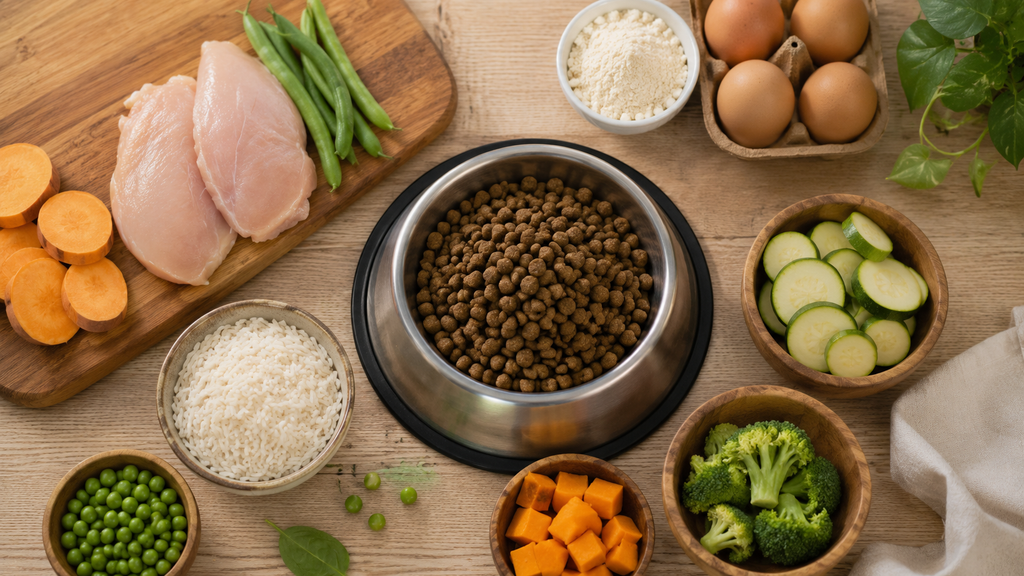
There’s no single “magic” ingredient that fixes digestive sensitivity across the board. Instead, look at the overall formulation through a few practical lenses.
Highly Digestible Ingredients
Digestibility refers to how efficiently a dog’s body can break down and absorb nutrients from a food, versus how much passes through largely unused. A highly digestible diet generally produces firmer, more consistent stool and puts less strain on the digestive tract. In practice, this often means recognizable, well-processed protein and carbohydrate sources rather than a long list of unfamiliar fillers or byproducts of inconsistent quality. Digestibility isn’t something you can judge from the ingredient list alone, though. It depends heavily on formulation, processing, and quality control at the manufacturer, which is one reason nutrition organizations encourage owners to look beyond the ingredient panel when evaluating a brand.
Appropriate Protein Sources
Protein selection matters for individual dogs, particularly if a dog has already shown a poor reaction to a specific protein such as chicken or beef. Some owners turn to “novel” proteins, sources the dog hasn’t eaten before, like duck, rabbit, or certain fish, on the theory that an unfamiliar protein is less likely to trigger a learned reaction. This can be a reasonable strategy for dogs with a documented history of problems, but a novel protein isn’t automatically better for every dog with general digestive sensitivity. Many dogs with sensitive stomachs do perfectly well on common proteins as long as the overall diet is well formulated.
Moderate, Appropriate Fat Levels
Fat is calorie-dense and, for some dogs, harder to digest in large amounts. Dogs with a history of fat intolerance or pancreatic sensitivity often do better on foods with moderate rather than high fat content. That said, this isn’t a universal rule. Plenty of dogs with sensitive stomachs tolerate standard fat levels just fine, and fat is still an essential part of a balanced canine diet. If you suspect fat specifically is a trigger for your dog, that’s a conversation worth having with your veterinarian rather than a guess to make alone.
Useful Fiber Sources
Fiber plays a real role in stool quality and digestive regularity. Soluble fiber (found in ingredients like pumpkin, beet pulp, or certain fruits) absorbs water and can help firm up loose stool, while insoluble fiber adds bulk and supports regular transit. Many diets formulated for digestive sensitivity include a moderate blend of both types. More fiber isn’t automatically better; too much can cause its own gas and bulk issues, so balance matters more than maximizing any single nutrient.
Limited and Clearly Defined Ingredients
A shorter, more clearly labeled ingredient list can make it easier to identify what might be causing a reaction if you need to troubleshoot. If a dog does poorly on a food with fifteen different protein and carbohydrate sources, it’s much harder to pinpoint the culprit than if the food contains three or four clearly named ingredients. Even so, “limited ingredient” is a marketing term, not a regulated standard, and a short ingredient list doesn’t guarantee the food is well formulated or that it will suit every sensitive dog.
Ingredients That May Be Worth Avoiding or Evaluating Carefully
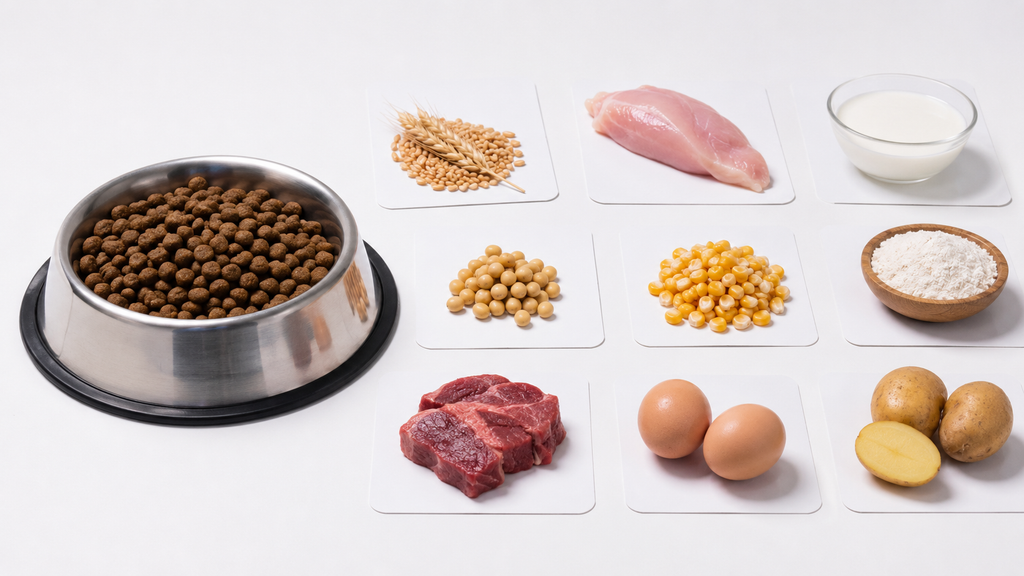
A sweeping list of “bad” ingredients tends to oversimplify a genuinely individual issue, so it’s more useful to think about what commonly triggers problems and why.
Any ingredient your dog has previously reacted to deserves caution, even if it’s generally considered a high-quality ingredient in other diets. A protein source with a complicated or unfamiliar name isn’t automatically suspect; plenty of perfectly reasonable ingredients simply sound unusual to the average shopper. What matters more is your dog’s actual history with it.
Sudden dietary changes are one of the most common, and most avoidable, triggers of digestive upset. A dog’s gut bacteria adapt to a consistent diet over time, and an abrupt switch, even to a “better” food, can cause temporary loose stool or gas simply because the gut hasn’t had time to adjust.
Rich or fatty foods, excessive treats, and table scraps are frequent culprits as well, particularly around holidays or events when a dog gets access to foods outside its normal diet. And unnecessarily complicated diets, meaning those with a very long list of protein and carbohydrate sources, can make it harder to isolate a trigger if problems do appear.
The goal isn’t to hunt for a villain ingredient on a label. It’s to notice patterns: does the dog do fine on a consistent, well-formulated diet but struggle specifically after treats, scraps, or an abrupt food switch? That pattern tells you far more than any single ingredient name.
Popular Sensitive Stomach Dog Food Brands Compared
While no single brand is “best” for every dog, these are among the most commonly recommended formulas by veterinarians and pet nutritionists for digestive sensitivity. Always confirm current formulations directly with the manufacturer, since recipes can change.
| Brand | Format | Typical Protein | Typical Fat | Best For |
|---|---|---|---|---|
| Hill’s Science Diet Sensitive Stomach & Skin | Dry/Wet | ~18-20% | ~12-15% | Mild, general sensitivity |
| Royal Canin Digestive Care | Dry/Wet | ~21% | ~12-14% | Moderate digestive sensitivity |
| Purina Pro Plan Sensitive Skin & Stomach | Dry | ~26-27% | ~16-17% | Budget-conscious owners |
| Blue Buffalo Basics Limited Ingredient | Dry | ~22-24% | ~12-14% | Suspected ingredient triggers |
| Hydrolyzed prescription diets (vet-only) | Dry/Wet | Varies | Varies | Confirmed food allergy, elimination trials |
These are starting points for a conversation with your veterinarian, not a substitute for one — especially if your dog has a documented allergy or chronic GI condition.
Dry vs. Wet Dog Food for Sensitive Stomachs
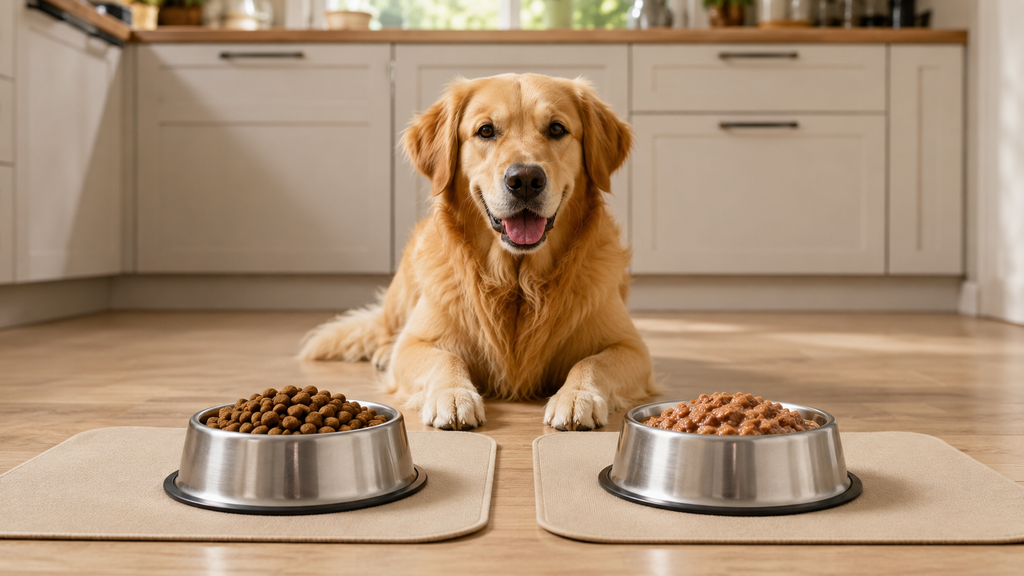
There’s a persistent idea that wet food is inherently gentler on digestion than dry food, or vice versa. Neither format is universally better for sensitive stomachs; the specific formulation matters far more than whether the food comes from a can or a bag.
Dry food (kibble) tends to be more convenient, more affordable per calorie, easier to store, and often more shelf-stable once opened. Some dogs do well on a consistent, high-quality kibble formulated for digestive sensitivity.
Wet food has a much higher moisture content, which can make it more palatable for dogs with a reduced appetite and easier to portion precisely. Some owners find wet food easier on a dog’s stomach simply because it’s more slowly and easily consumed, though this varies by dog.
Cost is worth factoring in too: wet food is generally more expensive per calorie than dry food, and it doesn’t store as long once opened. Some owners land on a mixed approach, feeding primarily dry food with a wet food topper, which can work well for picky eaters as long as the overall diet stays balanced.
When choosing between formats, ask less about wet versus dry and more about whether the specific formula suits your dog’s digestion, life stage, and any known sensitivities.
How to Choose the Best Dog Food for Your Dog

Rather than jumping straight to a product, work through the dog’s actual situation first.
- Identify the current symptoms. Write down what you’re seeing (loose stool, gas, vomiting, appetite changes) and how often it happens. This becomes useful information for your vet if symptoms continue.
- Review the current diet in detail, including the exact food, brand, and formula your dog is eating now.
- Check for recent food changes. A brand-new bag, a new flavor, or a recently switched formula is often the simplest explanation for a sudden change in stool quality.
- Audit treats and table scraps. Treats don’t always get the same scrutiny as main meals, but they can be just as disruptive to digestion.
- Think through ingredient history. Has your dog reacted poorly to a specific protein or ingredient before? Note it.
- Consider digestibility and formulation over marketing claims. Look for a diet built around clear, appropriate protein levels, moderate fat, and useful fiber sources rather than a product simply because the word “sensitive” is on the front.
- Introduce any dietary change gradually, using a transition period rather than an abrupt swap.
- Monitor stool quality, appetite, energy, and overall tolerance for at least one to two weeks after a change, since some effects take time to show up.
- Contact a veterinarian if symptoms don’t improve, worsen, or if you’re unsure what’s driving them.
This process takes more patience than grabbing a bag labeled “sensitive stomach” off the shelf, but it’s far more likely to actually solve the problem rather than simply changing which symptoms show up.
How to Switch Your Dog to a New Food

However carefully you’ve chosen a new diet, switching too quickly is one of the most common, and most preventable, causes of digestive upset. A dog’s gut microbiome adapts to whatever it’s regularly fed, and a sudden change doesn’t give it time to catch up.
cite index=”34-1,34-2″Most veterinarians recommend transitioning gradually, ideally over five to seven days, by mixing in progressively more of the new food while reducing the old food cite. A commonly used pattern looks something like this:
- Days 1–2: About 25% new food, 75% old food
- Days 3–4: Roughly 50% new food, 50% old food
- Days 5–6: About 75% new food, 25% old food
- Day 7 onward: 100% new food, assuming no issues have appeared
This exact schedule may need to be stretched out for dogs with a known history of sensitivity. <cite index=”34-3″>Dogs with sensitive stomachs, food allergies, or other gastrointestinal conditions may need a longer transition period</cite>, sometimes extending to ten days or more. There’s no single pace that works for every dog: the point of the schedule is to move slowly enough that the dog’s system can keep up, and to adjust based on how the individual dog responds.
During the transition, keep an eye on stool consistency, appetite, and energy level. If you notice loose stool or gas partway through, it’s usually best to pause at the current ratio for a few extra days rather than pushing forward on schedule. If problems are significant or don’t resolve, check in with your veterinarian before continuing.
Can a Limited-Ingredient Diet Help a Dog With a Sensitive Stomach?
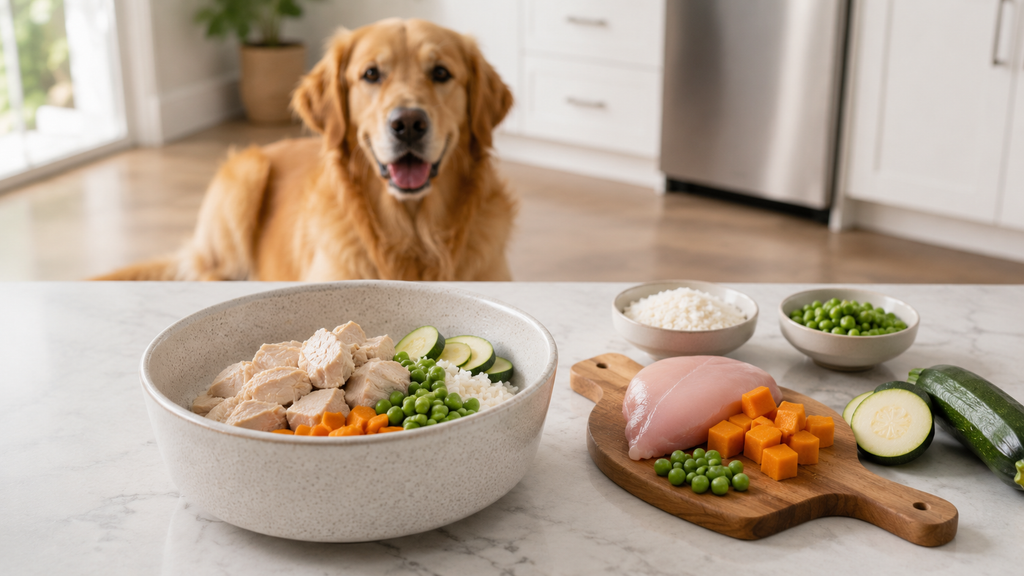
A limited-ingredient diet is exactly what it sounds like: a food built around a smaller number of protein and carbohydrate sources than a typical formula. The appeal is straightforward: fewer ingredients make it easier to identify what might be triggering a reaction if problems continue, and there’s less room for hidden or unexpected components.
Still, “limited ingredient” is not a regulated term, and it doesn’t automatically mean “hypoallergenic” or “better for digestion.” A limited-ingredient diet can still contain a protein a specific dog reacts poorly to, and a shorter ingredient list says nothing about the overall nutritional adequacy of the food. Simplicity and quality are two different things, and a good limited-ingredient diet should still meet complete nutritional standards for the dog’s life stage.
If you suspect your dog has a genuine food allergy rather than general sensitivity, a true elimination diet, usually a prescription hydrolyzed or novel-protein formula fed strictly for a defined period, is a different and more rigorous process than simply buying an over-the-counter limited-ingredient bag. cite index=”20-1″This kind of diet trial is typically fed after a five- to seven-day transition period, running about two weeks for gastrointestinal symptoms or roughly eight weeks for skin-related signscite and it works best under veterinary guidance so nothing sneaks into the diet that would compromise the results.
Best Dog Food for Sensitive Stomach by Dog Type

Puppies
Puppies have significantly different nutritional requirements than adult dogs, including higher protein and calorie needs to support growth. A food labeled for adult sensitive stomachs generally isn’t appropriate for a growing puppy; look instead for a diet specifically formulated for growth that also emphasizes digestibility.
Adult Dogs
For most adult dogs, maintenance nutrition combined with attention to individual tolerance is the priority. This is the group where the general principles above (digestibility, appropriate protein and fat, useful fiber) apply most directly.
Senior Dogs
Older dogs may have slower digestion, reduced activity levels, or age-related health conditions that affect which foods sit well with them. A senior-specific formula, chosen with input from a veterinarian, often makes more sense than a generic “sensitive stomach” label.
Small-Breed Dogs
Small dogs typically need more calorie-dense food relative to their size and often do better with smaller kibble pieces that are easier to chew and digest.
Large-Breed Dogs
Large-breed dogs, especially during growth, benefit from formulas that account for joint and skeletal development alongside digestibility, since growth-related nutrition needs differ meaningfully from those of small-breed dogs.
No single product is universally “best” across every one of these categories. A formula appropriate for a growing large-breed puppy looks very different from one suited to a senior toy breed, even if both dogs have sensitive stomachs.
When Sensitive-Stomach Symptoms Mean You Should See a Veterinarian

Occasional mild digestive upset is common and often resolves on its own or with a thoughtful diet change. But digestive symptoms can also be a sign of something that has nothing to do with food sensitivity at all: parasites, infection, pancreatitis, inflammatory bowel disease, obstruction, or other conditions that require medical diagnosis and treatment rather than a new bag of food.
Contact your veterinarian if digestive symptoms are:
- Persistent, lasting more than a couple of days without improvement
- Severe, meaning significant vomiting or diarrhea rather than mild, occasional episodes
- Recurrent, coming back repeatedly even after diet changes
- Accompanied by blood in the stool or vomit
- Paired with repeated vomiting, especially if your dog can’t keep water down
- Associated with dehydration, lethargy, or noticeably reduced energy
- Linked to significant weight loss
- Accompanied by abdominal pain, such as a hunched posture or reluctance to be touched near the belly
- Paired with a refusal to eat for more than a day
- Occurring in a very young, elderly, or medically vulnerable dog, where dehydration and complications can develop more quickly
None of this is meant to cause alarm over a single loose stool. Most digestive hiccups are minor and short-lived. But if symptoms fall into any of the categories above, dietary experimentation should take a back seat to a veterinary exam that can rule out or identify an underlying medical cause.
Frequently Asked Questions
What is the best dog food for a sensitive stomach?
There isn’t one specific food that qualifies as “best” for every dog. The best choice is a nutritionally complete diet that’s highly digestible, uses clearly defined protein and fiber sources, and, most importantly, one your individual dog tolerates well over time. What works for one sensitive dog may not work for another.
Is grain-free food better for dogs with sensitive stomachs?
Not necessarily. Grains are not a common source of digestive problems for most dogs, and grain-free formulas aren’t inherently more digestible. Grain-free diets should only be chosen for a dog with a confirmed grain-specific issue, ideally identified with veterinary guidance, since some grain-free formulations have raised separate nutritional concerns unrelated to digestion.
Is wet food easier for dogs with sensitive stomachs?
Sometimes, but not universally. Wet food’s higher moisture content and softer texture can be easier for some dogs to eat and digest, while other dogs do perfectly well on dry food. Formulation matters more than whether the food is wet or dry.
What protein is easiest for dogs to digest?
There’s no single protein that’s universally easiest to digest for every dog. Digestibility depends on the quality and processing of the protein source as much as the type of protein itself. A protein that’s easy for one dog may not sit well with another, particularly if that dog has reacted to it before.
Can changing dog food cause diarrhea?
Yes. An abrupt switch, even to a higher-quality food, can disrupt a dog’s gut bacteria and cause temporary loose stool or gas. This is one of the most common and most avoidable causes of digestive upset, which is why a gradual transition matters.
How long does it take for a dog’s stomach to adjust to new food?
For most healthy adult dogs, a five- to seven-day gradual transition is typically enough, though dogs with a history of sensitivity often need longer, sometimes ten days or more. If loose stool or gas continues well beyond the transition period, it’s worth checking in with your veterinarian.
Should I feed my dog a limited-ingredient diet?
It can be a useful option, particularly for troubleshooting a suspected trigger, but it isn’t automatically the right choice for every sensitive-stomach dog. A limited ingredient list simplifies identifying potential triggers, though it doesn’t guarantee better tolerance or higher nutritional quality on its own.
When should I take my dog to the vet for an upset stomach?
See a veterinarian if symptoms are persistent, severe, or recurring; if there’s blood in the stool or vomit; if your dog is lethargic, dehydrated, or losing weight; if there’s abdominal pain or a refusal to eat; or if your dog is very young, elderly, or has an existing medical condition. These signs point to something beyond ordinary food sensitivity.
Final Takeaway
There is no single dog food that qualifies as the automatic best choice for every dog with a sensitive stomach. The right food depends on digestibility, nutritional adequacy, your dog’s individual ingredient tolerance, their age and size, their prior history with specific foods, any existing medical conditions, and, when needed, guidance from your veterinarian.
Rather than chasing whichever product has the most persuasive “sensitive stomach” label, focus on the fundamentals: a well-formulated, digestible diet, a gradual transition when switching foods, close attention to how your own dog actually responds, and a willingness to involve your veterinarian when symptoms persist or raise concern. That combination will serve your dog far better than any single product claim.
For more on keeping your dog’s diet safe, see our guides on can dogs eat blueberries and can dogs eat mango.
(Visit: https://petnestcorner.com/)



2 Comments
How Do I Keep My Dog From Digging? 10 Practical Ways to Stop Yard Digging · September 8, 2026 at 08:21
[…] trying to change the behavior. With proper dog mental stimulation, regular exercise, and effective dog digging solutions, you can reduce unwanted holes and protect your yard. In this guide, you’ll learn why dogs dig […]
Flea and Tick Prevention for Dogs: Complete Guide · September 27, 2026 at 21:59
[…] For more on keeping your dog healthy, see our guides on dog grooming costs and best dog food for sensitive stomachs. […]