Best Flea and Tick Prevention for Dogs: A Complete Guide.
Best Flea and Tick Prevention for Dogs

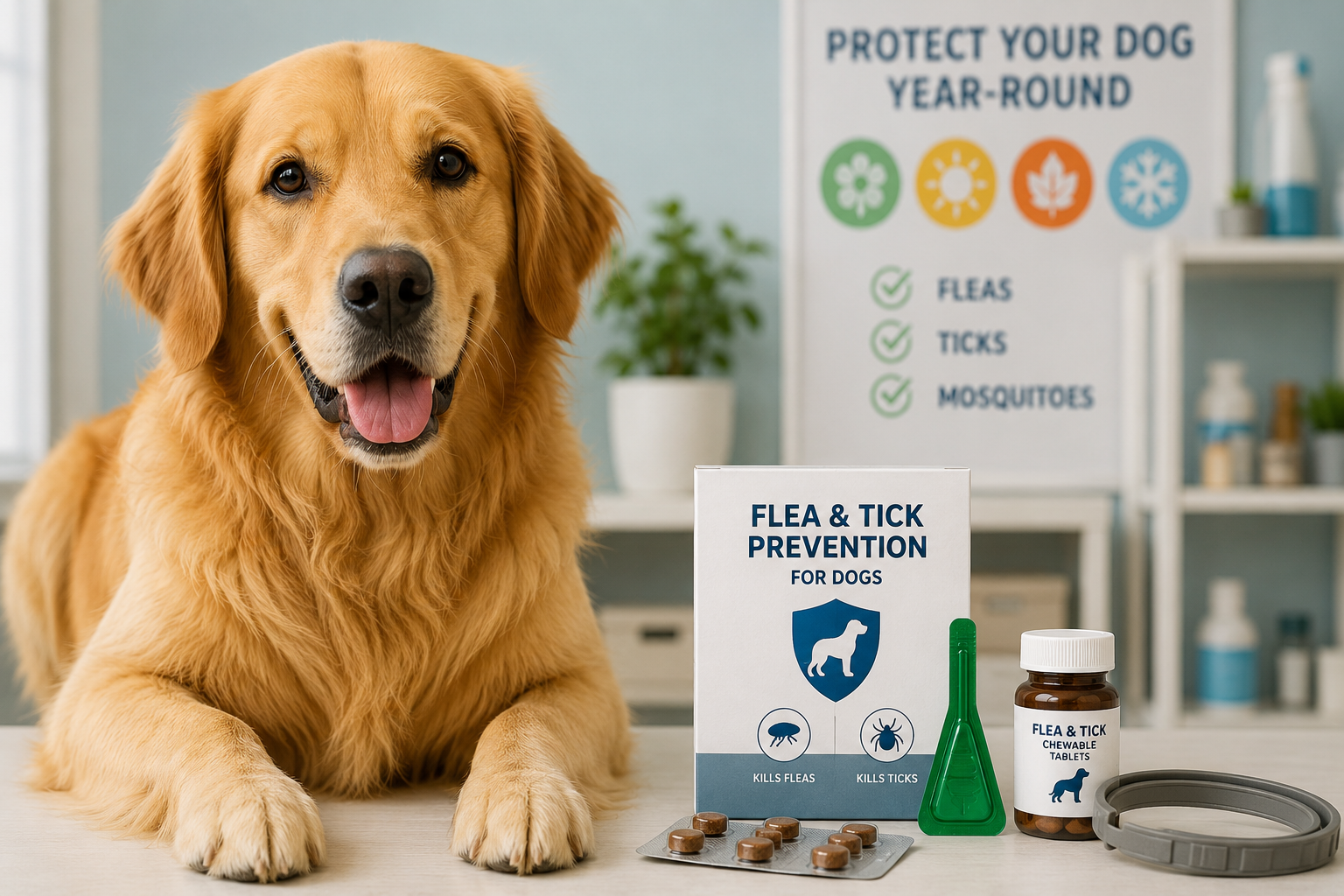
A single tick bite can transmit disease before you ever notice the tick was there, and a handful of fleas can turn into a full household infestation within weeks. That’s the real reason flea and tick prevention matters: it limits exposure to parasites that can affect your dog’s health, your home, and in some cases, the people living in it.
Here’s the part that trips up a lot of dog owners searching for the “best” option: there isn’t one. The right flea and tick preventive depends on your dog’s age, weight, breed, health history, where you live, how much time your dog spends outdoors, and even whether you’re more likely to remember a monthly chew or a topical applied every few weeks. A product that works well for a rural hunting dog in the Southeast may not be the right fit for a small, indoor-mostly dog in a Northeastern suburb.
This guide breaks down how the major categories of flea and tick prevention work, what actually separates them, how to think through the decision for your own dog, and when the conversation needs to include your veterinarian rather than a search engine.
Why Flea and Tick Prevention Matters for Dogs

Fleas do more than cause itching. A heavy infestation can lead to flea allergy dermatitis, an intense allergic skin reaction some dogs develop to flea saliva, along with hair loss, skin infections, and in young or small dogs, blood loss severe enough to cause anemia. Fleas can also transmit tapeworms and, less commonly, certain bacterial pathogens.
Ticks carry their own concerns. Depending on species and region, ticks can transmit pathogens responsible for Lyme disease, ehrlichiosis, anaplasmosis, and other tick-borne illnesses. Not every tick bite results in disease transmission, and not every exposed dog becomes clinically ill, but the possibility is real enough that veterinary and public health organizations consistently recommend prevention over a reactive, after-the-fact approach.
There’s also a household dimension. Fleas that get established in carpet or furniture can be difficult to eliminate and may bite other pets or people in the home, and because some tick-borne pathogens can affect people too, keeping ticks off your dog is also a layer of protection for your family. Most dogs will never develop a serious parasite-related illness even without prevention, but the possible consequences are serious enough that a deliberate strategy, chosen with your dog’s specific situation, is worth the effort.
What Is the Best Flea and Tick Prevention for Dogs?
The best option depends on the dog’s age, weight, health history, lifestyle, geographic location, and the flea and tick species it may encounter. Oral, topical, and longer-acting veterinary-administered options can all be appropriate when used according to their approved labeling.
In other words, “best” is dog-specific rather than universal. A product that’s an excellent fit for a healthy, middle-aged Labrador who hikes every weekend may not be appropriate for a senior dog on multiple medications, or a young puppy that hasn’t reached the minimum age or weight listed on the label. The categories below cover how the major types of prevention generally work.
Oral Flea and Tick Preventives

Oral preventives are chewable tablets given by mouth, typically once a month. Many contain active ingredients from the isoxazoline class, which work by disrupting the nervous system of fleas and ticks after the parasite bites the dog. Because the mechanism depends on the parasite feeding, oral products generally kill fleas and ticks that come into contact with the dog rather than repelling them before they attach.
The main advantage is convenience: no topical residue, no waiting period before bathing or swimming, and straightforward dosing. The tradeoff is that because the parasite typically needs to bite before the product takes effect, oral products don’t prevent every single bite from occurring.
Dosing schedules and approved age or weight ranges vary by product, so label instructions matter more than general assumptions. Not every oral product is labeled for puppies, and not every one covers the same list of tick species. A veterinarian can help match a product’s labeled indications to your dog’s situation.
Topical Flea and Tick Preventives

Topical preventives are liquid formulations applied directly to a dog’s skin, usually between the shoulder blades, where the dog can’t easily lick it off. The product spreads through the skin’s natural oils and typically remains effective for about a month, depending on the formulation.
Topical products can offer both repellent and killing action, depending on the formulation, which is an advantage for dogs with heavy outdoor exposure. Correct application matters: the product needs to reach the skin rather than sitting on top of the fur, and owners should avoid bathing the dog for the period specified on the label.
One safety point worth repeating: dogs should never be treated with a product labeled for cats, and cats should never receive a product labeled for dogs. Some canine topical products contain ingredients, such as certain concentrations of permethrin, that can be seriously harmful to cats.
Long-Acting Veterinary-Administered Options
Some newer flea and tick products provide extended protection through a single veterinary-administered dose rather than monthly at-home dosing. The FDA, for example, approved Bravecto Quantum, an extended-release injectable suspension, for dogs and puppies 6 months of age and older, with protection lasting 12 months against several tick species and 8 months against lone star ticks. Because a licensed veterinarian has to administer the injection, the appropriate treatment interval and whether it suits an individual dog get worked out as part of that visit.
Long-acting options can reduce the risk of a missed dose, but they’re prescription items with their own labeled age, weight, and health-history considerations, and aren’t automatically the right choice for every dog. The characteristics of one long-acting product shouldn’t be assumed to apply to other extended-duration options on the market.
Oral vs. Topical Flea and Tick Prevention

| Feature | Oral | Topical |
|---|---|---|
| Administration | Chewable tablet given by mouth | Liquid applied to the skin, usually between the shoulder blades |
| Typical dosing frequency | Often monthly, though this varies by product | Often monthly, though this varies by product |
| Convenience | No mess, no waiting period for bathing in most cases | Requires correct skin application and often a waiting period before bathing or swimming |
| Bathing considerations | Generally unaffected by bathing | Effectiveness may be reduced by frequent bathing or swimming, depending on the product |
| Parasite coverage | Varies by product; always confirm labeled tick species | Varies by product; some offer repellent action in addition to killing action |
| Prescription status | Some products are prescription-only; others are available over the counter | Some products are prescription-only; others are available over the counter |
| Potential drawbacks | May not repel parasites before they bite; not all products suit dogs with certain health histories | Risk of improper application; not safe to use interchangeably with cat products |
Duration of protection and exact parasite coverage vary by product, so treat this table as a general comparison rather than a guarantee for any specific formulation. Always check the current label.
How to Choose the Right Flea and Tick Prevention for Your Dog

Consider Your Dog’s Age
Puppies have narrower safety margins than adult dogs, and many flea and tick products carry specific minimum age and weight requirements. A product safe for a six-month-old dog isn’t automatically safe for an eight-week-old puppy. Always check the label rather than assuming a product is safe simply because it’s labeled for “dogs.”
Consider Your Dog’s Weight
Flea and tick medications are dosed by weight, often in defined bands (for example, a specific chew size for dogs between 25 and 50 pounds). Giving a dose sized for a heavier dog to a lighter one, or vice versa, isn’t something to guess at. Unless the manufacturer specifically allows splitting a dose, don’t attempt it, and don’t estimate a dog’s weight when precision matters.
Consider Where You Live
Flea and tick exposure isn’t uniform across the country. Certain tick species are more common in the Northeast and upper Midwest, others are more prevalent in the Southeast and South Central states, and flea pressure tends to be more consistent year-round in warmer climates. No single product covers every tick species found in every region, which is part of why a one-size-fits-all recommendation doesn’t really exist.
Consider Your Dog’s Lifestyle
A dog that hikes, camps, hunts, swims, or frequents dog parks faces different exposure levels than a dog that mostly stays in a fenced yard or lives an indoor lifestyle. Rural properties bordering wooded areas or tall grass tend to carry higher tick exposure. Frequent travel to a different region can also mean exposure to parasites your dog wouldn’t normally encounter at home. All of these factors can shift which type of prevention makes the most sense.
Consider Your Dog’s Medical History
Dogs with significant medical conditions, dogs taking other medications, dogs that are pregnant or intended for breeding, and dogs with a history of seizures or other neurologic problems all warrant a conversation with a veterinarian before starting or switching a flea and tick preventive. Certain product classes carry specific cautions for dogs with a neurologic history, and drug interactions are something only a veterinarian reviewing the dog’s full medication list can properly evaluate.
Are Flea and Tick Preventives Safe for Dogs?

Approved flea and tick products can be safe and effective when used according to their labels, but no medication, including these, is completely risk-free. The more useful question isn’t whether a product is 100% safe, but whether it’s an appropriate choice for this particular dog, used correctly. Correct dosing and label adherence matter: using a product outside its labeled age, weight, or species range increases the risk of an adverse reaction. Most dogs tolerate approved products without incident, but reactions can happen, ranging from mild gastrointestinal upset to more serious neurologic signs in rare cases.
The FDA has alerted pet owners and veterinarians to the potential for neurologic adverse events in dogs and cats treated with isoxazoline-class flea and tick products, which include several widely used oral options. Reported reactions have included muscle tremors, ataxia, and seizures in some animals, and seizures have occurred even in dogs without a prior history of them. At the same time, the agency has stated that isoxazoline products are commonly used and considered safe and effective for the majority of dogs and cats, and it continues to recommend that pet owners work with their veterinarian to decide whether a product in this class fits their individual dog.
If your dog has a history of seizures or other neurologic disease, mention it before starting any new preventive, since it may affect which product category is appropriate. If an adverse reaction does occur, whether it’s vomiting, unusual lethargy, tremors, or anything that seems out of character, contact your veterinarian promptly and be prepared to describe what product was used and when.
How Often Should Dogs Receive Flea and Tick Prevention?

Dosing schedules depend entirely on the specific product. Many oral and topical options are labeled for monthly administration, while newer long-acting formulations can extend protection to several months or up to a year with veterinary administration.
The Companion Animal Parasite Council recommends that dogs be maintained year-round on broad-spectrum flea and tick control, a position echoed by other veterinary organizations, since flea activity doesn’t reliably pause during colder months and fleas can survive indoors year-round even where winters are harsh.
Stretching a monthly product to six weeks to save money, or applying seasonal logic to a product labeled for year-round use, undermines the protection it’s designed to provide. Go by the current label, not assumptions about when parasites are “supposed” to be active.
Can Dogs Still Get Fleas or Ticks After Using Preventive?

Yes, and that doesn’t automatically mean the product failed. A few reasons this happens:
- Heavy environmental exposure, where new fleas jump onto a treated dog faster than the product can address them
- Reinfestation, since an established flea infestation may take several months to bring fully under control as immature stages persist in the environment
- Incorrect application or a missed dose, creating a gap in protection
- Product limitations, since no single product covers every tick species
- How certain products work: some tick-control products kill ticks after they attach rather than repelling every tick before contact, so it’s possible to find a tick on a treated dog even when the product is working exactly as intended
Manufacturers note that these products don’t claim to prevent tick-borne disease transmission outright, only to treat and control the parasites according to their tested indications. If you’re consistently finding fleas or ticks on your dog despite correct, timely use, discuss it with your veterinarian rather than switching products at random. It could point to a dosing issue, an environmental infestation, or a mismatch between the product’s coverage and local parasites.
How to Prevent Fleas and Ticks in Your Home

On-the-dog prevention is only part of the picture. Flea infestations involve eggs, larvae, and pupae living in carpet, bedding, and cracks in flooring, so treating only the fleas visible on your dog may not solve an established household problem. A few practical steps: wash pet bedding regularly in hot water, vacuum frequently in areas your dog rests, treat every pet in the household rather than just the one with visible symptoms, keep yards trimmed and reduce leaf litter near the house, limit exposure to heavily infested outdoor environments, and remove attached ticks promptly.
Avoid reaching for unverified household pesticides or “extra strength” treatments beyond what’s labeled for indoor pet-safe use. Products intended for lawns or general pest control aren’t always formulated with pets or children in mind, and misuse can create a separate safety problem.
Natural Flea and Tick Prevention for Dogs: Does It Work?

Plenty of owners are drawn to natural options, often out of concern about chemical exposure or because a dog had a bad reaction to a conventional product before. That instinct is understandable, but “natural” doesn’t automatically mean “safe” or “effective.”
Some natural approaches, like regular grooming, routine vacuuming, and yard maintenance, genuinely reduce parasite exposure as part of a broader strategy. Essential oils and homemade pesticide mixtures are a different story: concentrated essential oils, including some marketed for pet use, can be harmful to dogs and especially to cats in the same household, and shouldn’t be applied casually or treated as a substitute for tested, approved parasite prevention.
Anecdotal reports of a remedy “working” for one dog aren’t the same as controlled evidence across a population of dogs and parasite species. If you’re interested in reducing reliance on conventional chemical prevention, that’s a reasonable goal to bring to your veterinarian, who can weigh evidence-based options against your dog’s actual risk level.
Flea and Tick Prevention for Puppies

Puppies need particular attention to labeled minimum age and weight requirements, and these vary meaningfully from product to product. Some oral and topical preventives are approved for puppies as young as 7 or 8 weeks, provided they meet a minimum weight; others require the puppy to be several months older. There isn’t a single universal minimum age that applies across all products, which is exactly why checking the specific label matters more than relying on general advice.
Giving a puppy an adult-formulated product, or a product not labeled for its current weight, isn’t a shortcut worth taking. A veterinarian can help identify age- and weight-appropriate options and build a prevention plan that transitions appropriately as the puppy grows.
Flea and Tick Prevention for Senior Dogs

A senior dog’s age doesn’t by itself determine which flea and tick product is correct. What matters more is whatever else has changed along the way: chronic conditions, additional medications, reduced kidney or liver function, or a slower recovery from any adverse reaction, should one occur.
This is another situation where individualized veterinary guidance carries real weight. A senior dog on medication for arthritis or heart disease, for example, may need a product reviewed specifically for interactions, even if the same product would be a fine choice for a healthy younger dog. Senior status alone doesn’t mean a different medication is required, though it’s still worth looping in your veterinarian before making a change.
What to Do If You Find a Tick on Your Dog
- Keep calm. A single attached tick is a common, manageable situation, not an emergency in most cases.
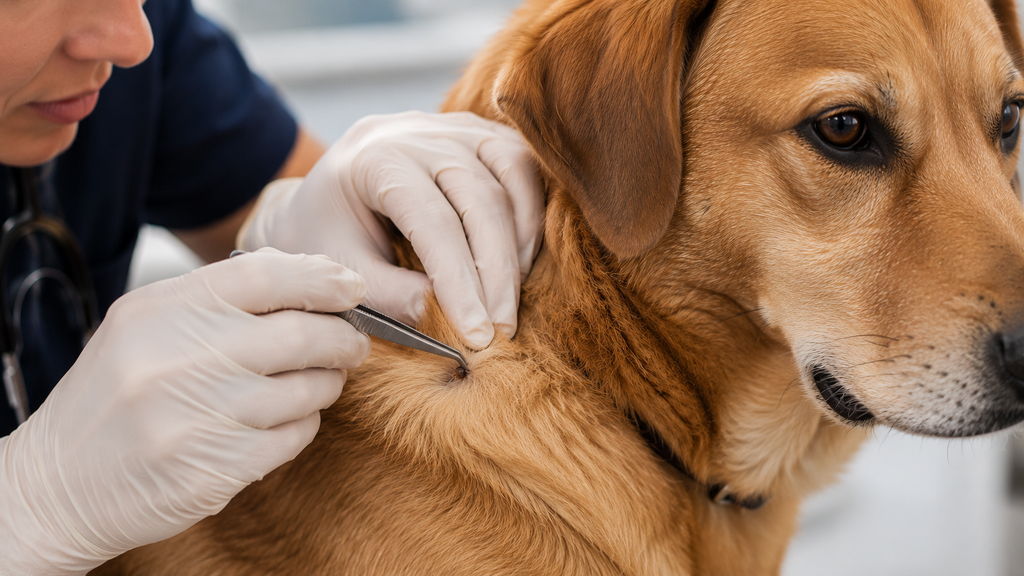
- Use fine-tipped tweezers or a purpose-made tick-removal tool, and grasp the tick as close to the skin’s surface as possible, near its mouthparts rather than the body.
- Pull the tick away from the skin with steady, even pressure, without twisting or jerking it, since twisting can leave mouthparts embedded and crushing the body can increase the risk of releasing infectious material.
- Clean the bite area and wash your hands thoroughly afterward.
- Monitor your dog over the following days and weeks for lethargy, appetite changes, lameness, or swelling near the bite site.
- Contact your veterinarian if you notice concerning symptoms, can’t remove the tick cleanly, or want guidance given elevated tick-borne disease risk in your area.
Do not burn the tick, cover it in petroleum jelly, or use other folk-remedy removal methods. These approaches don’t speed up detachment safely and may increase the risk of the tick releasing infectious material into the bite site.
When to Talk to Your Veterinarian

Certain situations call for a conversation with your veterinarian rather than a decision made independently:
- Puppy or young dog, especially when weight and age fall near a label’s minimum threshold
- Pregnant or breeding dog
- History of seizures or other neurologic disease
- Significant medical conditions such as liver, kidney, or heart disease
- Multiple current medications, where drug interactions need review
- Severe or recurring flea infestation despite consistent product use
- Repeated tick exposure in a high-risk area
- A suspected adverse reaction to a current or previous product
- Persistent parasites despite correct, on-schedule preventive use
- Travel to a region with different parasite risks than home
Veterinary guidance is especially important when selecting a prescription product or when a dog’s medical history is complicated enough that a generic recommendation isn’t good enough.
Frequently Asked Questions
What is the best flea and tick prevention for dogs?
There isn’t a single best option for every dog. The right choice depends on your dog’s age, weight, health history, lifestyle, and the parasites common in your area, and it should be used exactly as labeled.
Is oral or topical flea and tick prevention better?
Neither is universally better. Oral products tend to be more convenient and unaffected by bathing, while topical products can offer repellent action in addition to killing parasites. The better fit depends on your dog’s tolerance, lifestyle, and any relevant health considerations.
Should dogs receive flea and tick prevention year-round?
Many veterinary organizations, including CAPC, recommend year-round prevention rather than a seasonal approach, since fleas can survive indoors and some ticks remain active outside of summer. Your veterinarian can tailor this to your specific region and dog.
Can a dog still get ticks while on prevention?
Yes. Some products kill ticks after attachment rather than repelling every tick before contact, and factors like heavy environmental exposure, missed doses, or ticks outside a product’s labeled coverage can all result in a tick being found on a treated dog.
Are flea and tick preventives safe for puppies?
Many are, but only when the specific product is labeled for the puppy’s current age and weight. Requirements vary by product, so always check the label rather than assuming a “puppy-safe” claim applies universally.
What is the safest flea and tick prevention for dogs?
No single product is safest for every dog. Safety depends on matching a product’s labeled indications to your dog’s age, weight, and health history, and using it exactly as directed. A veterinarian can help weigh the options for your specific dog.
Does natural flea prevention work?
Some supportive measures, like regular grooming and yard maintenance, can help reduce exposure. But essential oils and homemade remedies aren’t reliable substitutes for tested, approved parasite prevention, and some can be harmful if used carelessly.
What should I do if my dog has a reaction to flea medicine?
Contact your veterinarian promptly, describe the product used and the symptoms you’re seeing, and follow their guidance. Don’t wait to see if mild symptoms resolve on their own if you’re seeing anything like tremors, unusual lethargy, or repeated vomiting.
Final Verdict
The best flea and tick prevention for dogs is whichever product or strategy provides appropriate protection for that particular dog, used correctly and consistently. It’s rarely about price, popularity, or how long a single dose lasts.
That means matching the product’s labeled age, weight, and health requirements to your dog, considering your geographic and lifestyle exposure, and staying on schedule rather than guessing at timing. When your dog’s health history, medications, age, breeding status, or level of parasite exposure adds complexity to the decision, bring your veterinarian into the conversation rather than choosing based on price or brand recognition alone. The goal is finding the right fit and using it consistently, not chasing a perfect product.
This article is for general educational purposes and does not replace advice from a licensed veterinarian. Product labels, approved uses, and dosing requirements can change, so check the current label and consult your veterinarian when choosing parasite prevention for your dog.
Looking for more dog health guides? Browse our full blog for grooming, nutrition, and pet insurance articles.



0 Comments