How to Groom a Cat at Home: A Complete Beginner’s Guide
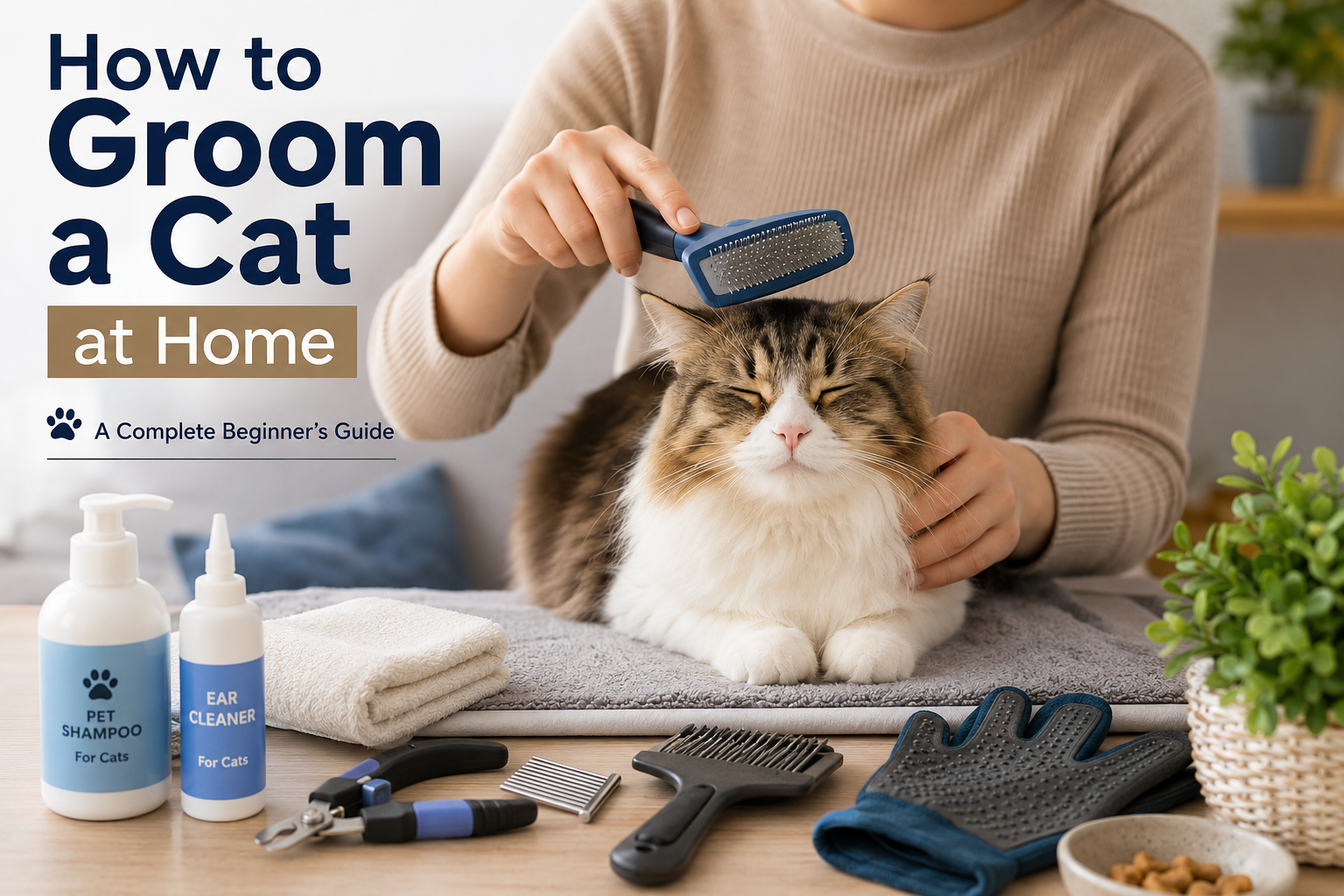
How to Groom a Cat at Home
If you’ve ever tried to towel-dry a cat who did not sign up for a bath, you already know grooming isn’t always as simple as it looks. Cats are famously fastidious about their own hygiene, but that doesn’t mean they don’t need your help. Mats hide under the collar. Nails get too long to retract properly. Ears collect wax without anyone noticing until there’s a problem.
Learning how to groom a cat at home isn’t just about keeping your cat looking tidy. It’s a genuine health habit. A short, calm grooming session a few times a week can catch skin issues early, reduce hairballs, and keep your cat far more comfortable than you’d expect.
In this guide, you’ll learn exactly what supplies you need, how to prepare your cat so the session goes smoothly, and a full step-by-step routine for brushing, bathing, nail trims, ear cleaning, and more, plus how to tell when it’s time to hand things over to a professional.
Quick answer
To groom a cat at home, brush your cat two to three times a week (daily for long-haired breeds), bathe only when visibly dirty or advised by a vet, trim nails every two to three weeks, and check ears and eyes weekly. Always work in short sessions, use cat-specific tools, and pair grooming with treats so your cat associates it with something positive rather than something to fear.
Why regular cat grooming is important
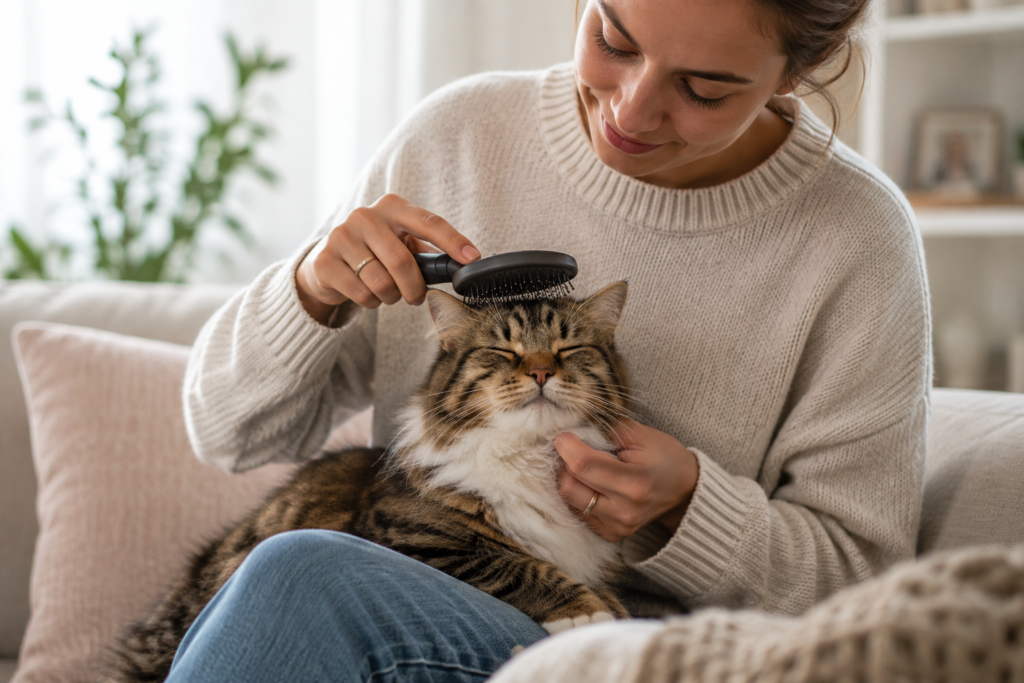
Cats spend a large part of their day grooming themselves, but self-grooming has limits. Loose fur that isn’t brushed out gets swallowed and can turn into hairballs. Mats, those tight clumps of tangled fur, can pull painfully on the skin and, in bad cases, restrict movement or trap moisture that leads to skin infections.
Regular grooming also gives you a chance to notice things a cat can’t tell you about: a lump under the fur, a flea you’d otherwise miss, redness in the ears, or a nail that’s curling back into the paw pad. None of that requires a medical background to spot. It just requires you to actually look, which grooming naturally makes you do.
There’s a bonding side to this too. Cats who are handled gently and regularly from a young age tend to be far more relaxed at vet visits, during travel, and around new people. Grooming, done right, becomes less of a chore and more of a routine your cat quietly comes to expect.
Benefits of grooming your cat at home
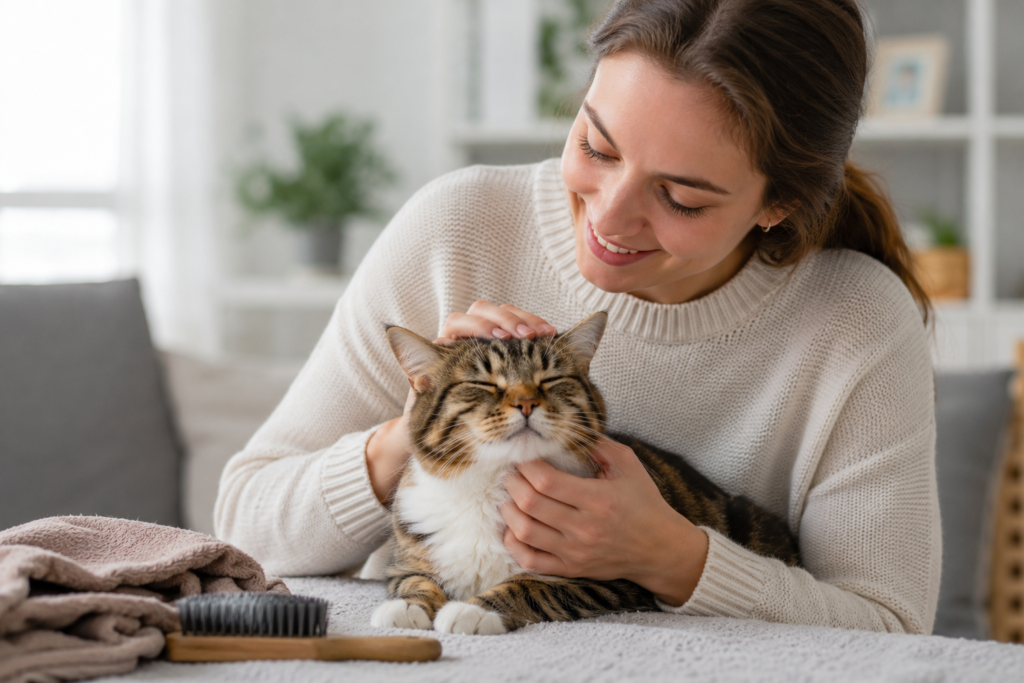
Grooming your own cat, rather than relying solely on a professional, comes with a handful of real advantages:
It’s cheaper. Regular brushing and nail trims cost nothing beyond the initial tools. It builds trust. Your cat learns to associate your hands with calm, positive attention. You catch problems early. Skin issues, parasites, and injuries are often found during a grooming session, not a vet visit. It reduces shedding around the house. A well-brushed cat leaves far less fur on your furniture. It lowers hairball frequency. Less loose fur ingested means fewer hairballs coughed up on your carpet.
That said, home grooming isn’t a full replacement for professional care in every situation. More on that later.
Essential grooming supplies you need
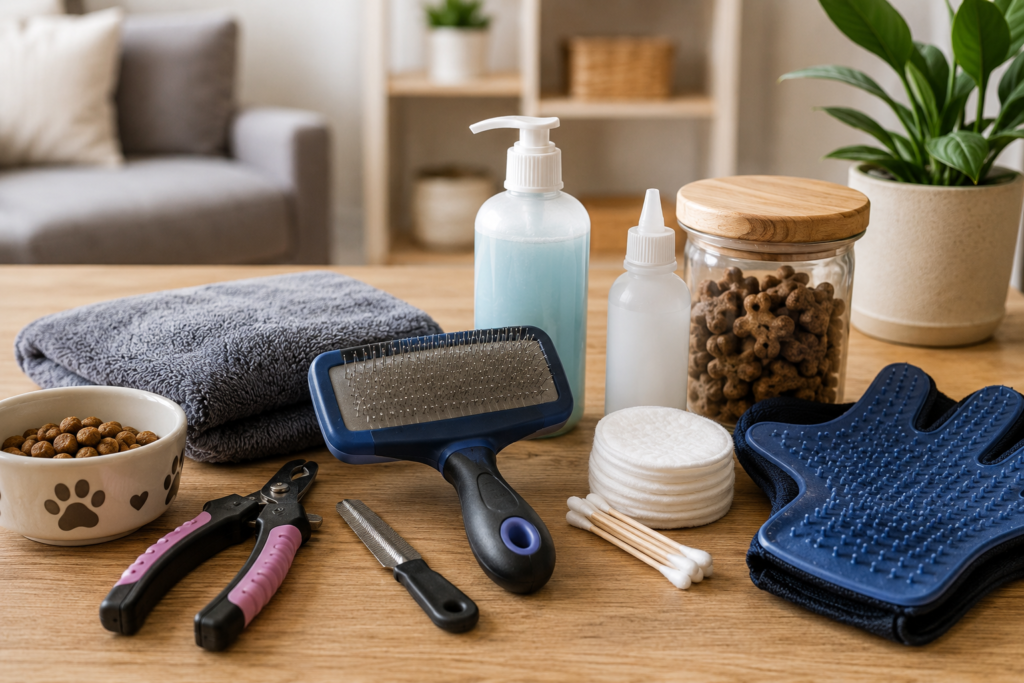
You don’t need a huge kit to get started. A handful of the right tools will cover almost everything.
Cat brush types
Different coats need different brushes. A slicker brush (fine, closely spaced pins) works well for removing loose fur and light tangles on most coats. A deshedding tool, like an undercoat rake, is better for cats that shed heavily, especially during spring and fall. A wide-tooth comb is useful for finishing touches and checking for fleas, since debris gets caught between the teeth.
Cat nail clippers
Look for clippers designed specifically for cats, either the scissor-style or the guillotine-style kind. Human nail clippers can crush rather than cleanly cut a cat’s nail, which is uncomfortable and can cause splitting.
Pet-safe shampoo
Never use human shampoo on a cat (more on why below). A shampoo formulated for cats keeps the coat’s natural pH balanced and won’t strip essential oils from the skin.
Ear cleaner
a cat-specific ear-cleaning solution recommended for routine external cleaning, used with cotton balls or pads, helps remove wax buildup without pushing debris deeper into the ear canal.
Cotton pads
Useful for both ear cleaning and gently wiping away discharge around the eyes.
Treats for positive reinforcement
Small, soft treats turn grooming into something your cat looks forward to rather than tolerates. Keep a few within reach during every session.
Preparing your cat before grooming
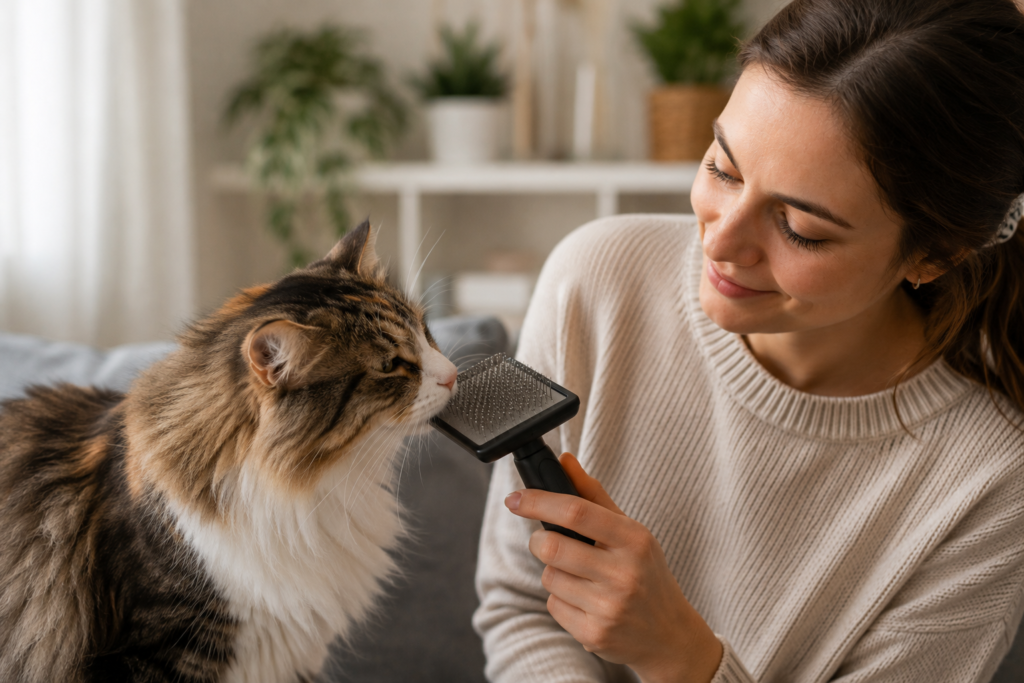
A little preparation goes a long way toward a stress-free session.
Pick a calm time. Right after playtime or a meal, when your cat is naturally more relaxed, tends to work better than grooming a wired, energetic cat.
Keep sessions short at first. Five minutes is plenty for a cat that’s new to grooming. You can extend the time as your cat gets more comfortable.
Let your cat sniff the tools first. A brush or clipper that suddenly appears near their face can be startling. Letting them investigate it beforehand takes away some of the mystery.
Choose a quiet, familiar space. Avoid grooming in a location with loud noises, other pets nearby, or heavy foot traffic.
Have treats ready before you start, not as an afterthought. Reward calm behavior throughout, not just at the very end.
Step-by-step guide to grooming a cat at home
Brushing
Start at the head and work toward the tail, brushing in the direction the fur grows. Use gentle, short strokes rather than long, forceful ones, especially around the belly and legs where the skin is more sensitive. For short-haired cats, two to three sessions a week is usually enough. Long-haired cats generally need daily brushing to prevent mats from forming in the first place.
Removing mats safely
Small mats can often be worked loose with your fingers or a wide-tooth comb, gently teasing the fur apart rather than yanking. For larger or tighter mats, hold the base of the mat close to the skin (this prevents pulling on the skin itself) and carefully work through it with a comb. If a mat is too tight, too close to the skin, or your cat becomes distressed, stop and let a professional groomer or vet handle it. Attempting to cut it out yourself risks nicking the skin, which is thinner than most people realize.
Bathing
Most indoor cats rarely need a full bath. When one is necessary, such as visible dirt, a greasy coat, or a vet’s recommendation, use lukewarm water and a cat-specific shampoo. Wet the coat thoroughly, avoiding the face and ears, lather gently, and rinse completely, since leftover shampoo residue can irritate the skin. A non-slip mat in the sink or tub helps your cat feel more secure and reduces the urge to scramble.
Drying
Pat your cat dry with a towel first to remove excess water. Some cats tolerate a hairdryer on the lowest, coolest setting held well away from the body, but many find the noise stressful. Towel drying in a warm room is often the safer, calmer choice. Keep your cat somewhere warm and draft-free until fully dry.
Cleaning ears
Dampen a cotton pad with a cat-specific ear cleaner and gently wipe the visible, outer part of the ear. Never insert a cotton swab into the ear canal itself, since this can push debris further in or damage the eardrum. If you notice dark discharge, a strong odor, or your cat scratching at their ears frequently, that’s a sign to see a vet rather than continue cleaning at home.
Cleaning eyes
Use a clean, damp cotton pad to gently wipe away any discharge from the corner of the eyes, using a fresh pad for each eye to avoid spreading debris or infection between them.
Trimming nails
Press gently on the paw pad to extend the claw. Trim only the sharp white tip, staying well clear of the pink area inside the nail (called the quick), which contains nerves and blood vessels. If you accidentally cut the quick, it will bleed and be painful for your cat, so keep styptic powder on hand just in case. If your cat’s nails are dark and the quick is hard to see, trim conservatively, taking off only a small amount at a time.
Dental care
Feline-specific toothpaste and a small, soft-bristled brush (or a finger brush) can help reduce plaque buildup. Start slowly, letting your cat get used to the taste and sensation before attempting a full brushing session. Dental chews and cat-specific dental diets can supplement, but not replace, brushing.
How often should you groom your cat?

Coat type and grooming schedule
Short-haired cats: Brush 2 to 3 times per week. Bathe only when needed. Trim nails every 2 to 3 weeks.
Long-haired cats: Brush daily to prevent mats. Bathe every 4 to 6 weeks or as needed. Trim nails every 2 to 3 weeks.
Senior or less mobile cats: Brush 3 to 4 times per week, since they often groom themselves less effectively. Check nails weekly, as claws can grow thicker and curl more with age.
Kittens: Short, gentle sessions 2 to 3 times per week to build positive associations early, using light brushing and minimal handling of paws until they’re comfortable.
Common grooming mistakes to avoid
Using human shampoo or soap, which disrupts a cat’s skin pH and can cause dryness or irritation. Cutting nails too short and hitting the quick, which is painful and can make your cat associate nail trims with fear. Skipping the “let them sniff the tools first” step and diving straight in, which often triggers a startled, defensive reaction. Trying to force a full grooming session in one sitting when your cat is clearly stressed. It’s better to split it across several short sessions. Ignoring mats until they’re severe, at which point they’re harder and more painful to remove. Inserting cotton swabs into the ear canal instead of just wiping the visible outer ear. Grooming right after a stressful event (a vet visit, a car ride, a loud storm), when your cat is already on edge.
Signs you should visit a professional groomer
Some situations are better left to someone trained for them:
Mats that are large, tight, or close to the skin A cat that becomes aggressive or extremely distressed during home grooming attempts Severely overgrown or ingrown nails Signs of skin infection, such as redness, swelling, or an unpleasant odor A first-time full bath for a nervous or unsocialized cat Any grooming task that requires sedation or specialized restraint techniques
There’s no shame in outsourcing the harder parts. A professional groomer has the training and tools to handle situations that would be genuinely risky to attempt at home.
Myth vs. fact
Myth: Cats never need baths because they clean themselves. Fact: Most cats rarely need baths, but there are exceptions. Skin conditions, mobility issues, or getting into something sticky or toxic all call for one.
Myth: Indoor cats don’t need regular grooming. Fact: Indoor cats still shed, form mats, and grow nails that need trimming, regardless of never going outside.
Myth: You can use baby shampoo if you don’t have cat shampoo. Fact: Even baby shampoo isn’t formulated for a cat’s skin pH and can cause irritation over time.
Myth: Longer nails mean better scratching ability. Fact: Overly long nails are more prone to snagging, splitting, and curling into the paw pad, which can cause pain and infection.
Quick tips
Always brush in the direction of hair growth. Keep grooming sessions short and end on a positive note. Reward calm behavior with treats throughout, not just at the end. Check paws and ears weekly, even outside of full grooming sessions. Never use scissors near the face. Use rounded-tip tools only.
Home grooming vs. professional grooming
Home grooming works well for: routine brushing, light bathing, basic nail trims, and ear or eye wiping.
Professional grooming is better for: mat removal on matted or tangled coats, full-service baths for nervous cats, nail trims on aggressive or fearful cats, and specialty coat trims for breeds like Persians or Maine Coons.
Cost consideration: home grooming has essentially no ongoing cost beyond initial tools, while professional grooming typically runs a set fee per visit depending on your area and the services needed.
Bath frequency guide
Healthy short-haired indoor cat: Rarely, only if visibly dirty.
Healthy long-haired indoor cat: Roughly every 4 to 6 weeks.
Cat with a diagnosed skin condition: As directed by your veterinarian.
Senior cat with reduced self-grooming: Every 6 to 8 weeks, or as needed.
Nail trimming schedule
Adult cat, average nail growth: Every 2 to 3 weeks.
Senior cat, thicker or slower-growing nails: Every 2 to 4 weeks, check weekly.
Kitten: Every 1 to 2 weeks, using very light trims.
Grooming checklist
Brush selected for your cat’s coat type Cat-specific nail clippers Styptic powder on hand Pet-safe shampoo (if bathing) Cat-specific ear cleaner and cotton pads Soft towel for drying Treats for positive reinforcement Quiet, calm space set up in advance
Frequently asked questions
How do you groom a cat that hates being groomed? Start with very short sessions, sometimes just thirty seconds of brushing, and stop before your cat becomes stressed. Pair every session with treats, and gradually build up duration over days or weeks. If your cat remains consistently distressed, a professional groomer experienced with anxious cats can help, and your vet can advise on options for particularly difficult cases.
Should indoor cats be bathed? Most indoor cats don’t need regular baths since self-grooming keeps them clean. Bathing becomes necessary if your cat gets into something sticky or dirty, has a skin condition your vet is treating, or has reduced mobility that limits their ability to self-groom.
Can I use human shampoo on my cat? No. Human shampoo is formulated for human skin pH, which is different from a cat’s. Using it can strip natural oils and cause dryness or irritation. Always use a shampoo made specifically for cats.
How often should cats have their nails trimmed? Most adult cats need a nail trim every two to three weeks. Kittens and senior cats may need more frequent checks, since their nails can grow differently or become harder to manage as they age.
Is professional grooming necessary? Not for every cat, but it becomes valuable for severe mats, nervous or aggressive cats, specialty coat trims, or any task that feels beyond what you can safely handle at home.
Do cats need their teeth brushed? Dental care helps reduce plaque and tartar buildup, and many vets recommend it as part of a full grooming routine, especially since dental disease is common in cats as they age. Ask your vet about the best approach for your cat specifically.
What’s the best age to start grooming a kitten? You can start gentle handling and short brushing sessions as early as a few weeks old, once a kitten is comfortable being touched. Early, positive exposure makes grooming far easier throughout their life.
Why does my cat groom itself so much but still need help? Self-grooming keeps the surface of the coat tidy, but cats can’t reach every angle, break up mats once they’ve tightened, or trim their own nails. That’s where you come in.
Final thoughts
Grooming a cat at home doesn’t need to be complicated once you have the right tools and a bit of patience. Keep sessions short, stay consistent, and pay attention to how your cat responds. Every cat has a different comfort level, and that’s completely normal.
Regular grooming isn’t just about appearances. It’s one of the simplest ways to catch small health issues before they become bigger ones, and it strengthens the bond between you and your cat along the way. If something ever feels beyond what you can safely manage, whether that’s a stubborn mat, a distressed cat, or a nail trim gone wrong, there’s no harm in reaching out to a professional groomer or your veterinarian. Responsible grooming means knowing your own limits just as much as knowing the steps.
(visit: https://petnestcorner.com/)



0 Comments