Can Dogs Eat Blueberries? Complete Safety Guide

Can Dogs Eat Blueberries?
If you’ve ever dropped a blueberry on the kitchen floor and watched your dog snap it up before you could react, you’ve probably wondered: is this actually okay? Yes, dogs can eat blueberries. They’re one of the safest, most nutrient-packed fruits you can share with your dog, as long as you feed them in moderation and prepare them the right way. Blueberries are low in calories, high in fiber, and loaded with antioxidants that support your dog’s brain health, immune system, and vision.
In this guide, we’ll walk through everything a pet parent needs to know – nutritional value, health benefits, possible risks, safe serving sizes by dog size, puppy safety, frozen and dried blueberries, blueberry-flavored treats like muffins and yogurt, warning signs of overfeeding, and a full comparison of fruits that are safe (and unsafe) for dogs. By the end, you’ll know exactly how to turn blueberries into a healthy treat for your best friend.
Table of Contents
- Can Dogs Eat Blueberries?
- Are Blueberries Safe for Dogs?
- Nutritional Value of Blueberries
- Health Benefits of Blueberries for Dogs
- Possible Risks of Feeding Blueberries
- How Many Blueberries Can Dogs Eat?
- Can Puppies Eat Blueberries?
- Can Dogs Eat Frozen Blueberries?
- Can Dogs Eat Dried Blueberries?
- Can Dogs Eat Blueberry Yogurt?
- Can Dogs Eat Blueberry Muffins?
- Can Dogs Eat Blueberry Jam?
- How to Feed Blueberries to Dogs
- Signs Your Dog Ate Too Many Blueberries
- When Should You Call a Veterinarian?
- Best Fruits Dogs Can Eat
- Fruits Dogs Should Never Eat
- Frequently Asked Questions
- Final Verdict
Can Dogs Eat Blueberries?
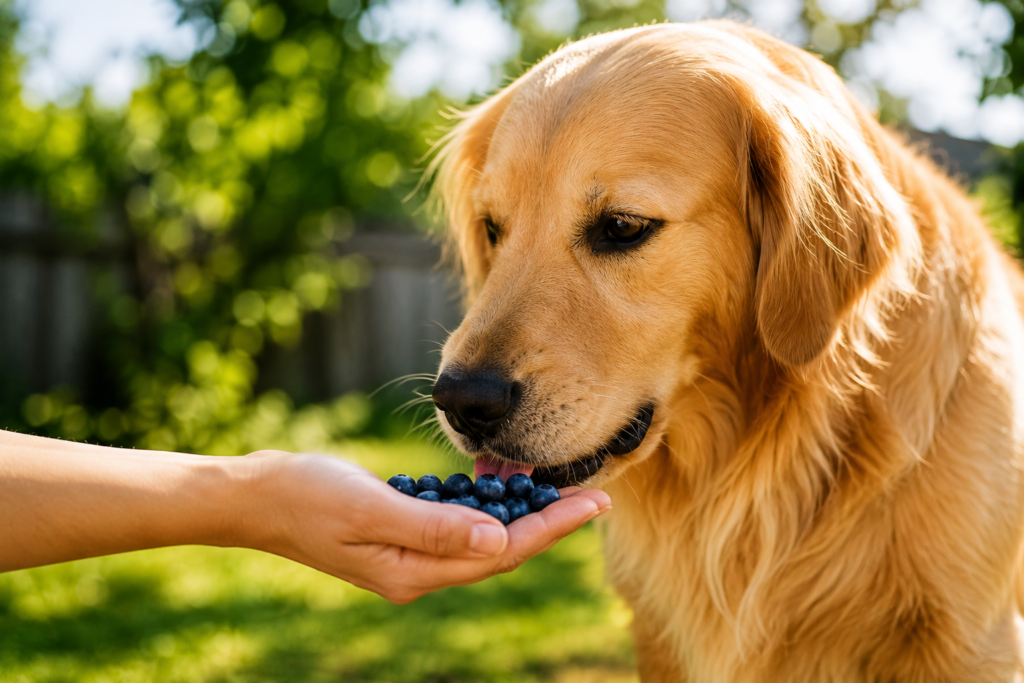
Blueberries are considered a “superfood” for dogs, just like they are for humans. Veterinary nutritionists frequently list them among the top fruit options for canine snacking because they’re small, easy to portion, and gentle on digestion when given in appropriate amounts. Unlike grapes or raisins, which are toxic to dogs even in small quantities, blueberries carry no known toxic compounds and are widely recognized as a safe, low-calorie treat option.
That said, “safe” doesn’t mean “unlimited.” Even healthy foods can cause digestive upset if a dog eats too many at once, especially a smaller breed. The key is moderation, proper portioning based on your dog’s size, and introducing them slowly the first time to watch for any sensitivity.
Are Blueberries Safe for Dogs?
Yes — blueberries are generally recognized as safe by veterinary organizations and pet nutrition experts. They contain no seeds, pits, or cores that could pose a choking hazard, which sets them apart from fruits like peaches or cherries. Their soft texture also makes them easy for dogs of nearly any age to chew, including seniors with dental sensitivity.
A few safety notes worth remembering:
- Always wash blueberries thoroughly before feeding, since pesticide residue can linger on the skin.
- Introduce them gradually — start with one or two berries to see how your dog’s stomach reacts.
- Avoid blueberry products that contain added sugar, xylitol, or artificial sweeteners, which can be dangerous even when the fruit itself is fine.
- Dogs with a history of pancreatitis or sensitive stomachs should get a smaller portion, or a vet’s go-ahead first.
Nutritional Value of Blueberries
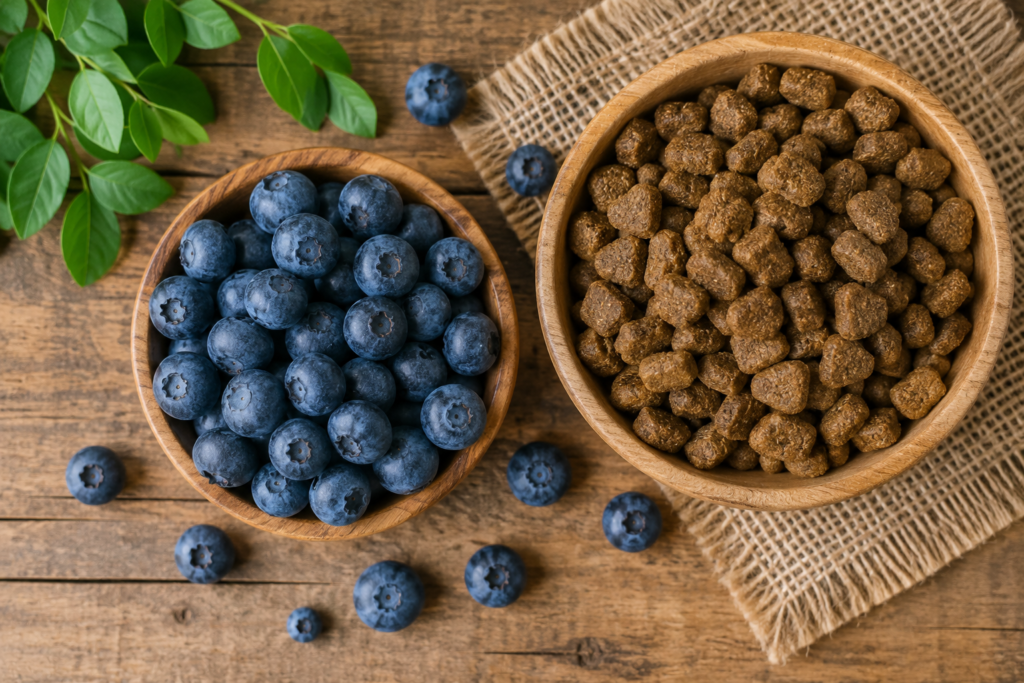
Blueberries are nutrient-dense without being calorie-dense, which is exactly why they make such a good training treat or snack replacement. Here’s a general nutritional snapshot per 100 grams of fresh blueberries:
| Nutrient | Amount (per 100g) | Why It Matters for Dogs |
|---|---|---|
| Calories | ~57 kcal | Low-calorie, treat-friendly |
| Fiber | ~2.4g | Supports digestion and gut health |
| Vitamin C | ~9.7mg | Supports immune function |
| Vitamin K | ~19.3mcg | Supports healthy blood clotting |
| Manganese | ~0.34mg | Supports bone and joint health |
| Water content | ~84% | Helps with hydration |
| Sugar | ~10g | Natural sugar; feed in moderation |
| Antioxidants (anthocyanins) | High | Fights free radical/cell damage |
Because blueberries are mostly water and fiber, they’re a smart substitute for calorie-dense commercial treats, especially for dogs who are managing their weight.
Health Benefits of Blueberries for Dogs
Beyond being a tasty snack, blueberries offer several real, research-supported benefits for dogs:
1. Rich in Antioxidants Blueberries are one of the highest antioxidant fruits available. Antioxidants like anthocyanins help neutralize free radicals in your dog’s body, which may reduce cellular damage linked to aging and chronic disease.
2. Supports Brain Health Some studies on aging dogs suggest antioxidant-rich diets may help slow age-related cognitive decline, supporting memory and mental sharpness in senior dogs.
3. Boosts Immune Function The vitamin C content, while not essential for dogs the way it is for humans (dogs produce their own), still contributes a helpful antioxidant boost that supports overall immune resilience.
4. Promotes Healthy Digestion The fiber in blueberries supports regular bowel movements and feeds beneficial gut bacteria, which plays a role in overall digestive wellness.
5. Supports Healthy Vision Blueberries contain compounds that have been associated with eye health, which can be especially helpful for aging dogs.
6. Low-Calorie Weight Management Tool Swapping high-fat commercial treats for a handful of blueberries can help dogs on a weight-loss or weight-maintenance plan stay satisfied without excess calories.
7. Supports Skin and Coat Health The combination of antioxidants and hydration can contribute to a healthier-looking coat over time when blueberries are part of a balanced diet.
Possible Risks of Feeding Blueberries

Even a safe fruit has limits. Here’s what to watch for:
- Digestive upset: Eating too many at once can cause loose stool, gas, or an upset stomach due to the fiber and natural sugar content.
- Choking hazard for tiny dogs: While rare, very small or toy breeds should have blueberries mashed or cut in half.
- Blood sugar concerns: Dogs with diabetes should only eat blueberries under veterinary guidance, since they do contain natural sugars.
- Allergic reactions: Uncommon, but possible. Watch for itching, swelling, or vomiting after the first serving.
- Added ingredients: The danger usually isn’t the blueberry itself — it’s pairing it with sugar, chocolate, or xylitol in muffins, yogurt, or jam (more on this below).
Pro Tip: Moderation is the golden rule. Blueberries should never make up more than 10% of your dog’s daily caloric intake, a general guideline recommended for treats of any kind.
How Many Blueberries Can Dogs Eat?
Portion size depends heavily on your dog’s weight. A large breed can safely handle far more blueberries than a toy breed. Use this table as a general starting guideline, and adjust based on your individual dog’s tolerance.
| Dog Size | Approx. Weight | Safe Daily Amount |
|---|---|---|
| Extra Small (Toy) | Up to 10 lbs | 2–3 blueberries |
| Small | 11–25 lbs | 4–6 blueberries |
| Medium | 26–50 lbs | 7–10 blueberries |
| Large | 51–90 lbs | 10–15 blueberries |
| Extra Large | 90+ lbs | 15–20 blueberries |
Quick Tip: Start on the lower end of the range, especially the first time, and increase gradually once you’re sure your dog tolerates them well.
Can Puppies Eat Blueberries?

Yes, puppies can eat blueberries once they’re eating solid food, typically around 8 weeks and older. Because puppies have smaller stomachs and more sensitive digestive systems, portions should be very small — think one blueberry cut into pieces for tiny breeds, or two to three small whole berries for larger puppy breeds.
Blueberries can actually be a great low-calorie training treat for puppies since they’re naturally soft, easy to chew, and low in the kind of fat that can upset a young digestive system. As always, introduce them one at a time and watch for any reaction before making them a regular snack.
Can Dogs Eat Frozen Blueberries?
Yes, frozen blueberries are perfectly safe for most dogs and are actually a favorite warm-weather treat. The cold, chewy texture can be soothing for teething puppies and refreshing for dogs in hot climates.
A few tips for frozen blueberries:
- Thaw slightly or mash them for small dogs and puppies to reduce hardness.
- Avoid giving a large handful of frozen berries at once, since the cold temperature combined with quantity can cause stomach discomfort.
- Frozen blueberries make an excellent stuffing for puzzle toys or lick mats.
Can Dogs Eat Dried Blueberries?
Dried blueberries can be given in small amounts, but there’s an important catch: dried fruit is more concentrated in sugar per bite than fresh fruit, since the water content has been removed. This means dried blueberries should be treated as an occasional, small treat rather than a regular snack.
Also double-check the label. Many store-bought dried blueberries are coated in added sugar or oil to prevent clumping — these versions should be avoided. Look for 100% pure, unsweetened dried blueberries if you choose to offer this option.
Can Dogs Eat Blueberry Yogurt?
Plain, unsweetened yogurt mixed with a few fresh blueberries can be a healthy treat in small amounts, especially for dogs that tolerate dairy well. However, flavored blueberry yogurt sold for human consumption often contains added sugar and, in some cases, xylitol — an artificial sweetener that is highly toxic to dogs even in tiny amounts.
Warning Box: Always check the ingredient label before sharing any yogurt product. If it lists xylitol, birch sugar, or “sugar alcohol,” do not feed it to your dog under any circumstances.
If you want to make a dog-safe version at home, mix a spoonful of plain, unsweetened yogurt with a few mashed fresh blueberries — no added sugar needed.
Can Dogs Eat Blueberry Muffins?
Store-bought or homemade blueberry muffins are not a recommended treat for dogs. While the blueberries themselves are safe, muffins typically contain:
- High amounts of refined sugar
- Butter or oil (high fat, which can contribute to pancreatitis)
- Possible chocolate chips or nuts in some recipes
- Occasionally xylitol in “sugar-free” versions
A small nibble of a plain, homemade muffin without added sugar likely won’t harm a healthy adult dog, but it’s not something to make a habit of. If you want to bake a dog-friendly version, look for recipes using whole wheat flour, mashed banana or applesauce instead of sugar, and no butter.
Can Dogs Eat Blueberry Jam?
No, blueberry jam should be avoided. Jam is essentially fruit cooked down with a large amount of added sugar, and sometimes pectin or preservatives. The sugar concentration is far too high for regular feeding, and some low-sugar or “diet” jams may contain xylitol, which is toxic to dogs. If you want the flavor of blueberries without the risk, stick to plain, fresh, or frozen berries instead.
How to Feed Blueberries to Dogs
Follow these steps to safely introduce blueberries into your dog’s diet:
- Wash thoroughly. Rinse fresh blueberries under running water to remove dirt and pesticide residue.
- Start small. Offer one or two berries the first time to check for any allergic reaction or digestive sensitivity.
- Cut or mash for small dogs and puppies. This reduces choking risk and makes digestion easier.
- Serve plain. Avoid sugar, syrup, chocolate, or seasoning of any kind.
- Use as a training reward. Their small size makes them ideal for repeated training sessions.
- Mix into meals. Add a few mashed berries to your dog’s regular food for an antioxidant boost.
- Freeze for hot days. Frozen berries make a refreshing summer treat (thawed slightly for small dogs).
- Watch portions. Stick to the size-based guidelines above and avoid daily overfeeding.
Signs Your Dog Ate Too Many Blueberries
If your dog gets into a larger stash of blueberries than intended, keep an eye out for:
- Loose stool or diarrhea
- Vomiting
- Excessive gas or bloating
- Lethargy or unusual tiredness
- Reduced appetite at the next meal
In most cases, mild digestive upset from overeating blueberries resolves on its own within 24 hours. Offer plenty of fresh water and monitor your dog closely.
When Should You Call a Veterinarian?

While blueberries themselves are low-risk, you should contact your veterinarian if your dog shows any of the following:
- Vomiting or diarrhea that lasts more than 24 hours
- Blood in the stool or vomit
- Signs of an allergic reaction, such as facial swelling, hives, or difficulty breathing
- Extreme lethargy or collapse
- Known ingestion of a blueberry product containing xylitol, chocolate, or large amounts of sugar
When in doubt, it’s always safer to call your vet or an animal poison control hotline than to wait and see.
Best Fruits Dogs Can Eat
Blueberries aren’t the only fruit dogs can safely enjoy. Here’s a quick comparison of other dog-safe fruits:
| Fruit | Safe? | Key Benefit | Feeding Note |
|---|---|---|---|
| Blueberries | Yes | High in antioxidants | Feed whole or mashed |
| Apples (no seeds/core) | Yes | High in fiber and vitamin C | Remove seeds; they contain trace cyanide compounds |
| Bananas | Yes (in moderation) | High in potassium | High in sugar; feed sparingly |
| Watermelon (no seeds/rind) | Yes | Hydrating, low calorie | Remove seeds and rind |
| Strawberries | Yes | Vitamin C and fiber | Remove leafy tops |
| Pineapple | Yes (in moderation) | Contains digestive enzymes | High in sugar; small amounts only |
| Mango (no pit) | Yes (in moderation) | Vitamins A, C, E | Remove pit and skin |
| Pears (no seeds/core) | Yes | Fiber and vitamin C | Remove core and seeds |
Fruits Dogs Should Never Eat
Some fruits are genuinely dangerous and should never be offered, regardless of quantity:
| Fruit | Danger Level | Why It’s Dangerous |
|---|---|---|
| Grapes / Raisins | Severe | Linked to sudden kidney failure, even in small amounts |
| Cherries (pits/stems) | High | Pits contain cyanide compounds; choking hazard |
| Avocado | Moderate | Contains persin, which can cause vomiting and diarrhea |
| Wild/Unknown Berries | High | Some wild berries are toxic and hard to identify |
| Citrus (large amounts) | Mild-Moderate | Citric acid can cause stomach upset |
| Green/Unripe Tomatoes | Moderate | Contains solanine, which is toxic to dogs |
Warning: If your dog eats grapes, raisins, or any fruit from the “never eat” list, contact your veterinarian or a pet poison control hotline immediately, even if your dog seems fine at first.
Frequently Asked Questions
1. Can dogs eat blueberries every day? Yes, in small, appropriate portions based on their size, blueberries can be a daily treat. Just make sure they stay within the 10% treat-calorie guideline and don’t replace balanced meals.
2. Are blueberries safe for senior dogs? Yes, blueberries are especially beneficial for senior dogs thanks to their antioxidant content, which may support aging brains and joints. Mash them if your senior dog has dental issues.
3. Can diabetic dogs eat blueberries? Blueberries contain natural sugar, so diabetic dogs should only eat them in very small amounts and only with veterinary approval, since blood sugar management is delicate.
4. Do blueberries help with a dog’s bad breath? Blueberries aren’t a breath freshener on their own, but their fiber and antioxidant content support overall digestive and immune health, which can indirectly support oral wellness.
5. Can dogs be allergic to blueberries? It’s rare, but possible. Watch for itching, hives, swelling, or vomiting after the first time you offer blueberries, and stop feeding them if any reaction occurs.
6. Are organic blueberries better for dogs? Organic blueberries may reduce pesticide exposure, but conventional blueberries are still safe as long as they’re washed thoroughly before feeding.
7. Can dogs eat blueberry seeds? Yes, blueberry seeds are tiny and completely safe for dogs to eat — they pass through digestion without issue, unlike larger fruit pits.
8. How should I store blueberries for my dog? Store fresh blueberries in the refrigerator for up to two weeks, or freeze them in a sealed bag for several months. Wash them right before feeding, not before storing.
9. Can dogs eat blueberry-flavored dog treats? Yes, most commercial blueberry-flavored dog treats are formulated specifically for canine safety, but always check the ingredient list for quality and appropriate portion sizes.
10. What’s the best way to introduce blueberries to a picky eater? Try freezing a few berries for a fun, crunchy texture, or mash fresh berries into their regular food so the taste and smell become familiar over time.
Final Verdict
Blueberries are one of the best fruit treats you can offer your dog. They’re low in calories, rich in antioxidants and fiber, and gentle enough for puppies, adults, and seniors alike, as long as portions are kept appropriate for your dog’s size. The real risks come not from the blueberries themselves, but from sugary, processed blueberry products like muffins, jam, and flavored yogurt. Stick to fresh, frozen, or plain dried blueberries in moderation, and you’ve got a genuinely healthy snack your dog will love.
Thank you for taking the time to learn how to feed your dog safely and thoughtfully — that’s what responsible pet ownership is all about. For more trustworthy, easy-to-follow pet care guides, keep exploring Petnest Corner, your go-to resource for happy, healthy pets. You might also want to check out our guides on can dogs eat mango and best dog food for sensitive stomachs. Here’s to many blueberry-filled tail wags ahead!



0 Comments