How to Brush Your Dog’s Teeth: A Complete Step-by-Step Guide
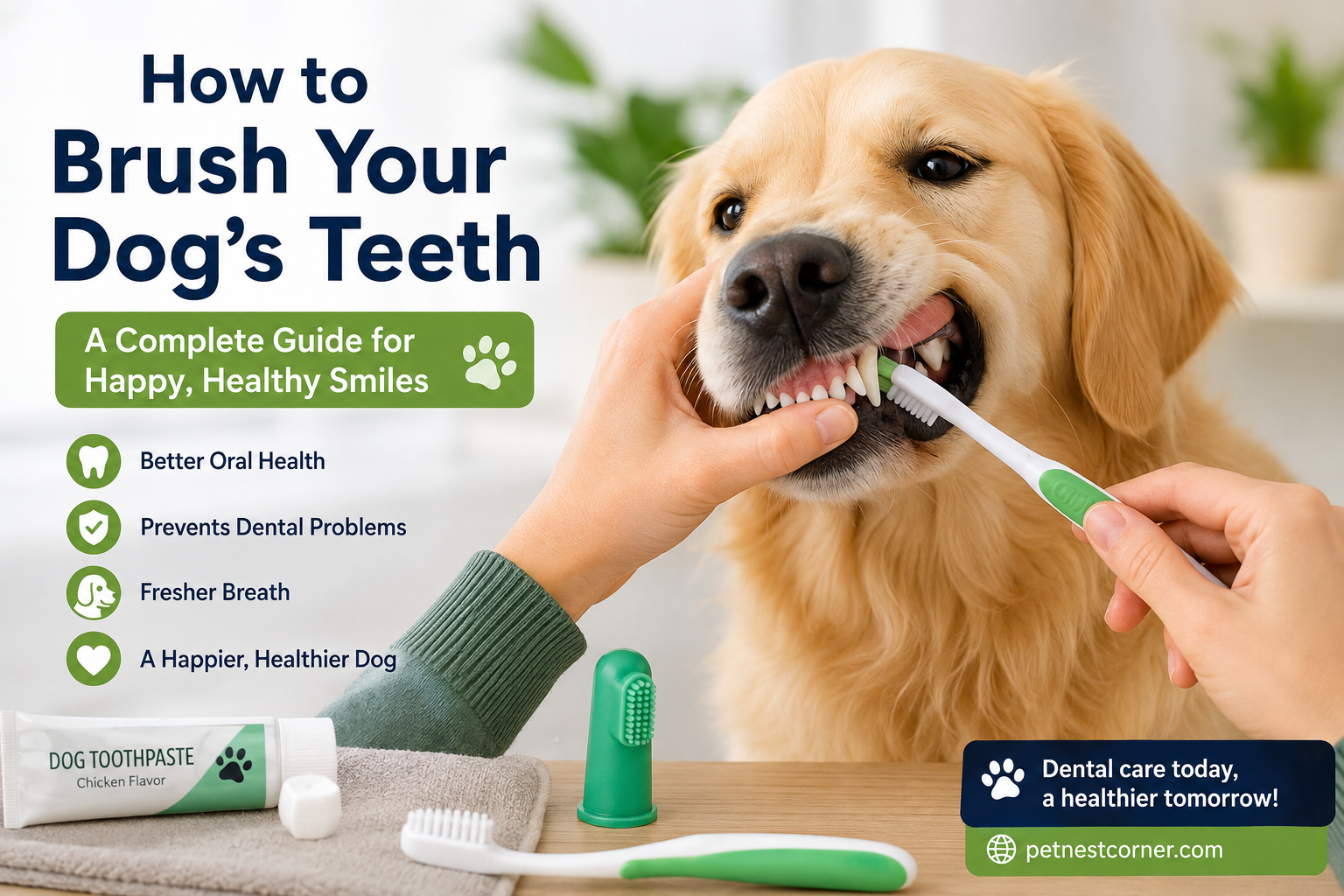
How to Brush Your Dog’s Teeth

If you’ve ever caught a whiff of your dog’s breath and wondered, “Is that normal?” — you’re not alone. Bad breath is often the first sign of a much bigger issue hiding in your dog’s mouth: dental disease. And here’s something that surprises a lot of new pet parents — most dogs over the age of three already show some sign of it.
The good news? Brushing your dog’s teeth regularly is one of the simplest, most affordable ways to prevent painful dental problems down the road. It doesn’t require special training or expensive equipment, just the right technique, a little patience, and consistency.
In this guide, we’ll walk you through everything you need to know: why dental care matters, what tools to use, a simple step-by-step brushing method, and how to handle a dog who isn’t exactly thrilled about the toothbrush. Whether you have a wiggly puppy or a senior dog set in their ways, you’ll find practical, vet-informed advice here at Petnest Corner to help you build a dental care routine that actually sticks.
Why Dog Dental Care Matters
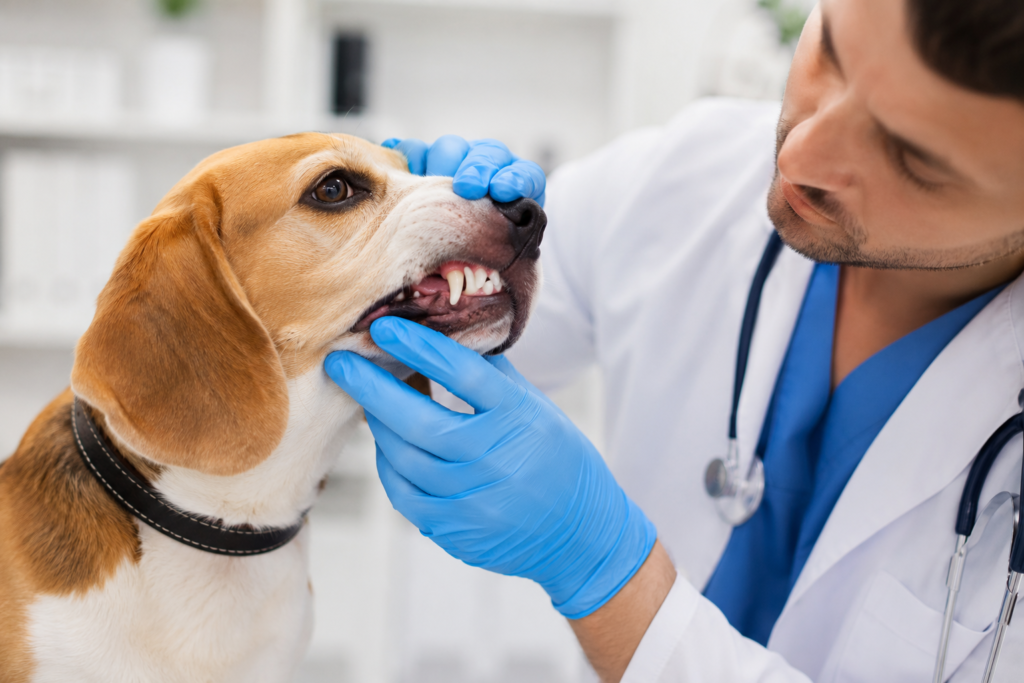
Dental health affects a lot more than fresh breath. Dogs can develop plaque within hours of eating, and if that plaque isn’t removed, it hardens into tartar within just a few days. Left untreated, this buildup can lead to gum inflammation, tooth loss, and infections that may even affect the heart, liver, or kidneys.
Veterinary organizations like the American Veterinary Medical Association (AVMA) note that dental disease is one of the most common health conditions seen in dogs, yet it’s also one of the most preventable. A consistent brushing routine, paired with regular veterinary checkups, goes a long way toward keeping your dog comfortable and healthy for years to come.
Pro Tip: Think of brushing your dog’s teeth the same way you think of brushing your own — it’s not just about a nice smile, it’s about preventing pain and disease before they start.
Benefits of Brushing Your Dog’s Teeth

Regular brushing offers benefits that go well beyond fresher breath:
- Prevents plaque and tartar buildup, reducing the risk of gum disease
- Lowers the risk of tooth loss as your dog ages
- Reduces bacteria that can enter the bloodstream and affect organs
- Saves money by reducing the need for costly professional cleanings under anesthesia
- Improves quality of life — dental pain often goes unnoticed until it’s severe
- Strengthens your bond with your dog through gentle, positive handling
Signs Your Dog Needs Dental Care
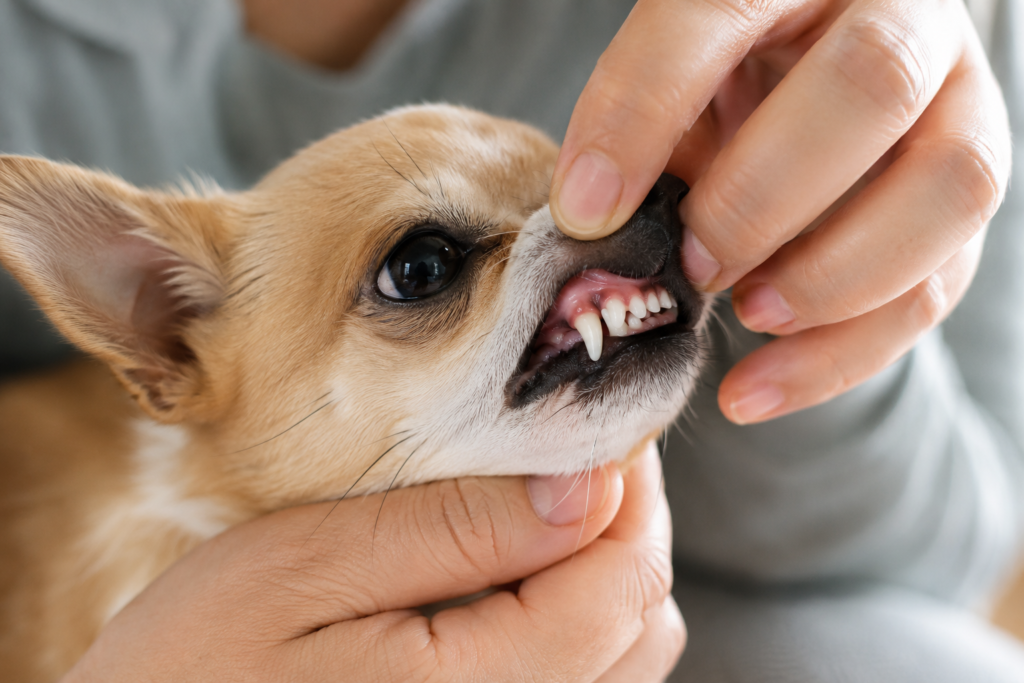
Not sure if your dog’s mouth needs attention? Watch for these common warning signs:
- Persistent bad breath (not just “dog breath”)
- Yellow or brown buildup on the teeth
- Red, swollen, or bleeding gums
- Dropping food while eating or chewing on one side
- Pawing at the mouth or face
- Loose or missing teeth
- Reduced interest in chew toys or hard food
If you notice several of these signs at once, it’s worth scheduling a veterinary dental exam rather than waiting for the next routine visit.
Warning Box: Bleeding gums, visible loose teeth, or a swollen face are not “wait and see” symptoms. These warrant a prompt call to your veterinarian.
How Often Should You Brush Your Dog’s Teeth?
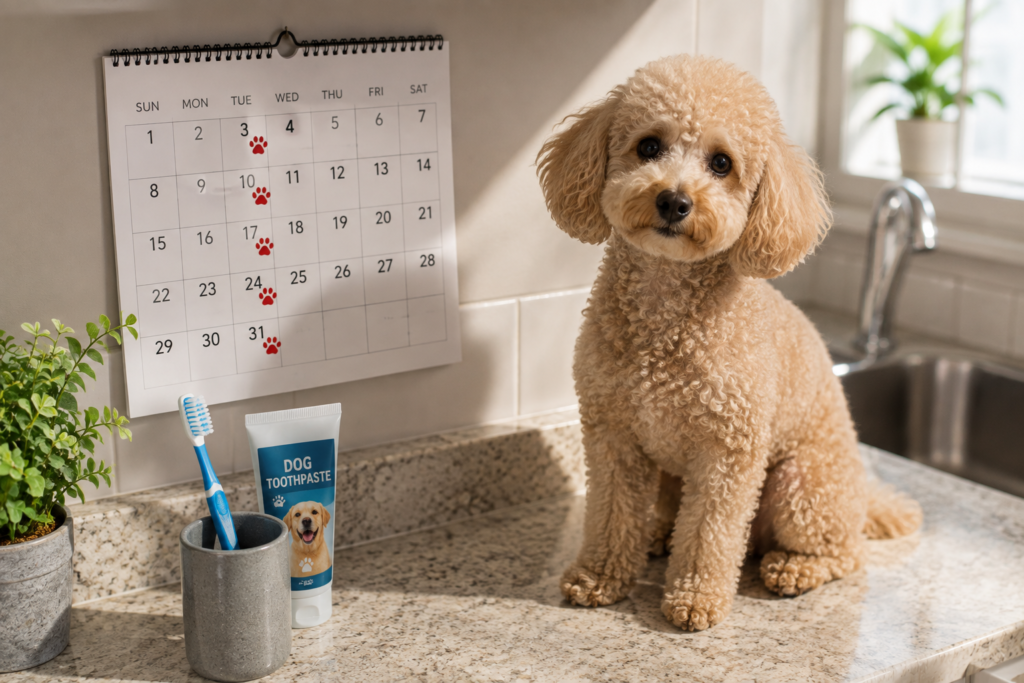
For the best results, veterinary dental experts recommend brushing your dog’s teeth daily. That might sound like a lot, but daily brushing prevents plaque from ever hardening into tartar.
That said, consistency matters more than perfection. If daily brushing isn’t realistic for your household, aim for at least three to four times per week — this still makes a meaningful difference compared to occasional or no brushing at all.
| Brushing Frequency | Effectiveness |
|---|---|
| Daily | Best — prevents plaque before it hardens |
| 3–4 times per week | Good — still significantly reduces tartar |
| Once a week | Minimal benefit — plaque may already harden |
| Rarely/Never | High risk of dental disease |
What You’ll Need Before Brushing
Before you get started, gather these essentials:
- A dog-specific toothbrush (or finger brush)
- Dog-safe enzymatic toothpaste
- A soft towel or mat for comfort
- Treats for positive reinforcement
- Patience and a calm environment
Important Note: Never use human toothpaste on your dog. Many contain xylitol, a sweetener that is toxic to dogs, along with fluoride levels that aren’t safe for them to swallow.
Choosing the Right Toothbrush
There isn’t a single “best” toothbrush for every dog — it depends on your dog’s size, temperament, and comfort level.
Options include:
- Finger brushes: Great for beginners, puppies, or small dogs. They give you more control and let your dog get used to the sensation of brushing.
- Long-handled dog toothbrushes: Better for larger dogs or reaching back molars.
- Dual-headed brushes: Offer two brush sizes on one handle for different areas of the mouth.
- Soft-bristled brushes: Always choose soft bristles to avoid irritating the gums.
Checklist for choosing a toothbrush:
- ✔ Soft bristles
- ✔ Comfortable handle grip
- ✔ Sized appropriately for your dog’s mouth
- ✔ Easy to clean and replace every 3 months
Choosing Dog-Safe Toothpaste
Dog toothpaste comes in flavors like poultry, peanut butter, and beef — designed to make brushing more enjoyable for your dog. Unlike human toothpaste, these are safe to swallow since dogs can’t spit and rinse.
Look for enzymatic toothpaste, which helps break down plaque using natural enzymes rather than abrasive scrubbing alone. The World Small Animal Veterinary Association (WSAVA) has highlighted enzymatic formulas as an effective part of a home dental care routine.
Pro Tip: Let your dog sniff and taste a small dab of toothpaste before your first brushing session. This turns toothpaste into a treat rather than a warning sign.
Step-by-Step Guide to Brushing Your Dog’s Teeth
Here’s a simple, beginner-friendly method to follow:
- Get your dog comfortable first. Sit with your dog in a calm, quiet space. Gently touch their muzzle and lips for a few days before introducing the brush if they’re new to this.
- Let them taste the toothpaste. Apply a small amount to your finger and let your dog lick it off.
- Lift the lip gently. Use one hand to lift the lip on one side of the mouth.
- Brush in small circles. Focus on the outer surfaces of the teeth, especially along the gumline, using gentle circular motions.
- Work in sections. Start with the front teeth, then move to the back molars, doing one side at a time.
- Keep sessions short. Aim for 30–60 seconds per session when starting out, gradually increasing to a full 2-minute brush.
- Praise and reward. End every session with praise, a treat, or a favorite toy so your dog associates brushing with something positive.
Important Note: You don’t need to brush the inside surfaces of the teeth extensively — a dog’s tongue naturally helps keep those areas cleaner than the outer surfaces.
Common Mistakes to Avoid
- Going too fast. Rushing the process can make your dog anxious about future sessions.
- Skipping the introduction phase. Jumping straight to brushing without letting your dog get used to handling first.
- Using human toothpaste. This can be toxic and is never worth the risk.
- Brushing too hard. Aggressive scrubbing can hurt gums and cause bleeding.
- Inconsistent scheduling. Sporadic brushing won’t prevent tartar buildup effectively.
- Giving up after one bad session. Like any new habit, it often takes several tries before your dog is fully comfortable.
Tips for Nervous Dogs
Some dogs need extra time and encouragement. If your dog is anxious about brushing, try these approaches:
- Go slow. Spend a week just touching their mouth and lips with your fingers before introducing a brush.
- Use high-value treats. Save a special treat only for brushing time.
- Try a different tool. A finger brush or a soft washcloth wrapped around your finger can feel less intimidating than a hard-handled brush.
- Pick calm moments. Avoid brushing right after exercise or excitement — choose a quiet, relaxed time of day.
- Stop before frustration builds. Ending on a positive note, even after just a few seconds of brushing, is better than pushing through resistance.
Warning Box: Never force or restrain a dog who is showing signs of fear or aggression during brushing. If your dog growls, snaps, or shows consistent distress, consult your veterinarian or a professional trainer for guidance.
Alternatives to Tooth Brushing
Brushing is the gold standard, but it isn’t the only tool in your dental care kit. These can complement — not replace — brushing:
Dental Chews
Dental chews are designed with a texture that helps scrape away plaque as your dog chews. Look for products with the Veterinary Oral Health Council (VOHC) seal of acceptance for proven effectiveness.
Dental Toys
Textured rubber toys can help reduce plaque through natural chewing behavior, while also keeping your dog mentally engaged.
Water Additives
These are liquid solutions added to your dog’s water bowl that help reduce bacteria and freshen breath. They’re a low-effort option but shouldn’t be relied on as a sole dental care method.
Professional Dental Cleaning
Even with excellent home care, dogs still benefit from periodic professional cleanings performed under anesthesia by a veterinarian. This allows for cleaning below the gumline, where a toothbrush can’t reach, and lets your vet check for hidden issues like fractured teeth or early decay.
| Method | Effectiveness | Best Used As |
|---|---|---|
| Daily Brushing | High | Primary method |
| Dental Chews | Moderate | Supplement |
| Dental Toys | Moderate | Supplement |
| Water Additives | Low–Moderate | Supplement |
| Professional Cleaning | Very High | Periodic deep clean |
Best Time to Brush
Choose a time when your dog is naturally calm — after a walk once they’ve settled, or as part of a bedtime routine. Consistency helps your dog anticipate and accept the process as a normal part of the day, rather than something unpredictable.
Puppy Teeth Care
Starting early makes a huge difference. Puppies typically begin losing their baby teeth around 3–4 months old, with adult teeth fully in by about 6 months.
- Begin gently handling your puppy’s mouth as early as 8 weeks old.
- Use a very soft finger brush and puppy-safe toothpaste.
- Keep sessions extremely short — even 10–15 seconds is a great start.
- Make brushing part of playtime so it feels normal, not scary.
Starting these habits young helps puppies grow into adult dogs who tolerate — and even enjoy — regular dental care.
Senior Dog Dental Care
Older dogs often have more sensitive gums, existing dental issues, or missing teeth, so their care may need adjusting.
- Use an extra-soft brush or finger brush to avoid irritating sensitive gums.
- Watch for signs of pain during brushing, such as flinching or pulling away.
- Schedule more frequent veterinary dental checkups, as senior dogs are at higher risk for periodontal disease.
- Be patient — some senior dogs may need a gentler, slower approach than they did when younger.
Frequently Asked Questions
1. How do I brush my dog’s teeth if they hate it? Start slowly by simply touching your dog’s mouth and lips for a few days before introducing a brush. Use a flavored toothpaste as a reward, keep early sessions under a minute, and always end on a positive note with praise or a treat. Gradual, positive exposure works far better than forcing the process.
2. Can I use a washcloth instead of a toothbrush? Yes, a clean, damp washcloth wrapped around your finger can be an effective alternative, especially for dogs who are nervous about a brush. Gently rub it along the teeth and gumline in circular motions. It won’t reach as effectively into small gaps, but it’s a great starting tool.
3. Is it too late to start brushing my older dog’s teeth? It’s never too late to start, though older dogs may need a gentler approach and a veterinary checkup first to rule out existing dental disease. Introduce brushing slowly and watch for signs of discomfort, adjusting your technique as needed.
4. How long should a brushing session take? Aim for about two minutes total once your dog is comfortable, covering both sides of the mouth. Beginners can start with just 30–60 seconds and build up gradually as their dog becomes more relaxed with the process.
5. What if my dog’s gums bleed a little while brushing? Slight bleeding can happen if gums are inflamed, especially during the first few brushings. If it continues after a few sessions or seems excessive, stop and consult your veterinarian, as it may indicate gum disease that needs professional attention.
6. Do small dogs need more dental care than large dogs? Small breeds are often more prone to dental disease due to overcrowded teeth in a smaller jaw. This makes consistent brushing and regular veterinary checkups especially important for small dog owners.
7. Are dental chews a replacement for brushing? No, dental chews are best used as a supplement rather than a replacement. Brushing removes plaque directly from all tooth surfaces, while chews primarily help with chewing surfaces and can’t replicate the thoroughness of brushing.
8. How do I know if my dog has bad breath from dental disease versus something else? Occasional food-related breath is normal, but persistent, strong odor is often linked to bacterial buildup from dental disease. If bad breath continues despite regular brushing, a veterinary checkup can help rule out other causes.
9. What age should I start brushing my puppy’s teeth? You can start gently handling your puppy’s mouth around 8 weeks old, introducing an actual brush and puppy toothpaste once they’re comfortable with handling, typically by 3–4 months.
10. How much does a professional dog teeth cleaning cost? Costs vary widely based on location, your dog’s size, and whether additional procedures like extractions are needed, but it’s generally more expensive than daily home brushing. Regular brushing can help reduce how often professional cleanings are needed.
Expert Tips
- Keep a consistent daily routine — same time, same location, if possible.
- Reward calm behavior, not just the finished brushing session.
- Inspect your dog’s mouth weekly, even on days you don’t brush, to catch changes early.
- Pair brushing with an existing habit, like right after your evening walk, to build consistency.
- Don’t wait for bad breath to start — prevention is far easier than treatment.
Final Thoughts
Brushing your dog’s teeth might feel like a small task, but it plays a big role in your dog’s overall health and comfort. With the right tools, a little patience, and a consistent routine, most dogs can learn to accept — and even look forward to — their brushing sessions.
Start slow, stay consistent, and celebrate small wins along the way. Your dog’s teeth (and their vet bills) will thank you for it.
From all of us at Petnest Corner here’s to healthier smiles, one gentle brush at a time.
Related reading: How to Bathe a Dog, Best Dog Food for Every Life Stage, Dog Grooming Tips for Beginners, How to Clean Dog Ears Safely, and our Dog Nail Trimming Guide.


1 Comment
Dog Grooming Cost 2026: What You'll Actually Pay (Complete Guide) · September 6, 2026 at 18:33
[…] The most reliable way to keep grooming affordable is consistency: regular brushing at home, a grooming schedule that matches your dog’s coat, and a groomer you trust to tell you honestly what your dog needs rather than upselling services that aren’t necessary. At Petnest Corner, we’d rather help you understand what you’re paying for than push you toward the cheapest option available. A well-groomed, comfortable dog is worth it, wherever you decide to book that next appointment. If your dog also needs dental care, check out our guide on how to brush your dog’s teeth. […]