Dog Grooming Cost: What You’ll Actually Pay in 2026
Dog Grooming Cost
Most dog owners don’t think about grooming costs until they’re standing at the front desk, credit card in hand, wondering why the total is higher than they expected. The truth is, there’s no single answer to “how much does dog grooming cost.” A Chihuahua with a short coat and a Standard Poodle with a full show clip aren’t remotely the same job, and neither is a quick bath-and-brush compared to a full groom that includes dematting and a breed-specific haircut.
That said, most owners can expect to pay somewhere between $30 and $200 per visit, with the majority of appointments landing in the $40 to $90 range. Where your dog falls in that range depends on a handful of predictable factors: size, coat type, how matted or overgrown the coat is, where you live, and what services you actually book. This guide walks through those factors in detail, breaks down pricing by size and breed, explains what’s typically included in a grooming appointment, and offers realistic ways to keep costs manageable without skimping on your dog’s comfort or safety.
How much does dog grooming cost?
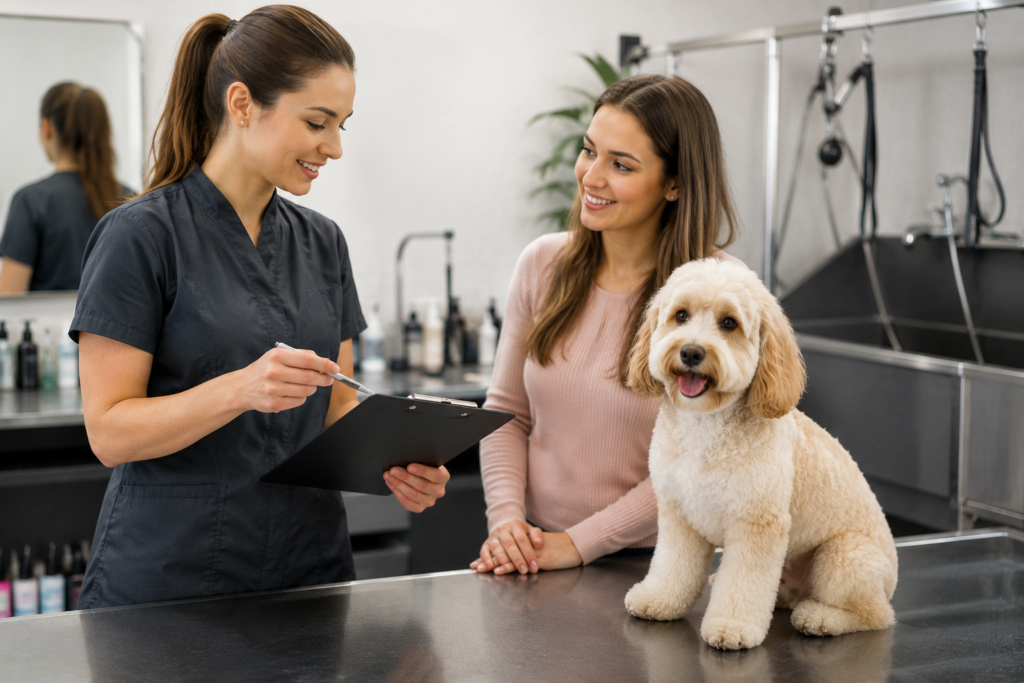
At a basic level, dog grooming falls into a few tiers: a simple bath and brush-out, a full groom that includes a haircut, and add-on services layered on top of either. Prices shift significantly depending on your groomer’s location: a salon in a major metro area will typically charge more than one in a smaller town, and that gap also reflects the specific salon’s overhead, staffing, and reputation.
Here’s a general breakdown of what owners commonly report paying across the country. Treat these as planning estimates rather than fixed prices, since your local market may run higher or lower.
| Grooming Service | Typical Price Range | What Usually Affects the Price |
|---|---|---|
| Bath and brush (no haircut) | $25–$55 | Size, coat thickness, how dirty or shedding the coat is |
| Full groom with haircut | $45–$120 | Breed, coat length, style complexity, matting |
| Puppy’s first groom | $25–$60 | Age, temperament, whether it’s an introductory session |
| Nail trim only | $10–$20 | Often discounted or free with a full groom |
| De-matting (moderate to severe) | $20–$75+ | Time required, whether shaving is needed |
| Mobile grooming (full service) | $60–$150+ | Travel distance, single-dog convenience, local demand |
A few things worth knowing before you book: many salons quote a “starting at” price and adjust once they see the dog in person, since photos and phone descriptions rarely capture true coat condition. It’s also common for pricing to be tiered by weight class, with a jump in cost roughly every 15 to 25 pounds. None of this is arbitrary. It reflects the real difference in time, product, and physical effort a groomer puts into each dog.
Average dog grooming cost by dog size
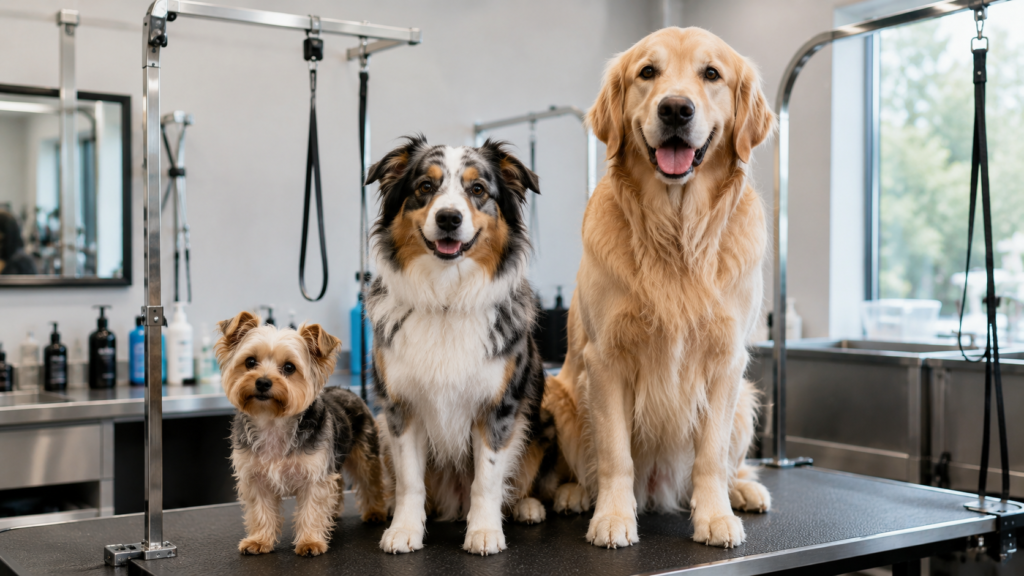
Size is one of the biggest cost drivers in grooming, mostly because it determines how much shampoo is used, how long bathing and drying take, and how much physical handling is involved.
Small dogs. Dogs under about 20 pounds, think Chihuahuas, Yorkies, and small mixed breeds, generally sit at the lower end of the pricing spectrum, often landing between $30 and $60 for a standard groom. They use less product and dry faster, and they’re typically easier to handle on the table. That said, small dogs with dense or curly coats, like a Maltese or a Bichon Frise, can push costs higher because the haircut itself takes more skill and time than the bathing does.
Medium dogs. Dogs in the 20- to 50-pound range, such as Cocker Spaniels, Beagles, and Border Collies, typically cost more than small breeds, often falling between $45 and $85. The increase mostly comes down to volume: more coat to wash, more area to dry, and often more brushing to prevent tangles before a cut.
Large dogs. Large and giant breeds, Golden Retrievers, Labradors, German Shepherds, Great Pyrenees, commonly run $60 to $130 or more. Bathing alone can take considerably longer, and drying a heavy double coat properly, rather than just towel-drying it, is a genuine time investment. Larger dogs also require more physical strength and patience to manage safely, which factors into the price groomers set.
| Size Category | Approximate Weight | Typical Full Groom Cost |
|---|---|---|
| Small | Under 20 lbs | $30–$60 |
| Medium | 20–50 lbs | $45–$85 |
| Large | 50–90 lbs | $60–$130 |
| Giant | 90+ lbs | $75–$150+ |
Dog grooming cost by breed and coat type
Breed matters, but it’s really a stand-in for coat type, coat density, and haircut complexity, not a fixed price tag. Two dogs of the same breed can cost noticeably different amounts depending on how well their coat has been maintained at home.
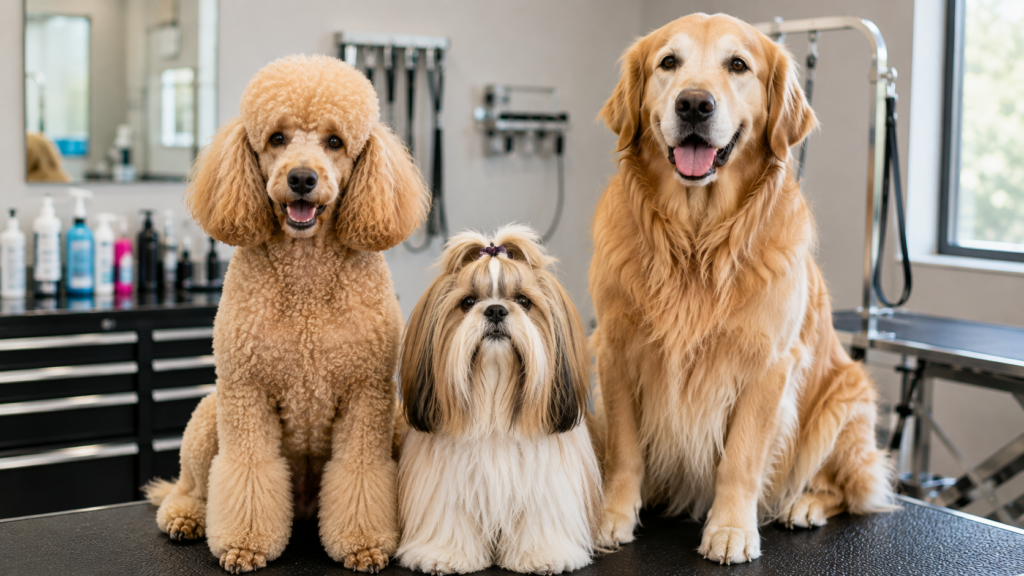
Golden Retrievers and German Shepherds have double coats that shed heavily. Grooming for these breeds often centers on thorough brushing and de-shedding rather than a dramatic haircut, but the sheer volume of hair can add time and cost.
Poodles and Goldendoodles have curly or wavy coats that mat easily and require regular, skilled trimming to maintain a specific look. These breeds tend to sit at the higher end of pricing because the haircut itself is labor-intensive and often needs a groomer experienced with scissor work.
Shih Tzus, Maltese, and Yorkshire Terriers have long, fine coats that tangle quickly without frequent brushing at home. If an owner has let the coat go too long between grooming sessions, the appointment can cost more simply because of the extra dematting involved.
Cocker Spaniels have feathering on the legs, ears, and belly that needs careful trimming, which adds time compared to a short-coated breed of similar size.
Huskies don’t typically need haircuts at all (clipping a Husky’s coat can actually damage its insulating properties), but they shed enormous amounts of undercoat, so grooming appointments often focus on de-shedding treatments, which can be priced separately.
The pattern across all of these breeds is the same: coat length, density, curl pattern, and current condition matter more than the breed name on paper. A well-maintained Poodle and a badly matted one are not the same appointment, even though they’re the same breed.
What is included in a typical dog grooming appointment?
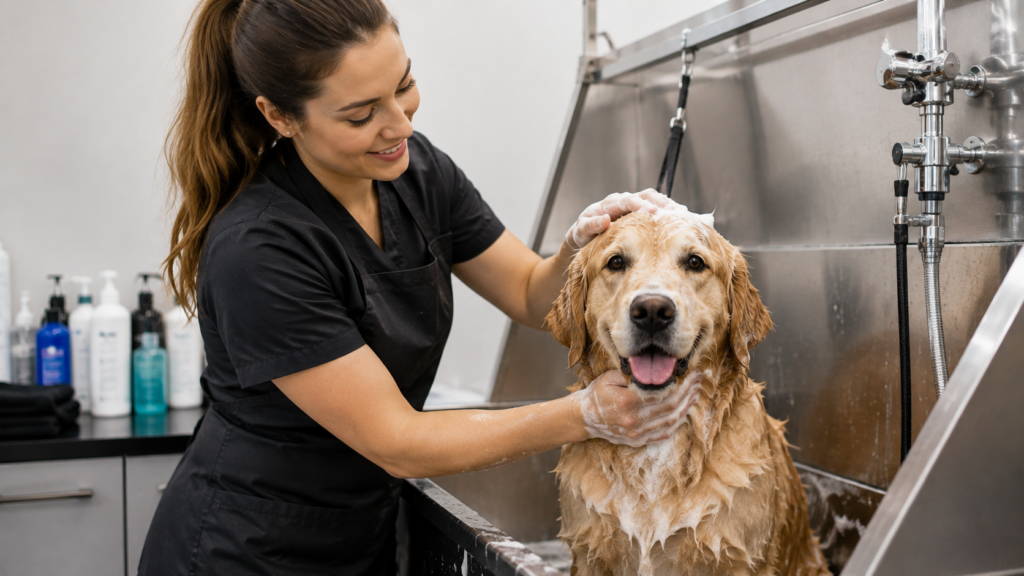
A standard full-service grooming appointment usually includes:
- A bath with shampoo suited to the dog’s coat and skin
- Blow-drying (rather than air-drying, which takes longer and can be less thorough)
- Brushing and de-tangling before and after the bath
- A haircut or trim, styled to the breed or the owner’s preference
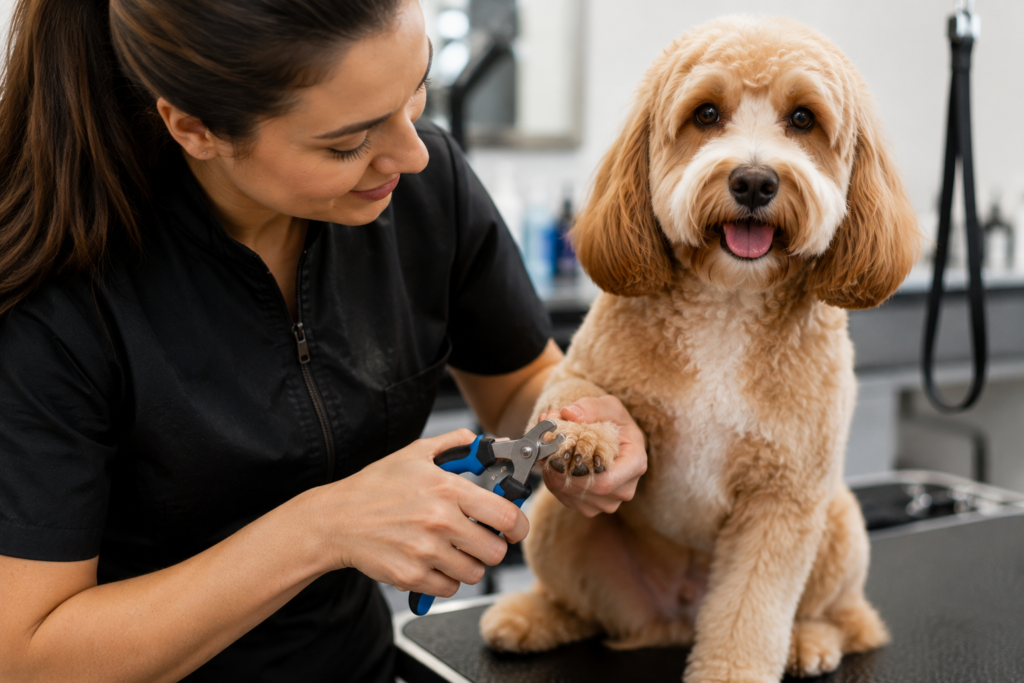
- Nail trimming
- Ear cleaning
- Basic sanitary trimming around the paws and hindquarters
Most salons bundle these into one package price rather than charging separately for each step. It’s worth asking directly what’s included, since “full groom” can mean slightly different things from one salon to the next.
Additional dog grooming services that may cost extra
Beyond the standard package, many salons offer optional add-ons, usually priced individually:
- Nail grinding, which files nails smooth after trimming and is often preferred for dogs with brittle nails
- De-shedding treatments, which go beyond a standard brush-out to reduce loose undercoat
- Teeth cleaning (non-anesthetic brushing or gel application, not a substitute for veterinary dental care)
- Flea and tick treatments, typically involving a specialized shampoo
- Dematting, charged by time when the coat has significant tangles
- Specialty shampoos, such as whitening, medicated, or hypoallergenic formulas
- Anal gland expression, offered by many groomers as a routine add-on
- Hand stripping, a technique used mainly on wire-coated terriers to maintain coat texture
- Creative grooming, involving color or decorative styling, mostly seen at specialty salons
If your dog has persistent skin irritation, unusual odor, or a coat condition that seems more serious than everyday tangling, that’s a conversation for your veterinarian rather than something to address through grooming add-ons alone.
How much does mobile dog grooming cost?
Mobile grooming means the groomer comes to you in a fully equipped van, handling the entire appointment in your driveway rather than at a salon. It’s a popular option for dogs that get anxious around other animals, owners with limited transportation, or households with multiple pets to groom in one visit.
Mobile grooming often costs somewhat more than an equivalent salon visit, commonly an extra $10 to $30, because you’re paying for the groomer’s travel time and the convenience of one-on-one, at-home service. That’s not universal, though. Pricing varies widely by provider, region, and how far the groomer has to travel, and some mobile groomers price competitively with local salons, especially in areas with several mobile services competing for business.
The trade-off is worth considering on its own merits rather than assuming mobile is automatically the pricier choice: less stress for anxious dogs, no car ride, and a groomer’s undivided attention can be worth a modest premium for many households.
Puppy grooming cost
Puppies typically don’t need a full haircut early on, but an introductory grooming visit, sometimes called a “puppy package,” helps them get comfortable with the sounds, handling, and equipment involved in professional grooming. These sessions tend to be shorter and gentler, and pricing often reflects that, commonly falling between $25 and $60.
A good early groom focuses on positive exposure: a light bath, gentle brushing, a nail trim, and maybe a light trim around the eyes or paws if needed. The goal is building comfort, not achieving a polished look. Many groomers recommend starting these visits once a puppy has completed its initial vaccination series, though the right timing depends on your veterinarian’s guidance and your puppy’s individual health status.
Choosing a groomer with genuine experience handling puppies matters here. A rushed or overly forceful first experience can make a dog fearful of grooming for years, while a calm, patient introduction tends to pay off with an easier appointment every time after.
How often should a dog be groomed?
There’s no single schedule that fits every dog. Grooming frequency depends heavily on coat type:
- Short-coated breeds (Labradors, Beagles) often do well with grooming every 8 to 12 weeks, supplemented by regular at-home brushing.
- Double-coated breeds (Huskies, Golden Retrievers) benefit from more frequent brushing at home, with professional de-shedding sessions every 6 to 8 weeks, especially during seasonal shedding.
- Curly or continuously growing coats (Poodles, Doodles, Bichons) generally need professional grooming every 4 to 6 weeks to prevent matting, since these coats don’t shed out naturally the way others do.
- Long-haired breeds (Shih Tzus, Maltese, Yorkies) usually need grooming every 4 to 6 weeks as well, particularly if the owner isn’t brushing daily at home.
Lifestyle plays a role too. A dog that swims often, spends a lot of time outdoors, or has skin sensitivities may need more frequent baths regardless of coat type. The honest answer for most owners is to ask their groomer directly, since someone who’s handled the dog in person can give a far more accurate recommendation than a generic schedule.
Why does dog grooming cost so much?
It’s a fair question, especially when a haircut for a person costs less than one for a 70-pound dog. But the comparison doesn’t hold up well once you look at what’s actually happening during a grooming appointment.
A groomer is washing, thoroughly drying, brushing out tangles, clipping or scissoring a coat with precision, trimming nails on an animal that may not want its paws touched, cleaning ears, and doing all of this on a moving, sometimes anxious subject rather than a cooperative human client. That takes real skill, physical stamina, and patience. On top of the hands-on time, salons carry ongoing costs: professional-grade equipment, quality shampoos and conditioners, table and tub maintenance, insurance, rent, and staff training. Groomers who specialize in difficult coats or handle anxious and senior dogs safely are providing a level of expertise that’s easy to underestimate until you’ve tried to do it yourself.
How much does it cost to groom a dog with mats?
Matting changes the entire scope of an appointment. What might normally take 60 to 90 minutes can stretch to two or three hours when a groomer has to carefully work through tangled, knotted fur, and in cases of severe matting, the safest option is often to shave the coat down rather than risk pulling on the dog’s skin during dematting.
Expect matting fees to add anywhere from $20 to $75 or more, depending on severity, and some salons charge by the quarter-hour once dematting exceeds a certain time threshold. This isn’t an upsell tactic; heavily matted fur can trap moisture against the skin, restrict movement, and in bad cases cause real discomfort or skin irritation.
If your dog’s coat has reached the point where mats feel tight against the skin or won’t come apart with a comb, resist the urge to cut them out at home. Scissors and skin are a dangerous combination on a squirming dog, and a professional groomer has the tools and technique to remove mats far more safely.
Professional dog grooming vs. grooming at home
Plenty of owners handle basic maintenance themselves and save professional visits for haircuts or de-matting. Here’s how the two approaches stack up.
| Factor | Professional Grooming | DIY Grooming |
|---|---|---|
| Upfront cost | Per-visit fee, no equipment needed | Higher initial cost for clippers, brushes, shampoo |
| Equipment | Provided by the salon | Owner must buy and maintain tools |
| Convenience | Drop off and pick up, done for you | Requires your own time and space |
| Time | Typically 1–3 hours, handled by staff | Can take significantly longer without practice |
| Skill required | Trained, experienced groomer | Learning curve, risk of uneven cuts or nicks |
| Best suited for | Complex cuts, matting, nervous or senior dogs | Basic brushing, bathing, nail trims between visits |
DIY grooming can genuinely reduce costs over time, especially for basic maintenance like brushing and bathing between professional appointments. But haircuts, dematting, and nail trims on a dog with dark or fast-growing nails carry real risk if you’re inexperienced: cutting a nail too short, for example, can cause pain and bleeding. A blended approach, where owners handle routine brushing at home and leave haircuts and trickier tasks to a professional, tends to be the most practical balance for most households.
How to save money on dog grooming
Grooming costs add up over a year, but there are legitimate ways to keep them in check:
- Brush your dog regularly at home. Preventing mats before they form is far cheaper than paying a dematting fee later.
- Stick to a consistent schedule. Letting a coat go too long between appointments almost always increases the cost of the next one.
- Ask about package pricing. Many salons offer discounts when nail trims, ear cleaning, and baths are bundled with a haircut rather than booked separately.
- Compare a few local groomers. Prices vary more than owners expect, even within the same town.
- Ask about loyalty or recurring-client discounts. Some salons reward regular bookings with a reduced rate.
- Handle nail trims between visits if you’re comfortable doing so, using proper clippers or a grinder, to reduce the need for extra appointments.
- Be specific about what your dog actually needs. Not every visit requires every add-on service.
- Avoid last-minute severe matting by scheduling proactively rather than reactively.
One thing worth avoiding: choosing a groomer purely because they’re the cheapest option nearby. Grooming involves sharp tools, restraint, and handling of a living animal, and cutting corners on qualifications or facility standards to save a few dollars isn’t usually a trade worth making.
How to choose a good dog groomer
A good groomer is worth more than their price tag suggests. Before booking, it’s reasonable to look into:
- Experience with your dog’s breed or coat type, since not every groomer is equally skilled with every coat
- Communication style, including whether they ask about your dog’s temperament and health history
- Facility cleanliness, which you can often assess with a quick in-person visit or tour
- Handling practices, particularly how they manage anxious, senior, or reactive dogs
- Reviews and reputation, ideally from other local pet owners
- Pricing transparency, meaning they explain costs clearly before starting
- Safety procedures, such as never leaving dogs unattended on a grooming table
A short list of questions worth asking before your first appointment:
- What’s included in your standard grooming package?
- How do you handle dogs that are nervous or reactive?
- What happens if my dog is more matted than expected?
- Do you have experience with my dog’s specific breed or coat type?
- What safety measures do you have in place during drying and handling?
Dog grooming cost FAQ
How much does it cost to groom a dog?
Most full grooming appointments cost between $40 and $120, though prices can range from $30 to $200 depending on size, coat condition, and location. Small, short-coated dogs tend to fall at the lower end, while large or heavily matted dogs fall higher.
How often should I take my dog to the groomer?
It depends on coat type. Short-coated breeds often do well every 8 to 12 weeks, while curly or continuously growing coats usually need grooming every 4 to 6 weeks to prevent matting.
Is mobile dog grooming more expensive?
Often, yes, by roughly $10 to $30, since you’re paying for the groomer’s travel and one-on-one attention. Pricing varies by provider, though, and some mobile services are competitively priced with local salons.
How much does grooming cost for a large dog?
Large dogs typically cost $60 to $130 or more per visit, due to the extra time needed for bathing, drying, and handling a bigger coat.
How much does puppy grooming cost?
Introductory puppy grooming sessions usually run $25 to $60, and tend to focus on gentle handling and positive exposure rather than a full haircut.
Does dog grooming include nail trimming?
Most full-service packages include a nail trim as standard. If you’re only booking a bath or a specific add-on, confirm with the salon whether nail trimming is included or priced separately.
Why does matted dog grooming cost more?
Dematting takes significantly more time and care than a routine brush-out, and severe cases may require shaving the coat for the dog’s safety. Fees for matting commonly range from $20 to $75 or more.
Can I groom my dog at home to save money?
Basic maintenance like brushing, bathing, and even nail trims (if you’re comfortable and equipped) can be done at home to reduce costs. Haircuts and dematting are generally safer left to a professional, especially for dogs with dense or curly coats.
Final thoughts
There’s no universal dog grooming price, and that’s actually good news: it means the cost of caring for your dog’s coat is something you have real influence over. Size, breed, coat condition, and the specific services you choose all shape the final bill, and understanding those factors makes it much easier to budget accurately and avoid surprises at pickup.
The most reliable way to keep grooming affordable is consistency: regular brushing at home, a grooming schedule that matches your dog’s coat, and a groomer you trust to tell you honestly what your dog needs rather than upselling services that aren’t necessary. At Petnest Corner, we’d rather help you understand what you’re paying for than push you toward the cheapest option available. A well-groomed, comfortable dog is worth it, wherever you decide to book that next appointment. If your dog also needs dental care, check out our guide on how to brush your dog’s teeth.
(Visit: https://petnestcorner.com/)



1 Comment
The Complete Guide to Flea and Tick Prevention and Treatment for Dogs · September 8, 2026 at 07:39
[…] more on keeping your dog healthy, see our guides on dog grooming costs and best dog food for sensitive […]