Pet Insurance for Cats: Coverage, Costs, and How to Choose the Right Plan
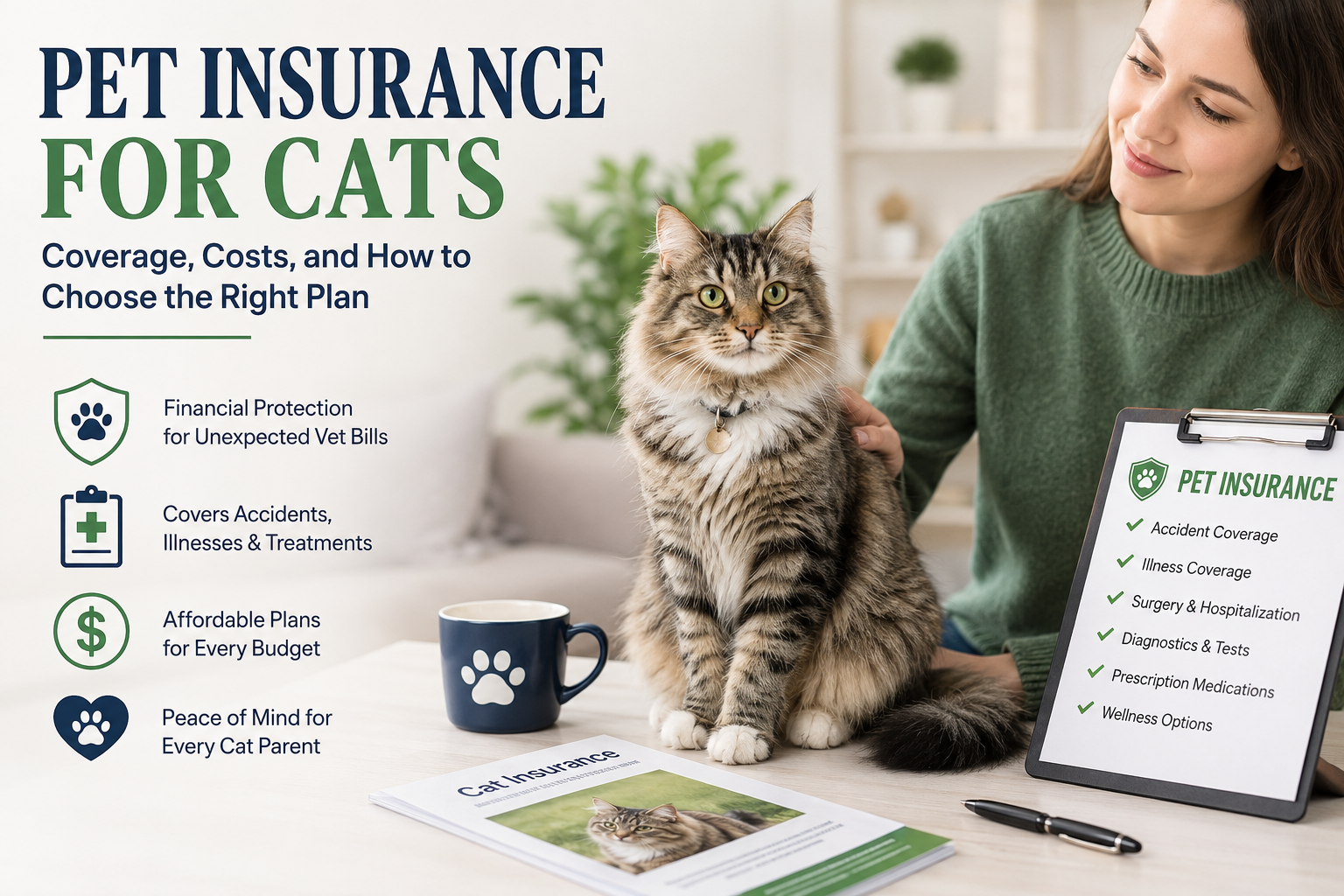
Pet Insurance for Cats
A single emergency vet visit can cost more than a year of premiums, and that’s usually the moment cat owners start looking into pet insurance. It’s a reasonable question to ask: does it actually make sense to pay monthly for coverage you might not use, or is it smarter to save that money yourself?
There’s no single right answer, because it depends on your cat’s age, health history, and your own comfort with financial risk. What you can control is understanding how these policies work before you buy one. This guide walks through what cat insurance typically covers, what it usually leaves out, how pricing works, and how to compare plans so you can make a decision that fits your situation. For dog owners comparing options, see our best pet insurance for dogs guide.
What is pet insurance for cats?

Pet insurance for cats is a policy that reimburses you for eligible veterinary costs after you’ve paid the vet directly. Unlike human health insurance, most cat insurance doesn’t work through a network or get billed at the clinic. You typically pay your veterinarian in full at the time of service, submit a claim with the invoice and medical records, and the insurer reimburses you based on your policy’s terms.
Most modern policies are “accident and illness” plans, meaning they cover unexpected injuries and diagnosed illnesses rather than routine checkups. Some insurers offer an optional wellness add-on for preventive care, usually priced and structured separately from the core accident and illness coverage.
The core idea is straightforward: you pay a predictable monthly premium in exchange for protection against unpredictable, sometimes very large, veterinary bills.
What does cat insurance usually cover?
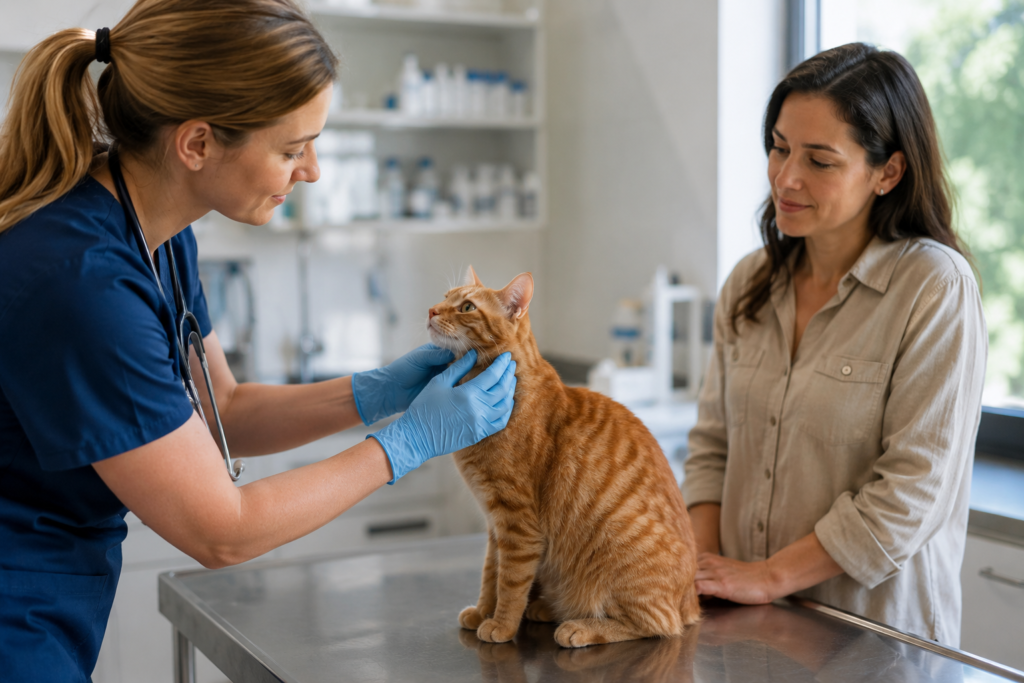
Coverage details vary by insurer and policy tier, but most accident and illness plans are built around a similar core.
Accidents. This typically includes injuries from falls, car accidents, swallowed foreign objects, bite wounds, and similar sudden events. Emergency exams, imaging, and treatment tied to the accident are usually included, subject to your deductible and reimbursement rate.
Illnesses. Common categories include infections, digestive issues, urinary tract problems, respiratory illness, and chronic conditions like diabetes or kidney disease when they aren’t pre-existing. Cancer treatment is often covered under standard accident and illness plans too, though specifics differ by insurer.
Diagnostic tests and veterinary care. Bloodwork, X-rays, ultrasounds, MRIs, and lab work related to a covered accident or illness are generally eligible. This is often one of the more useful parts of coverage, since diagnostics can add up quickly even before treatment begins.
Surgery and hospitalization. Surgical procedures, anesthesia, hospitalization, and post-operative care connected to a covered condition are typically included. These are often the largest single expenses a policy will reimburse, which is part of why many owners consider insurance in the first place.
What does cat insurance usually not cover?
No policy covers everything, and the exclusions matter just as much as the coverage. Common categories include:
- Pre-existing conditions. Any illness or injury your cat showed symptoms of, was diagnosed with, or was treated for before the policy started (or during a waiting period) is typically excluded.
- Routine and preventive care, unless you’ve purchased a separate wellness add-on. This usually means annual exams, standard vaccinations, and routine bloodwork aren’t covered under a base accident and illness plan.
- Cosmetic procedures, such as declawing or tail docking, when not medically necessary.
- Breeding-related expenses, including pregnancy and birth costs, on many policies.
- Conditions diagnosed during the waiting period: the initial window (often a few days for accidents and a few weeks for illnesses) after your policy starts, before coverage becomes active.
Exclusions vary significantly by insurer and by state, so treat any general description as a starting point rather than a guarantee. The only reliable way to know what a specific plan will and won’t pay for is to read the actual policy wording, especially the exclusions section.
How much does pet insurance for cats cost?
Monthly premiums vary widely depending on several factors, and it isn’t accurate to quote a single “typical” price without pulling current quotes for your own cat. What’s more useful is understanding what actually moves the price up or down:
- Age. Premiums generally increase as a cat gets older, since older cats are statistically more likely to develop health issues.
- Breed. Some breeds are predisposed to certain hereditary or congenital conditions, which can affect pricing.
- Location. Veterinary costs differ by region and by state, and insurers price policies accordingly.
- Coverage level. Higher annual limits and richer coverage generally cost more.
- Deductible. A lower deductible usually means a higher premium, and vice versa.
- Reimbursement percentage. Plans that reimburse a higher share of the bill (say, 90% versus 70%) typically cost more per month.
- Annual limit. Unlimited or high annual limits raise the premium compared to capped, lower-limit plans.
- Optional wellness coverage. Adding a wellness rider increases the total monthly cost but can offset routine care expenses.
Because pricing depends on so many variables specific to your cat and your chosen plan structure, the only reliable way to know what you’d actually pay is to request quotes directly from insurers for your cat’s age, breed, and location, and compare those quotes side by side.
How do deductibles and reimbursement rates work?

These two terms determine how much you actually get back after a claim, and they’re often the most confusing part of a policy for new buyers.
A deductible is the amount you’re responsible for before the insurer starts reimbursing you. Some policies use an annual deductible, met once per policy year across all claims, while others use a per-condition deductible, met separately for each new condition. The reimbursement rate is the percentage of the eligible bill the insurer pays after the deductible is met.
Here’s a simplified example. Suppose your cat needs treatment with an eligible vet bill of $1,000, your policy has a $250 annual deductible that hasn’t yet been met this year, and your reimbursement rate is 80%.
- Subtract the deductible from the bill: $1,000 − $250 = $750
- Apply the reimbursement rate to the remaining amount: $750 × 80% = $600
In this scenario, you’d be reimbursed $600, and you’d have paid $400 out of pocket. If your deductible had already been met earlier in the policy year, the calculation would simply be $1,000 × 80% = $800 reimbursed.
This is a simplified illustration, not a promise of how any specific insurer calculates claims. Some policies apply deductibles differently, cap reimbursement per incident, or use benefit schedules instead of percentage-based reimbursement. Always check how a particular policy defines and applies these terms.
Does cat insurance cover pre-existing conditions?
Generally, no. A pre-existing condition is typically defined as any illness, injury, or symptom that occurred, was diagnosed, or showed signs before your policy’s effective date or during the initial waiting period. Most insurers exclude these permanently: even after months or years on the policy, that specific condition usually remains excluded.
Some insurers distinguish between curable and incurable pre-existing conditions. A curable condition, like a resolved urinary tract infection, may become eligible for coverage again after a symptom-free period defined by the insurer, while incurable or chronic pre-existing conditions typically remain excluded for the life of the policy.
Because definitions and exceptions vary by insurer, it’s worth reading the pre-existing condition clause carefully and asking the insurer directly how they’d treat your cat’s specific medical history before you buy. This is not something a general guide can determine for you, and it isn’t legal or financial advice. Insurers apply their own underwriting rules.
Is pet insurance worth it for cats?
This depends on your cat’s health, your financial cushion, and your risk tolerance, and reasonable owners land on different answers.
Insurance may be worth considering when:
- Your cat is young and healthy, since premiums are typically lower and there’s no accumulated history of pre-existing conditions.
- You don’t have a dedicated emergency fund set aside for veterinary costs.
- Your cat’s breed has known predispositions to costly hereditary or congenital conditions.
- You’d want the option to pursue advanced treatment (surgery, specialist care, cancer treatment) without cost being the deciding factor.
Insurance may make less financial sense when:
- You’ve already built a substantial pet emergency fund and can comfortably absorb a large unexpected bill.
- Your cat is older with pre-existing conditions that would be excluded anyway, reducing how much of your cat’s likely future care would actually be covered.
- You’ve reviewed the numbers and find that, for your specific cat and chosen plan, expected premiums over time may exceed what you’d likely spend out of pocket.
Neither path is automatically correct. Insurance shifts risk from unpredictable, potentially large bills to smaller, predictable monthly payments. Whether that trade is worth it depends on your own finances and how much uncertainty you’re willing to carry.
What should you look for when choosing cat insurance?

Once you’ve decided to look seriously at a policy, compare plans against the same checklist:
- Coverage scope: What’s included under accident and illness coverage, and are chronic or hereditary conditions covered?
- Exclusions: What specifically is left out, beyond the standard pre-existing condition exclusion?
- Deductible structure: Annual or per-condition, and how much can you adjust it?
- Reimbursement percentage: What options are available, and how is it calculated?
- Annual or lifetime limits: Is there a cap on payouts, and is it per year, per condition, or per lifetime?
- Waiting periods: How long before accident coverage and illness coverage become active?
- Claim process: How are claims submitted, and what’s the typical turnaround time for reimbursement?
- Direct vet payment availability: Does the insurer offer to pay the clinic directly in some cases, or is reimbursement the only option?
- Renewal terms: Can premiums increase significantly at renewal, and are new conditions from the prior year treated as pre-existing?
- Age restrictions: Is there a maximum enrollment age, and what happens to coverage as your cat ages?
- Wellness options: Is preventive care available as an add-on, and what does it include?
- Customer service and transparency: Are policy documents clear, and is support easy to reach when you have a claims question?
Cat insurance for kittens vs. older cats
Age affects both eligibility and price in meaningful ways.
Kittens are often the least expensive cats to insure. Enrolling early means there’s little to no medical history yet, which reduces the chance of exclusions from pre-existing conditions later on. Some owners view kitten insurance as a way to lock in coverage before anything shows up on a vet record.
Older cats can usually still be insured, but premiums tend to be higher, and some insurers apply upper age limits for new enrollment. Existing health issues by the time you apply are more likely to be excluded as pre-existing conditions, which can reduce how much of an older cat’s actual care ends up being covered. That doesn’t necessarily make insurance worthless for a senior cat, since new, unrelated conditions could still be covered, but it does change the value calculation compared to insuring a kitten. See our related guide on senior cat insurance for more detail.
How to compare pet insurance plans for cats
- List your priorities first: decide whether low premiums, high reimbursement, or broad coverage matters most to you before you start reading plans.
- Get quotes for the same cat profile across several insurers, using identical age, breed, and location details so the comparisons are apples-to-apples.
- Match deductible and reimbursement settings across quotes where possible, since a cheaper premium is often just a higher deductible or lower reimbursement rate in disguise.
- Read the exclusions section in full, not just the marketing summary, paying close attention to how pre-existing and chronic conditions are defined.
- Check the waiting periods for both accident and illness coverage before assuming coverage starts immediately.
- Confirm the annual or lifetime limit and whether it resets each policy year.
- Review real claim examples or sample policy documents if the insurer provides them, rather than relying only on summary pages.
Frequently asked questions about pet insurance for cats
Is pet insurance worth it for a cat? It depends on your cat’s age and health, your financial cushion, and your tolerance for unpredictable expenses. It tends to offer more value for younger, healthy cats and for owners without a dedicated emergency fund for vet bills.
How much does pet insurance for cats cost? Cost varies based on your cat’s age, breed, location, coverage level, deductible, and reimbursement rate. Because these factors differ so much from one cat to another, getting current quotes directly from insurers is the most reliable way to find an accurate number.
Can you insure an older cat? Usually, yes, though some insurers set a maximum enrollment age and premiums tend to be higher. Any conditions your cat already has at enrollment are typically treated as pre-existing and excluded.
Does cat insurance cover pre-existing conditions? Generally no. Most insurers permanently exclude conditions that existed before the policy started or during the waiting period, though some allow previously “curable” conditions to become eligible again after a symptom-free period.
Does pet insurance cover routine vet visits? Standard accident and illness plans typically don’t cover routine or preventive care. Some insurers offer a separate wellness add-on that reimburses things like annual exams and vaccinations.
Is kitten insurance worth getting? Many owners find value in enrolling kittens early, since premiums are often lower and there’s minimal medical history to trigger pre-existing condition exclusions later.
Does cat insurance cover dental treatment? Coverage for dental care varies by insurer. Some plans cover dental illness or injury (like a broken tooth from an accident) under standard coverage, while routine dental cleanings are often excluded unless a wellness add-on is included. See our dedicated guide on cat insurance that covers dental for more.
How soon does cat insurance start after purchase? Coverage typically doesn’t begin immediately. Most policies have a waiting period, often a few days for accidents and a few weeks for illnesses, before claims become eligible.
Final thoughts
Pet insurance for cats isn’t a simple yes-or-no decision. It’s a way to manage financial risk, and how much it’s worth to you depends on your cat’s age and health, the specific policy terms, and how much of an unexpected bill you could absorb on your own. The details that matter most, deductibles, reimbursement rates, exclusions, and waiting periods, aren’t standardized across the industry, so they’re worth reading carefully rather than assuming.
If you decide to move forward, request quotes from a few insurers for your cat’s actual profile, compare them against the checklist above, and read the policy documents in full before signing up. Insurance coverage varies by provider and policy, so review the current terms directly with any insurer you’re considering before making a decision.

1 Comment
Cat Insurance That Covers Dental: What's Included · September 6, 2026 at 18:40
[…] Before you buy a policy specifically for its dental benefits, read the actual sample policy document, not just the summary page, and confirm directly with the insurer how it defines pre-existing conditions, what dental illnesses are named as covered, and whether any sub-limits apply. The right policy for your cat depends on their age, dental history, and your own tolerance for premiums versus out-of-pocket risk. For broader coverage details beyond dental, see our guide to pet insurance for cats. […]