Pet Insurance That Covers Dental: What Pet Owners Need to Know
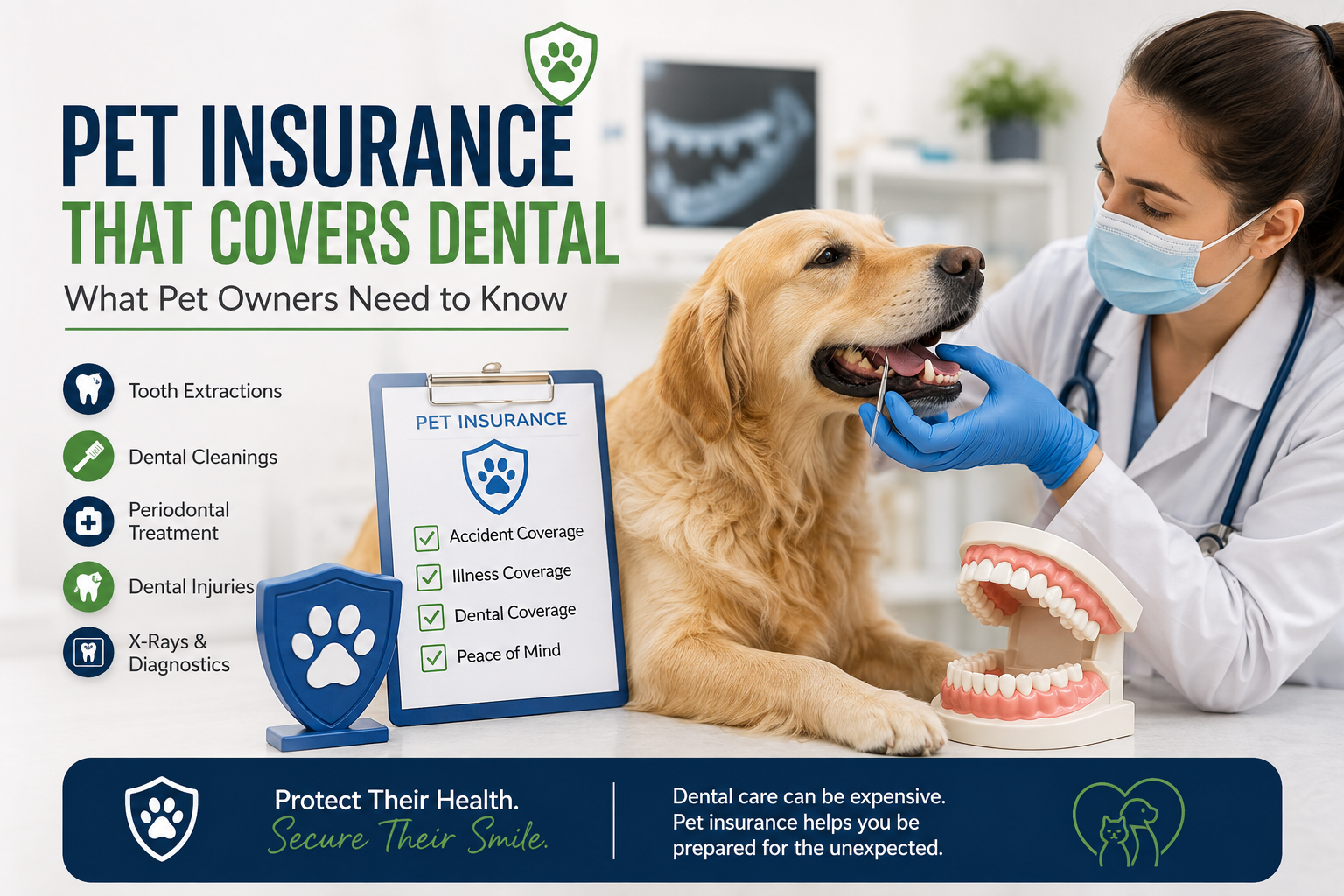
Pet Insurance That Covers Dental
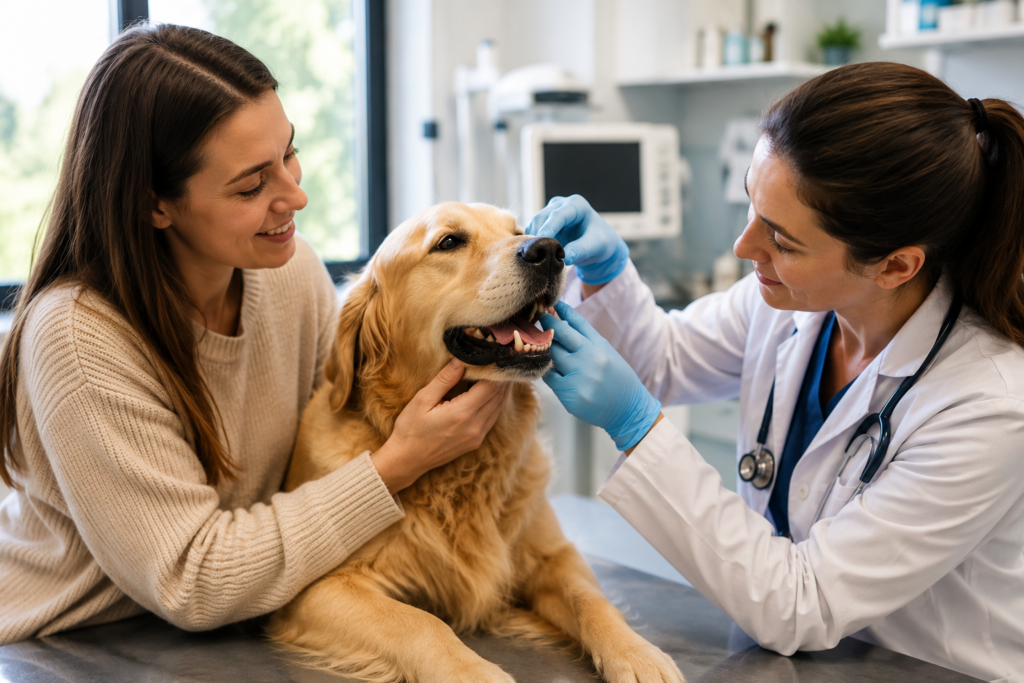
A cracked canine tooth or a mouth full of tartar can turn into one of the more expensive vet bills a dog or cat owner ever faces, and it usually happens without warning. That’s part of why so many people start searching for pet insurance that covers dental the moment a veterinarian mentions the word “extraction.” The trouble is, dental coverage is one of the most misunderstood parts of any pet insurance policy. Two plans can both advertise “dental coverage” and mean very different things by it. One may pay for a tooth broken in an accident but nothing else, while another covers periodontal disease but excludes routine cleanings entirely.
This guide breaks down how dental coverage actually works: what’s typically included, what’s usually excluded, how accident coverage differs from illness coverage, what dental care tends to cost, and what questions to ask before you buy. The goal here is to help you read any policy correctly so you can decide for yourself, not to tell you which one to buy.
A common scenario we hear about from readers: a dog owner notices their pet pawing at its mouth or refusing hard kibble, only to learn at the vet that a molar needs extraction. If that owner had a wellness add-on, the routine cleaning six months earlier might have caught the problem before it needed surgery — which is exactly why understanding the difference between “dental illness” and “dental wellness” coverage matters before you’re standing at the front desk with a treatment estimate in hand.
Does Pet Insurance Cover Dental Care?
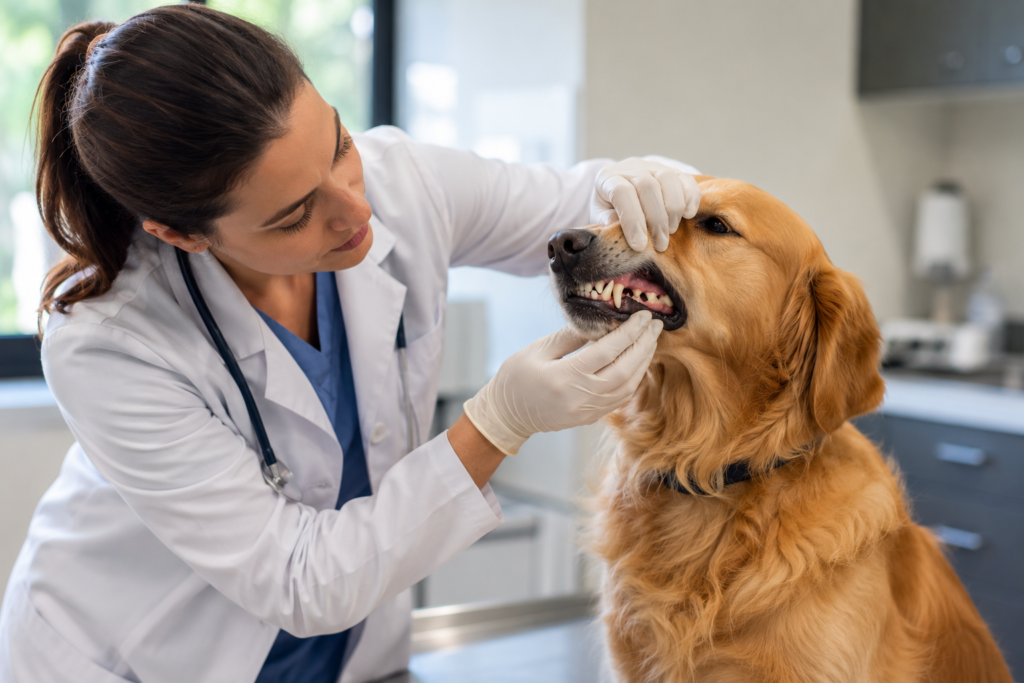
The short answer is that it depends entirely on the policy. There’s no industry-wide standard that defines what “dental coverage” means, so the same phrase can describe very different benefits from one insurer to the next.
Most comprehensive accident-and-illness plans distinguish between several categories of dental care, and each one is typically treated differently:
- Dental accidents: damage from a specific, sudden event, such as a fractured tooth from chewing something hard or a jaw injury from a fall
- Dental illnesses: conditions that develop over time, such as periodontal disease, gingivitis, or oral infections
- Preventive dental care: routine cleanings, exams, and polishing done to maintain oral health before a problem develops
- Medically necessary procedures: treatment a veterinarian determines is required to address a diagnosed condition, such as an extraction tied to advanced periodontal disease
Broken teeth, oral infections, and periodontal disease are commonly addressed under standard illness and accident coverage, while routine cleanings usually are not. Dental examinations tied to a covered illness are often included as part of the diagnostic workup, but a stand-alone annual cleaning typically falls under a separate preventive or wellness add-on.
The most important habit to build as a shopper: don’t assume a policy that mentions “dental” covers everything dental-related. Read the actual definitions section and the exclusions list, because that’s where the real answer lives.
What Dental Treatments Can Pet Insurance Cover?
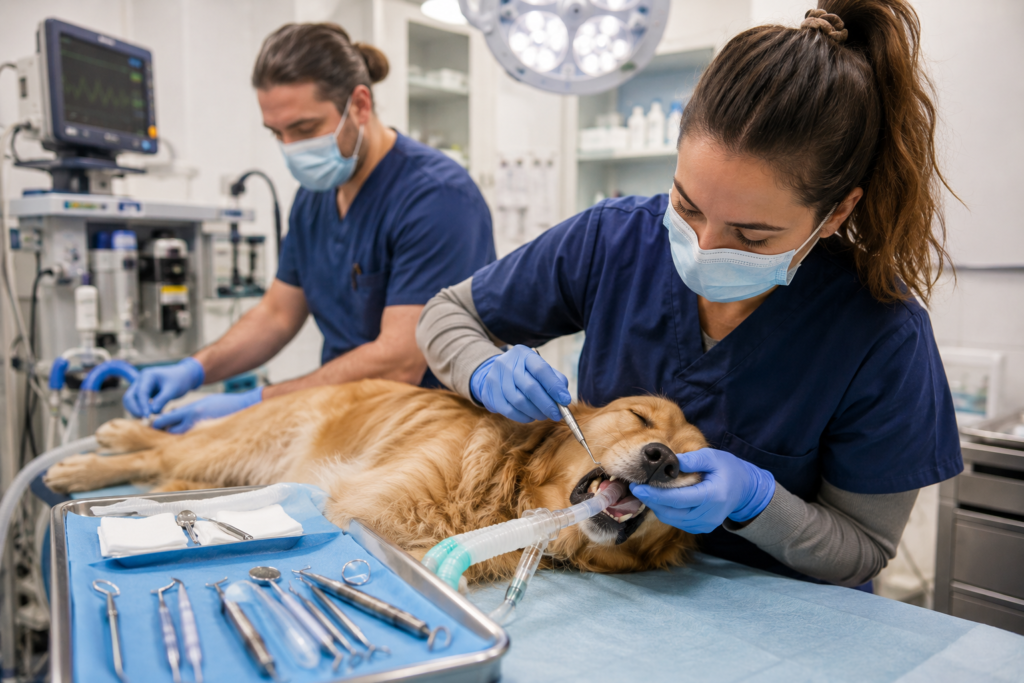
Depending on the policy, dental benefits under a standard accident-and-illness plan can potentially include:
- Tooth extraction when medically necessary due to disease or injury
- Treatment for dental injuries, such as fractured or knocked-out teeth
- Treatment for oral infections and abscesses
- Treatment for periodontal disease when the condition developed after coverage began and isn’t excluded
- Dental surgery resulting from a covered accident
- Diagnostic imaging, such as dental X-rays, when medically necessary to evaluate a covered condition
- Anesthesia connected to a covered dental procedure
Some plans may also cover related complications, such as antibiotics for an infection tied to a covered dental issue. Coverage can vary by insurer, and some policies cap dental benefits separately from other illness or accident claims, so it’s worth checking whether there’s a dental-specific sublimit in addition to the annual policy maximum. Always check the policy’s exclusions and limitations before assuming a treatment is included.
Does Pet Insurance Cover Dental Cleanings?
This is one of the most common points of confusion. The direct answer is usually not, unless you add optional preventive or wellness coverage.
Preventive dental cleaning, the kind your vet recommends annually or every couple of years to remove tartar and check for early disease, is generally classified as routine, elective care. Most standard accident-and-illness policies treat preventive care as outside their scope, the same way they typically exclude vaccines and annual exams from the base plan.
Medically necessary dental treatment, on the other hand, is care a veterinarian determines is required because of an existing illness or injury. A cleaning performed alongside extractions to treat active periodontal disease, for example, is more likely to be considered under illness coverage, because it’s addressing a diagnosed condition rather than preventing one.
The distinction matters because it changes what you’re actually paying for when you buy “dental coverage.” If your main goal is reimbursement for the biannual cleaning your vet recommends, you’ll likely need a wellness or preventive-care add-on, not just the base accident-and-illness plan. If your bigger concern is a large, unplanned bill from a dental illness or injury, the base plan may already provide that protection.
Does Pet Insurance Cover Tooth Extraction?
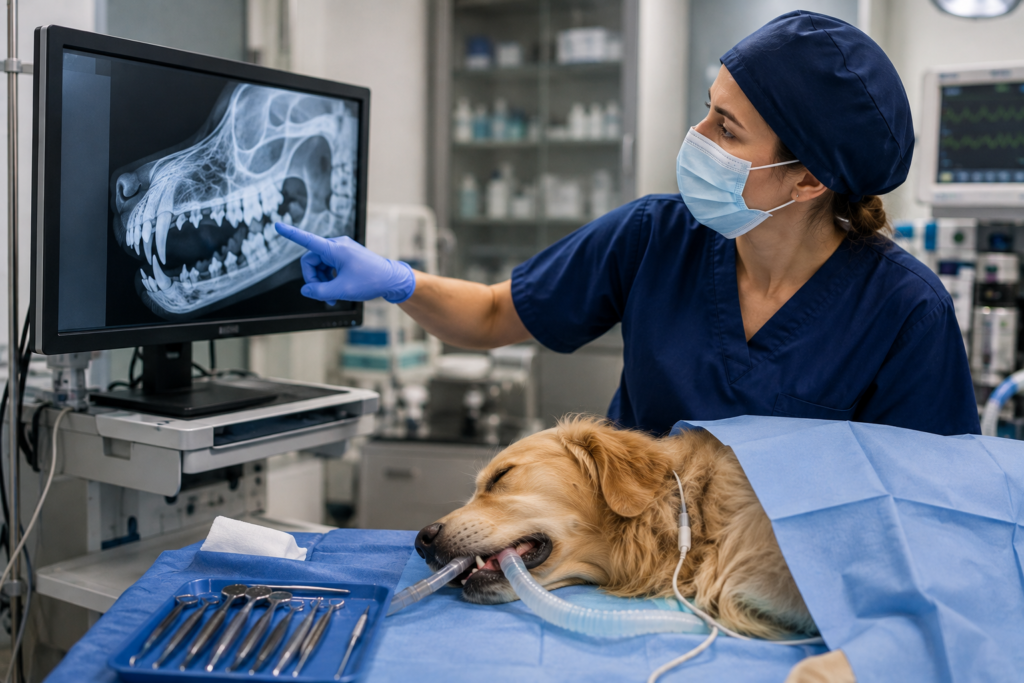
Tooth extraction is one of the dental procedures most likely to be covered by a standard accident-and-illness policy, but “likely” isn’t “guaranteed,” and the reason for the extraction matters.
An extraction tied to a recent accident, a tooth shattered by a fall or a hard chew toy, for instance, is generally treated similarly to other accidental injuries and is often eligible for coverage, subject to the policy’s deductible and reimbursement terms.
An extraction tied to a diseased tooth or periodontal disease is typically evaluated under illness coverage. Whether it’s paid depends on several factors:
- Whether the dental disease was diagnosed or showing symptoms before the policy’s waiting period ended, which could classify it as a pre-existing condition
- Whether the specific insurer excludes certain dental conditions by breed, age, or history
- Whether the procedure meets the policy’s definition of “medically necessary”
- Whether any applicable waiting period for illness coverage has already passed
Because periodontal disease often develops silently over months or years, insurers frequently ask for veterinary records to determine whether the condition existed before the policy started. This is one of the most common reasons dental claims get denied: the specific tooth in question already had documented problems before the policy took effect, not because dental coverage doesn’t exist at all. Enrolling pets while their teeth are healthy, rather than waiting until a dental issue appears, generally gives owners a better chance at coverage down the road.
Does Pet Insurance Cover Periodontal Disease?
Periodontal disease is inflammation and infection of the tissue and bone that support the teeth, and veterinary dental organizations consider it the most common dental condition affecting dogs and cats. Left untreated, it can lead to tooth loss, chronic pain, and infection that may spread beyond the mouth.
Because it’s so common and progressive, periodontal disease sits at the center of most dental insurance disputes:
- How insurers may treat it: Many accident-and-illness plans do include periodontal disease as a covered illness, but the specific stage of disease and the timing of diagnosis both matter.
- Pre-existing conditions: If your pet showed any signs of gum disease, even mild tartar noted at a wellness visit, before your policy’s illness waiting period ended, the insurer may classify related future treatment as pre-existing and exclude it.
- Dental history: Insurers frequently request several years of veterinary records when a dental claim is filed, so an incomplete or undisclosed dental history can complicate a claim later.
- Policy definitions: Some insurers distinguish between different stages of periodontal disease, such as gingivitis versus advanced bone loss, and may apply different rules to each.
None of this means coverage is unlikely. It means the fine print determines the outcome here more than it does with almost any other condition.
Dental Accident Coverage vs. Dental Illness Coverage
The table below is a general guide to how dental situations are typically categorized. It is not a guarantee of coverage under any specific policy; always confirm details with the insurer.
| Dental situation | May be covered? | What to check |
|---|---|---|
| Broken tooth from an accident | Often, under accident coverage | Confirm the injury meets the policy’s accident definition and occurred after any waiting period |
| Extraction caused by disease | Sometimes, under illness coverage | Confirm the condition wasn’t pre-existing and meets the medical-necessity standard |
| Routine cleaning | Rarely under base plans | Check whether a wellness or preventive add-on is available and what it reimburses |
| Periodontal disease | Varies by insurer and timing | Review dental history requirements and pre-existing-condition rules closely |
| Oral infection | Often, under illness coverage | Confirm it’s linked to a covered condition and not a pre-existing issue |
| Dental X-rays | Often, when tied to a covered condition | Confirm imaging counts as diagnostic care under a covered claim |
| Dental surgery | Varies, depends on cause | Check whether the underlying cause (accident vs. disease vs. cosmetic) is covered |
What Dental Care Is Usually Excluded From Pet Insurance?
Even strong dental policies carry exclusions. Common ones include:
- Routine or preventive cleaning without a wellness add-on
- Cosmetic dental procedures, such as purely aesthetic work with no medical necessity
- Pre-existing dental disease diagnosed or symptomatic before coverage began or during the waiting period
- Congenital or hereditary dental abnormalities in some policies, depending on the insurer’s terms
- Claims filed during the waiting period, even if the policy is otherwise active
- Treatment that doesn’t meet the policy’s definition of medically necessary care, which varies by insurer
Some insurers also apply breed-specific dental exclusions or additional waiting periods for illness claims, given that certain small-breed dogs and some cat breeds are more prone to periodontal disease. Exclusions differ enough from one insurer to the next that it’s worth reading the policy’s specific exclusions section rather than assuming a general rule applies.
What to Look for in Pet Insurance That Covers Dental
Use this checklist while comparing policies:
- Dental accident coverage. Confirm broken or injured teeth from a specific incident are included in the base plan.
- Dental illness coverage. Confirm periodontal disease, infections, and related conditions are covered, not just accidents.
- Preventive-care options. Check whether a wellness add-on exists for routine cleanings, and what it costs and reimburses.
- Annual coverage limits. Some policies cap total dental benefits separately from the overall annual limit; know both numbers.
- Deductible. Understand whether the deductible is annual or per-condition, since this affects how much you pay out of pocket before reimbursement starts.
- Reimbursement percentage. Confirm what percentage of the vet bill the insurer pays after the deductible, commonly a range selected when you buy the policy.
- Waiting periods. Note how long you must wait after enrollment before illness claims, including dental illness claims, are eligible.
- Pre-existing-condition exclusions. Understand how the insurer defines and documents pre-existing conditions, since this is where most dental disputes originate.
- Dental-specific exclusions. Look for language that singles out certain dental conditions, breeds, or procedures for exclusion.
- Claim documentation requirements. Check what records (exam notes, X-rays, dental charts) the insurer requires to process a dental claim, since incomplete documentation is a common cause of delay.
How Much Does Dental Care for Dogs and Cats Cost?
Veterinary dental costs vary widely based on your location, whether the work is done by a general practice veterinarian or a board-certified veterinary dentist, your pet’s size, and the extent of disease present. According to a Forbes Advisor analysis of veterinary pricing data, a professional dog teeth cleaning averages around $404, though the total can range from roughly $300 for a straightforward cleaning at a general practice to $1,000 to $2,000 or more when performed by a board-certified veterinary dentist or when extractions and advanced imaging are involved. CareCredit similarly reports typical dog dental cleaning costs in the $300 to $700 range, with additional procedures pushing the total higher.
Several factors influence the final bill:
- Routine dental examination: often bundled into a wellness visit, though a stand-alone exam has its own cost
- Professional cleaning: requires general anesthesia to clean below the gumline properly
- Dental X-rays: increasingly standard for evaluating disease below the surface
- Tooth extraction: priced per tooth in many practices, with simple extractions costing less than surgical extractions of larger or multi-rooted teeth
- Anesthesia: frequently the single largest cost driver in any dental procedure
- Treatment of advanced dental disease: multiple extractions, antibiotics, and follow-up care add up quickly
- Emergency dental treatment: after-hours or emergency-clinic pricing is typically higher than a scheduled procedure
A single dental procedure with extractions can run into four figures. That’s exactly the kind of cost that makes dental-inclusive coverage appealing to many pet owners, and exactly why understanding what’s actually covered matters before you need to file a claim.
How to Compare Pet Insurance Dental Coverage
- Check whether dental illness is covered. Confirm periodontal disease and oral infections are included, not just accidents.
- Check accident coverage. Confirm broken or injured teeth from a specific incident are eligible.
- Read the dental exclusions. Look for any language that carves out specific dental conditions or procedures.
- Review waiting periods. Note separate waiting periods for accidents versus illnesses, since they often differ.
- Check reimbursement and deductible. Calculate what you’d actually receive back on a typical dental claim at your chosen reimbursement level.
- Check annual limits. Confirm whether dental care has its own sublimit within the broader annual maximum.
- Review preventive-care options. Decide whether a wellness add-on for cleanings is worth the extra monthly cost for your pet.
- Check pre-existing-condition rules. Understand how the insurer treats dental issues noted in past records.
- Review claim requirements. Know what documentation you’ll need to submit before treatment happens, not after.
- Read the actual policy documents. Marketing pages summarize; the policy wording and sample contract govern what’s actually paid.
Questions to Ask Before Buying Pet Insurance With Dental Coverage
- Does the policy cover dental illness, or only dental accidents?
- Are tooth extractions covered, and under what circumstances?
- Are dental X-rays included as part of a covered claim?
- Are routine cleanings covered, or only available through a wellness add-on?
- Are periodontal conditions specifically covered or specifically excluded?
- How does the policy define a pre-existing dental condition?
- Is there a separate waiting period for dental illness claims?
- Is there a dental-specific annual or per-incident limit?
- What documentation is required to file a dental claim?
- Does the policy exclude any conditions based on breed or age?
- Is anesthesia covered as part of a covered dental procedure?
- Can I see a sample policy document before enrolling?
Is Pet Insurance With Dental Coverage Worth It?
There’s no universal answer. It depends on your pet’s dental risk, your budget, and how much financial uncertainty you’re comfortable carrying.
Dental coverage tends to be particularly valuable when:
- Your pet is a breed with a higher documented risk of periodontal disease, such as many small dog breeds or certain cat breeds
- You’re enrolling while your pet is young and has a clean dental history, which reduces the chance that future dental issues get classified as pre-existing
- You want protection against a large, unplanned bill from an accident or advanced dental disease, rather than reimbursement for routine care
It may provide less value when:
- Your pet already has diagnosed dental disease, since related treatment may be excluded as pre-existing
- Your main goal is covering routine cleanings, which often requires a separate add-on with its own cost and limits
- The policy’s dental sublimits or exclusions are narrow enough that a realistic claim wouldn’t be reimbursed meaningfully
Weigh this against your pet’s age, breed-related risk factors, dental history, your household budget, and how much risk you’re willing to absorb yourself before deciding.
How to Choose the Right Dental Coverage for Your Pet
Dogs: Small and toy breeds are more prone to periodontal disease, so illness coverage and manageable dental sublimits matter more than for breeds with generally lower dental risk.
Cats: Certain breeds have documented higher rates of dental and oral health issues, making illness coverage and clear periodontal-disease terms worth close attention.
Younger pets: Enrolling before any dental issues appear generally provides the cleanest path to coverage, since there’s no existing dental history to complicate a future claim.
Older pets: Dental disease is more likely to already be present, so read pre-existing-condition language carefully and ask the insurer directly how existing dental notes in the record will be treated.
Pets with previous dental problems: Coverage for the same tooth or condition may be excluded going forward. Ask the insurer directly how they’ll treat a documented history before enrolling, rather than assuming.
Frequently Asked Questions
Does pet insurance cover dental cleanings? Usually not under a standard accident-and-illness plan. Routine, preventive cleanings are typically classified as elective care and require a separate wellness or preventive-care add-on, which usually has its own monthly cost and reimbursement limit.
Does pet insurance cover tooth extraction? Often, but it depends on the cause. Extractions tied to a recent accident are commonly covered under accident benefits. Extractions tied to disease are evaluated under illness coverage and depend on whether the condition was pre-existing.
Does pet insurance cover periodontal disease? Many accident-and-illness policies do cover periodontal disease as an illness, but coverage depends heavily on timing, specifically whether signs of the disease existed before the policy’s waiting period ended.
What pet insurance covers dental illness? Most comprehensive accident-and-illness policies include some form of dental illness coverage, but the scope, exclusions, and sublimits vary by insurer. Reviewing each insurer’s specific policy wording is the only reliable way to confirm what’s included.
Does pet insurance cover dental accidents? Yes, in most standard accident-and-illness plans. A fractured or injured tooth resulting from a specific incident is typically treated similarly to other accidental injuries, subject to the deductible and reimbursement terms.
Does pet insurance cover anesthesia for dental procedures? Generally, yes, when the anesthesia is connected to a covered dental procedure. Anesthesia is usually bundled into the total cost of the covered treatment rather than billed and reimbursed separately.
Are pre-existing dental conditions covered by pet insurance? Typically not. If a dental condition was diagnosed, treated, or showing symptoms before coverage began or during the waiting period, most insurers classify it as pre-existing and exclude related future treatment.
Is dental coverage worth adding to pet insurance? It depends on your pet’s breed-related dental risk, age, and dental history, along with your budget and risk tolerance. It tends to offer the most value for younger pets with a clean dental history and breeds prone to periodontal disease.
Final Thoughts
Dental coverage is one of the more valuable, and more misunderstood, parts of pet insurance. Coverage varies from one insurer to the next, and even within a single policy, accident coverage, illness coverage, and preventive care are usually treated as three separate things. A policy that pays for a fractured tooth from an accident may still exclude periodontal disease that was already present, and routine cleanings often require a separate add-on entirely.
The best way to find pet insurance that covers dental in a way that actually fits your pet is to slow down and read the real policy documents rather than relying on marketing summaries. Compare waiting periods, pre-existing-condition definitions, dental sublimits, and exclusions side by side, and don’t hesitate to ask an insurer directly how they’d treat your pet’s specific dental history. A little research before you buy can make the difference between a policy that pays out when you need it and one that leaves you covering the bill yourself. For cat-specific details, see our guide to cat insurance that covers dental.
Looking for more pet health guides? Browse our full blog for grooming, nutrition, and insurance articles.

1 Comment
Pet Insurance for Senior Dogs: Coverage, Costs & What to Know · September 26, 2026 at 16:57
[…] guide to pet insurance for older dogs. If your dog needs dental work specifically, our guide on pet insurance that covers dental covers coverage specifics by […]