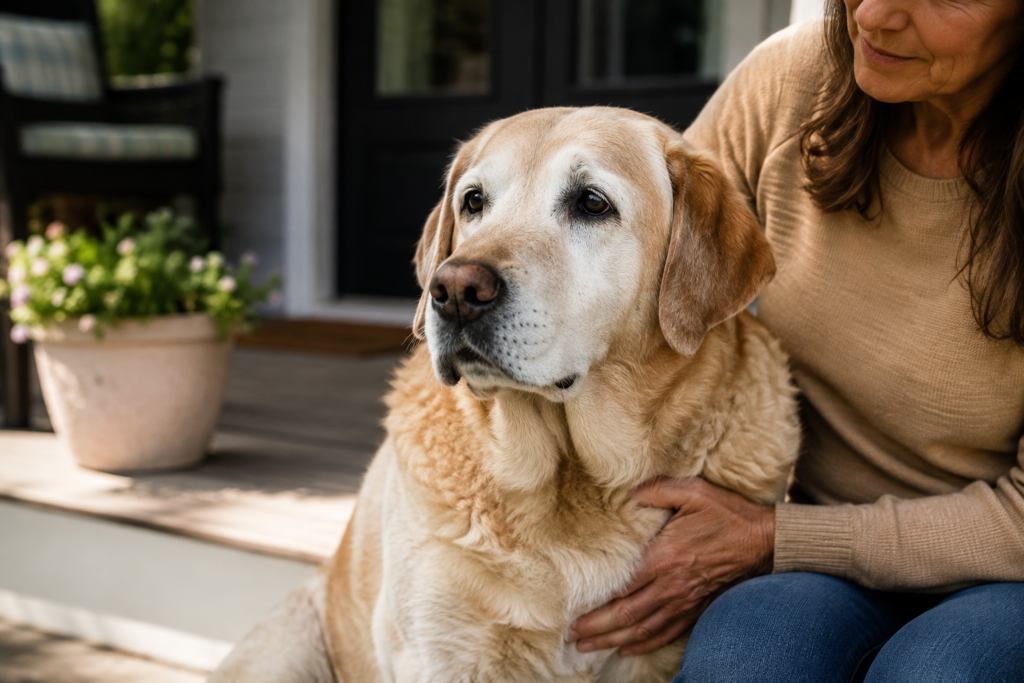
If your dog has crossed into their senior years, you’ve probably noticed the vet visits happening more often and the bills creeping higher. A dog that once needed nothing more than an annual checkup might now need bloodwork, joint support, or a specialist referral. That shift is exactly what sends most owners searching for pet insurance for senior dogs in the first place, and it’s a reasonable thing to look into. The short answer is that older dogs can often still be insured, but the process and the coverage look different than they would for a puppy, and it’s worth understanding why before you commit to a policy.
This guide walks through how senior dog insurance typically works, what tends to be covered, how pre-existing conditions factor in, and what questions to ask before you sign up. Nothing here should replace reading an actual policy document, since terms vary significantly from one insurer to the next.
Can senior dogs get pet insurance?

Yes, in most cases. Many insurers will accept older dogs for new enrollment, though the exact age cutoff differs by company and sometimes by breed or size. Smaller breeds tend to have longer working age ranges for eligibility than giant breeds, since life expectancy and age-related risk differ so much between them.
There’s an important distinction to understand here: enrolling a senior dog for the first time is not the same as continuing coverage on a dog that’s been insured since puppyhood. A policy that started years ago typically carries forward whatever conditions have already been covered, while a brand-new policy on an older dog starts from scratch, meaning any condition that already exists or has already been diagnosed is likely to be excluded from day one.
Because eligibility rules and enrollment cutoffs change and vary by provider, the only reliable way to know whether your dog qualifies is to check current terms directly with the insurer you’re considering. Don’t assume that because one company turned you down, all of them will.
Why pet insurance can be different for older dogs

Age changes the math for insurers, and it changes the experience for owners too. Older dogs are statistically more likely to develop conditions like arthritis, dental disease, kidney issues, or certain cancers, which means the potential for claims goes up. Insurers account for that risk in a few ways.
Premiums tend to be higher. Since claims become more likely as a dog ages, monthly costs for senior coverage are generally higher than they would be for a young, healthy dog enrolled in the same plan.
Waiting periods still apply, sometimes more strictly. Most policies require a set period between enrollment and when coverage actually begins for illnesses, and insurers may look more closely at symptoms that appear during that window in an older dog.
Deductibles and annual limits matter more. Because senior dogs are more likely to need care, the deductible you choose and the annual payout cap on your policy have a bigger real-world impact on what you’ll actually receive if you file a claim.
Some conditions may be excluded outright. Certain insurers limit or exclude coverage for conditions that are considered common or expected in aging dogs, depending on breed and health history.
That doesn’t make senior coverage a bad idea. It just means the fine print matters more than it would for a younger, healthier dog, so reading the actual policy wording is worth the time.
What does pet insurance for senior dogs usually cover?

Coverage varies by plan and provider, so treat the categories below as common building blocks rather than guarantees. A policy might include some of these, all of these, or offer them as optional add-ons.
Accident coverage
Injuries from accidents, such as falls, cuts, or being hit by a car, are commonly covered across most plan types, including accident-only policies. Age doesn’t usually reduce eligibility for this category, since accidents aren’t tied to how old a dog is.
Illness coverage
This category covers non-pre-existing illnesses that develop after the policy is active and any waiting period has passed. For senior dogs, this is often the most useful part of a plan, since age-related conditions fall here, but it’s also the category most affected by pre-existing condition exclusions.
Diagnostic testing
Bloodwork, X-rays, ultrasounds, and other diagnostics used to investigate a covered accident or illness are frequently included, though routine or preventive diagnostic panels may fall under a separate wellness add-on rather than standard coverage.
Surgery and hospitalization
Many comprehensive plans cover surgical procedures and hospital stays tied to a covered condition. This tends to be one of the larger expense categories for older dogs, since age-related surgeries like mass removals or orthopedic procedures become more common.
Prescription medication
Some plans include prescription medications related to a covered condition, while others treat medication as a separate reimbursement category or exclude certain long-term maintenance medications. This is worth checking closely for senior dogs, who are more likely to be on ongoing prescriptions.
Specialist or emergency care
Referrals to veterinary specialists, such as oncologists or cardiologists, along with emergency clinic visits, are commonly covered under comprehensive plans, though reimbursement percentages and limits still apply.
How pre-existing conditions affect senior dog insurance

This is the section that trips up the most owners, so it deserves a close look.
Insurers generally define a pre-existing condition as any illness or injury that showed symptoms, was diagnosed, or was treated before the policy’s effective date, or sometimes before the waiting period ends. The key word is “generally,” because the precise definition and cutoff point differ by company.
For older dogs, this matters more than it does for a puppy, simply because more time has passed for something to show up in the medical record. A dog with a documented history of hip dysplasia, for example, would likely have that specific condition excluded from a new policy, even if the insurer covers hip-related issues for other dogs.
It’s worth understanding the difference between a condition that’s excluded and a condition that develops after coverage begins. If your dog is enrolled in a new policy and later develops a new, unrelated illness, that illness may be covered as long as it’s not connected to something documented beforehand. Insurers sometimes distinguish between “curable” pre-existing conditions, which may become eligible for coverage again after a symptom-free period, and conditions considered chronic or incurable, which typically remain excluded permanently. Whether that distinction applies, and how it’s defined, depends entirely on the specific insurer and policy.
Because underwriting for older dogs often includes a closer look at veterinary records, it’s worth requesting your dog’s full medical history from your vet before applying, so you know exactly what an insurer might see and can ask direct questions about how it will be treated.
None of this is medical advice, and nothing here should be read as a diagnosis or a prediction about your dog’s health. If you have concerns about a specific condition, that conversation belongs with your veterinarian.
How much does pet insurance for senior dogs cost?
There’s no universal number here, and any article that gives you one is guessing. What can be said with confidence is which factors tend to move the price up or down.
- Age. Premiums generally rise as a dog gets older, reflecting increased likelihood of claims.
- Breed. Breeds prone to specific hereditary or age-related conditions often carry higher premiums.
- Location. Veterinary costs vary regionally, and insurers price policies accordingly.
- Coverage level. Accident-only plans are typically cheaper than comprehensive accident-and-illness plans.
- Deductible. A higher deductible usually lowers the premium, and a lower deductible usually raises it.
- Reimbursement percentage. Plans that reimburse a higher percentage of the bill tend to cost more per month.
- Annual coverage limit. Higher payout caps generally come with higher premiums.
- Medical history. A dog with an extensive treatment history may see different pricing than a dog with a clean record, depending on the insurer’s underwriting approach.
If you want to see hypothetical numbers, think of it this way: a policy with a low deductible, high reimbursement rate, and high annual limit will almost always cost more per month than a policy with a high deductible, lower reimbursement rate, and capped annual limit, even for the exact same dog. The trade-off is between predictable monthly costs and predictable claim payouts. Actual quotes should always come from the insurer, not from a general guide like this one.
What should you look for in a senior dog insurance policy?
Use this as a working checklist when you’re comparing plans side by side.
| What to check | Why it matters |
|---|---|
| Age eligibility | Confirms your dog can be newly enrolled at all |
| Accident and illness coverage | Determines whether age-related illness is included, not just injuries |
| Pre-existing condition exclusions | Shapes what will actually be paid out |
| Waiting periods | Affects when coverage actually starts working |
| Deductible | Impacts your out-of-pocket cost per claim |
| Reimbursement percentage | Determines how much of an approved bill you get back |
| Annual and lifetime limits | Caps how much the policy will pay in a year or over time |
| Prescription and diagnostic coverage | Often the most-used benefits for senior dogs |
| Specialist care coverage | Relevant if referrals become likely with age |
| Claims process | Affects how quickly and easily you’re reimbursed |
| Premium increase history | Signals how much costs might rise at renewal |
| Renewal terms | Clarifies whether coverage continues as your dog ages further |
Is pet insurance worth it for an older dog?
There’s no single right answer, and being told otherwise should make you skeptical. Insurance is a risk management tool, not a guaranteed win, and whether it makes sense depends on your dog’s health history, your financial cushion, and how you’d handle an unexpected large vet bill.
Insurance may make more sense if your dog is relatively healthy for their age, you’d struggle to cover a sudden four-figure emergency bill out of pocket, or you want predictable monthly costs instead of an unpredictable lump sum later. It may make less sense if your dog already has significant pre-existing conditions that would be excluded anyway, since you’d be paying premiums for coverage that wouldn’t apply to the health issues you’re most likely to face. In that situation, some owners choose to self-insure instead, setting aside a dedicated savings fund for veterinary costs, or they look at accident-only coverage paired with savings for illness-related expenses.
The honest way to evaluate this is to run the numbers for your specific situation: estimate likely annual premiums, compare that to what you could realistically save on your own, and factor in your dog’s actual health history rather than a general assumption about senior dogs as a category.
How to compare pet insurance for senior dogs
- Check eligibility first. Confirm your dog’s age and breed qualify for new enrollment with a given provider before doing anything else.
- Review exclusions closely. Read the list of excluded conditions, not just the list of included ones.
- Compare deductibles. Look at both the dollar amount and whether it’s annual or per-condition.
- Compare reimbursement rates. A lower rate on a higher bill can still mean more money back than a higher rate on a smaller bill.
- Check annual limits. Make sure the cap is realistic against the kind of expenses your dog might actually face.
- Review waiting periods. Note how long you’d need to wait before illness coverage becomes active.
- Examine renewal conditions. Ask whether premiums typically increase at renewal and by how much.
- Understand the claims procedure. Find out whether the insurer reimburses after the vet is paid upfront or offers direct payment to the clinic.
- Get multiple quotes. Prices and terms can differ meaningfully between insurers for the same dog.
- Read the full policy wording before purchasing. Marketing pages summarize; the policy document is what actually governs a claim.
Questions to ask before buying insurance for a senior dog
- Is my dog’s current age eligible for new enrollment?
- Are any of my dog’s existing medical conditions excluded, and how were they determined?
- Is there an upper age limit for continued coverage as my dog ages further?
- What waiting periods apply before illness coverage becomes active?
- How does the deductible work: per year, per condition, or per incident?
- What percentage of an approved bill does the plan actually reimburse?
- Are hereditary or breed-specific conditions covered or excluded?
- Are prescription medications included, and are there limits on chronic medication coverage?
- Can premiums increase at renewal, and is there a cap on how much?
- What specific conditions or treatments are excluded from this plan?
Frequently asked questions
Can you insure a 10-year-old dog? In many cases, yes, though eligibility depends on the individual insurer, the dog’s breed, and their specific age cutoffs. Some companies set upper age limits for new enrollment, while others accept dogs into their teens. Checking directly with a provider is the only way to confirm eligibility for a specific dog.
Is pet insurance more expensive for older dogs? Generally, yes. Premiums tend to rise with age because the likelihood of a claim increases. The exact increase depends on the insurer, the dog’s breed, and the coverage level chosen, so comparing quotes for your specific dog is the most reliable way to understand the real cost difference.
Does pet insurance cover pre-existing conditions? Typically not. Most insurers exclude conditions that showed symptoms or were diagnosed before the policy’s effective date. Some plans distinguish between curable and chronic pre-existing conditions, occasionally allowing coverage to resume after a symptom-free period, but this varies significantly by provider.
Is it too late to insure a senior dog? Not necessarily. Many insurers still accept older dogs, though coverage may be more limited due to pre-existing condition exclusions and higher premiums. The value of a policy at this stage depends heavily on your dog’s current health and what conditions would realistically be covered.
What is the best type of coverage for an older dog? There isn’t a universal “best” plan, since it depends on your dog’s health history and your budget. Comprehensive accident-and-illness coverage tends to offer the broadest protection, while accident-only plans cost less but cover a narrower range of situations.
Can senior dogs get accident and illness insurance? Often, yes, though illness coverage is where pre-existing condition exclusions have the biggest impact. Accident coverage is generally less affected by a dog’s age or prior health history.
Should I insure my senior dog or save money instead? Both are valid strategies, and some owners combine them. Insurance offers predictable monthly costs and protection against large, unexpected bills, while self-funding through savings offers flexibility but requires financial discipline. The right choice depends on your dog’s health, your risk tolerance, and your financial situation.
Final thoughts
Pet insurance for senior dogs isn’t automatically a good or bad idea. It’s a decision that depends on your dog’s specific health history, the exclusions and terms of the policy you’re considering, and how comfortable you’d be covering an unexpected vet bill on your own. Older dogs can often still qualify for coverage, but the value of that coverage hinges on the details: what’s excluded, what the waiting periods look like, and how the deductible and reimbursement rate actually work in practice. Take the time to compare a few policies side by side, read the actual terms rather than the marketing summary, and confirm anything important directly with the insurer before you commit.