Pet Insurance for Older Dogs: What Senior Dog Owners Need to Know
Pet Insurance for Older Dogs
If your dog has crossed into their senior years, you’ve probably noticed the vet visits getting a little more frequent, and the bills getting a little harder to predict. A sore hip that needs an X-ray. Bloodwork to check on kidney values. A lump that turns out to be nothing, but only after a biopsy confirms it. This is the stage of a dog’s life when pet insurance starts to feel less like an optional extra and more like a real financial question.
The tricky part is that most people assume insurance windows close once a dog hits a certain age. That’s not entirely true, but it’s not entirely false either. Age genuinely does change what pet insurance for older dogs looks like: what it costs, what it covers, and how much homework you need to do before signing up. This guide walks through the realistic picture, including what’s typically available, what to watch for, and how to figure out whether it makes sense for your dog specifically.
One thing worth doing before you even request a quote: pull together your dog’s last two years of vet records. Insurers reviewing an older dog’s application almost always ask for history anyway, and having it ready upfront often speeds up underwriting and avoids the frustration of a claim being questioned later for a condition nobody remembered was ever mentioned at a checkup.
Can older dogs get pet insurance?
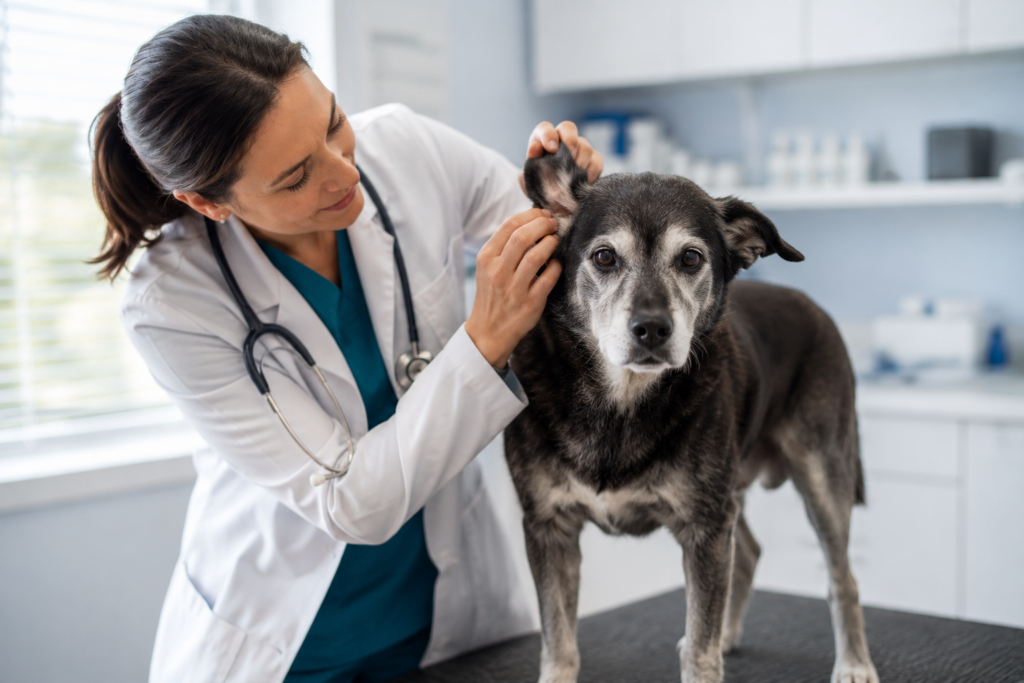
Yes, most insurers offer coverage for older dogs, though enrollment cutoffs, premium costs, and coverage terms vary significantly by provider. Some companies cap new enrollments around a certain age, commonly somewhere in the low-to-mid teens, while others accept dogs well into their senior years with adjusted pricing.
The catch isn’t usually eligibility itself; it’s what that coverage actually includes once your dog is older. A policy purchased for a twelve-year-old dog is very unlikely to look identical, in cost or in coverage, to one purchased for a two-year-old. Insurers price risk, and an older dog statistically carries a higher chance of needing veterinary care in the near term. That doesn’t make coverage impossible, it just changes the shape of the deal.
If your dog already has a diagnosed condition, that specific condition will almost certainly be excluded from a new policy as pre-existing, even if the insurer accepts the enrollment. This is one of the most important things for senior dog owners to understand before assuming insurance will solve an existing problem.
How age affects pet insurance for older dogs

Age touches nearly every part of a policy, not just whether you can enroll in the first place.
Enrollment age limits. Some insurers set a maximum age for new applicants. Others will insure dogs of any age but limit certain types of coverage, such as wellness add-ons, once a dog passes a certain birthday.
Premium pricing. Premiums for senior dog insurance tend to run higher than for a young, healthy dog, and many insurers increase premiums at each policy renewal as a dog ages, regardless of whether any claims were filed. This is standard practice across the industry rather than something specific to one company.
Underwriting scrutiny. Older dogs are more likely to be asked for a recent veterinary exam or medical history before a policy is approved, since insurers want a clearer picture of the dog’s current health before taking on risk.
Condition exclusions. Anything diagnosed, treated, or showing symptoms before the policy’s effective date is typically treated as pre-existing and excluded, a pattern that becomes more relevant with age simply because older dogs have had more years to accumulate a medical history.
None of this means insurance becomes useless for an older dog. It means the value proposition shifts: you’re less likely to get comprehensive, low-cost coverage, and more likely to be weighing a policy that covers new and unrelated problems while your dog’s existing conditions stay on you.
What does pet insurance for senior dogs usually cover?

Coverage varies by policy type and provider, but most senior-eligible plans fall into a few broad categories:
Accident-only coverage: helps with costs from injuries like fractures, swallowed objects, or car accidents, but generally excludes illness-related care. Accident and illness coverage: the more common and comprehensive option, covering both injuries and newly diagnosed illnesses such as infections, cancer treatment, or organ-related conditions that weren’t present before enrollment. Wellness or preventive-care add-ons: optional riders that reimburse routine costs like vaccinations, dental cleanings, or annual bloodwork; not every insurer offers these for senior dogs, and some cap them separately.
For a dog in their senior years, accident and illness coverage tends to be the more relevant category, since new-onset illness becomes statistically more common with age. Whether it’s worth the added premium compared to accident-only coverage depends on your dog’s breed, current health, and your own risk tolerance.
What may not be covered?

This is where senior dog owners are most likely to be caught off guard, so it’s worth slowing down here.
Pre-existing conditions
Pre-existing conditions are almost universally excluded from pet insurance policies, regardless of the dog’s age. If your dog was already diagnosed with arthritis, diabetes, or a heart murmur before you enrolled, treatment for that specific condition typically won’t be reimbursed under a new policy. Some insurers distinguish between “curable” and “incurable” pre-existing conditions, occasionally allowing coverage to resume after a symptom-free period, but this varies enough by provider that it needs to be confirmed directly with the company, not assumed.
Waiting periods
Nearly every policy includes a waiting period between the purchase date and when coverage actually begins, often a short window for accidents and a longer one for illnesses. Anything that arises during that window may be treated as pre-existing, even if it wasn’t present when you signed up. This detail matters more for older dogs, since a longer illness waiting period gives more time for an age-related condition to surface before coverage kicks in.
Routine and preventive care
Standard accident-and-illness plans typically do not cover routine items like annual exams, teeth cleanings, or elective procedures unless you’ve added a specific wellness rider. For senior dogs, this matters because a large share of their veterinary costs, including senior bloodwork panels, dental care, and joint supplements, often falls into this routine category rather than the emergency category insurance is built around.
Is pet insurance worth it for an older dog?
It depends on your dog’s current health, your financial cushion for unexpected vet bills, and how much the available premiums cost relative to your dog’s remaining life expectancy. Insurance tends to be most valuable when it can cover new, unpredictable conditions, not when it’s asked to retroactively cover something that’s already been diagnosed.
A few honest questions can help clarify this:
Could you comfortably cover a $2,000 to $5,000 emergency vet bill out of pocket right now? Does your dog have breed-related risks (certain cancers, joint disease, heart conditions) that tend to appear later in life? Are the available premiums for your dog’s age still low enough to matter compared to what you’d likely pay out of pocket for a plausible emergency? Would you rather budget a predictable monthly premium, or self-insure by setting aside savings specifically for vet costs?
There’s no universally correct answer here. Some owners find that, once premiums climb high enough for a senior dog, setting that same money aside in a dedicated savings account provides more flexibility, since it isn’t restricted by exclusions or waiting periods. Others prefer the predictability insurance offers, even at a higher monthly cost, because it protects against a single catastrophic bill they couldn’t otherwise absorb.
How much does pet insurance for older dogs cost?
Exact premiums vary widely based on the insurer, your location, your dog’s breed and size, and the specific coverage and deductible you choose, so this article won’t cite a specific dollar figure, since any number given here would likely be outdated or inaccurate by the time you’re reading it. What’s consistent across the industry is the general direction: premiums for senior dogs are typically higher than for young dogs, and they tend to increase at renewal as a dog continues to age.
Rather than looking for a single “average cost,” it’s more useful to request quotes directly from a handful of insurers using your dog’s actual breed, weight, and age. Quotes are usually free and take only a few minutes, and comparing several side by side will give you a far more accurate picture than any general estimate.
How to compare pet insurance policies for senior dogs
Once you’ve narrowed down a few providers that accept your dog’s age, the real comparison work happens at the policy-detail level.
| Policy feature | Why it matters for older dogs |
|---|---|
| Deductible | Determines how much you pay out of pocket before reimbursement starts; higher deductibles usually mean lower premiums |
| Reimbursement rate | The percentage of an eligible bill the insurer pays back, commonly a choice between a few tiers |
| Annual or lifetime limit | Caps how much the insurer will pay in a year or over the dog’s lifetime; matters more for chronic, ongoing senior conditions |
| Waiting period | Determines how soon after enrollment coverage actually begins for accidents versus illnesses |
| Pre-existing condition rules | Clarifies whether any existing diagnoses are excluded permanently or potentially reinstated after a condition-free period |
Coverage limits
Some policies cap payouts per incident, per year, or over your dog’s entire lifetime. A lower lifetime limit can matter a great deal for an older dog managing a chronic condition that requires ongoing treatment, since costs can accumulate over multiple years rather than resolving after a single claim.
Deductibles
Deductibles are usually either an annual flat amount or a per-incident amount reset with each new condition. Annual deductibles tend to be more favorable for dogs likely to have multiple unrelated issues in a year, which becomes more common as dogs age.
Reimbursement rates
This is the percentage of an approved vet bill the insurer pays back after the deductible, commonly offered in a few tiers. A higher reimbursement rate generally comes with a higher premium, so it’s a direct trade-off between monthly cost and out-of-pocket exposure when a claim happens.
Annual or lifetime limits
Beyond the number itself, check whether the limit resets each year or applies once, ever. For a senior dog managing something like ongoing joint treatment, an annual reset is usually more useful than a one-time lifetime cap.
Prescription and diagnostic coverage
Confirm whether prescription medications, imaging (X-rays, ultrasounds, MRIs), and lab work are included under the base plan or require an add-on. Senior dogs are more likely to need diagnostic imaging and long-term prescriptions, so this detail can make a real difference to real-world value.
Common mistakes to avoid
Assuming a diagnosis will be covered once you have a policy. New enrollment doesn’t retroactively cover an existing condition. Not reading the definition of “pre-existing” carefully. Some insurers define it narrowly (only conditions with symptoms before enrollment); others define it broadly (any condition typical for the breed). Choosing the cheapest premium without checking the reimbursement rate and deductible. A low premium paired with a high deductible and low reimbursement can end up costing more at claim time than a slightly pricier plan. Ignoring the waiting period. Enrolling right before a planned procedure won’t help if the illness waiting period hasn’t elapsed yet. Skipping the annual/lifetime limit details. This matters especially for chronic senior conditions that require years of ongoing care. Forgetting to ask about rate increases. Ask directly how the insurer determines renewal pricing as your dog continues to age.
Questions to ask before buying insurance for an older dog
What is the maximum enrollment age for this specific breed and size? How does the company define a pre-existing condition, and can any conditions become eligible again after a symptom-free period? What are the waiting periods for accidents versus illnesses? Is there an annual limit, a per-incident limit, or a lifetime limit, and which one applies to ongoing conditions? How much do premiums typically increase at each renewal as a dog ages? Are dental illness, cancer treatment, and hereditary conditions covered, or are they separate add-ons? Can I see a sample policy document before enrolling, not just a marketing summary? What documentation is required to prove a condition isn’t pre-existing?
Alternatives to pet insurance
Insurance isn’t the only way to prepare for a senior dog’s veterinary costs, and it may not be the most practical option for every owner or every dog.
A dedicated pet emergency savings account. Setting aside a fixed amount monthly gives you flexibility with no exclusions, waiting periods, or claim paperwork, though it requires discipline and time to build up before an emergency happens. Veterinary care credit programs. Some financing options are designed specifically for medical expenses and allow costs to be paid off over time, often with promotional interest terms. Wellness plans through your veterinary clinic. These aren’t insurance, but some clinics offer membership-style plans covering routine senior care like bloodwork and dental cleanings for a flat annual fee. Breed- or condition-specific charitable funds. A small number of nonprofit organizations and breed clubs offer limited financial assistance for specific conditions, though availability varies widely and shouldn’t be relied on as a primary plan.
The right approach often ends up being a combination: insurance for unpredictable new problems, savings for routine and pre-existing needs.
Frequently asked questions
Can you insure an older dog? In most cases, yes. Many insurers accept dogs well into their senior years, though some set maximum enrollment ages and nearly all exclude pre-existing conditions from coverage.
Is pet insurance worth it for senior dogs? It depends on the premium cost relative to your dog’s health and your financial ability to absorb a large vet bill without coverage. It helps most with new, unpredictable conditions, not ones that already exist.
Does pet insurance cover pre-existing conditions? Generally, no. Almost all providers exclude conditions that were diagnosed, treated, or symptomatic before the policy’s start date, though a few insurers allow certain “curable” conditions to become eligible again after a symptom-free waiting period.
Does dog insurance get more expensive with age? Yes, in most cases. Premiums typically rise with each renewal as a dog ages, since the likelihood of needing veterinary care generally increases over time.
Can a 10-year-old dog get insurance? Often yes, though eligibility depends on the specific insurer and breed. It’s worth requesting quotes from a handful of providers, since enrollment age limits vary considerably.
What happens if my older dog already has health problems? Existing, diagnosed conditions will typically be excluded from a new policy as pre-existing. Insurance purchased at this point would primarily cover new, unrelated issues going forward.
Should I buy accident-only or accident-and-illness coverage for a senior dog? Accident-and-illness coverage is usually more relevant for older dogs, since new illnesses become statistically more likely with age, though it typically comes at a higher premium than accident-only plans.
How do I compare pet insurance quotes for an older dog? Request quotes from several insurers using your dog’s actual age, breed, and weight, then compare deductibles, reimbursement rates, annual or lifetime limits, and how each defines pre-existing conditions before deciding.
Final thoughts
Pet insurance for older dogs isn’t as simple as a yes-or-no decision, and it isn’t the same product it would have been if you’d enrolled your dog as a puppy. Eligibility is usually still possible, but premiums, exclusions, and waiting periods all shift as a dog ages, which means the value of a policy depends heavily on your dog’s current health and the specific terms of the plan you’re comparing.
The most useful next step isn’t picking a provider based on advertising, it’s requesting a few real quotes, reading the actual policy documents rather than the marketing pages, and asking direct questions about pre-existing conditions and renewal pricing. Combined with a conversation with your veterinarian about your dog’s specific health risks, that homework will tell you far more than any general guide can about whether insurance makes sense for your dog.
This article provides general information and is not personalized financial or veterinary advice. Insurance terms, pricing, and availability vary by provider and change over time. Always review current policy documents directly with the insurer, and consult your veterinarian for guidance specific to your dog’s health.
See also our guide on pet insurance for senior dogs, or browse the full blog for more.


2 Comments
Best Pet Insurance for Dogs 2026: Complete Comparison Guide · September 8, 2026 at 07:40
[…] Because enrollment age limits and senior-specific terms vary considerably between companies, it’s worth requesting quotes from several insurers rather than assuming any one company is the default option for older dogs. For breed-specific considerations, see our guide on pet insurance for older dogs. […]
Pet Insurance for Senior Dogs: Coverage, Costs & What to Know · September 26, 2026 at 08:02
[…] guide takes: assuming your senior dog is already eligible for coverage (see our companion guide on how age affects eligibility and coverage terms if you haven’t checked that yet), here we focus specifically on pricing, budgeting, and the […]