Rabbit Care for Beginners: The Complete Guide
Rabbit Care for Beginners: 15 Essential Tips
If you’re bringing home a rabbit for the first time, you probably have a hundred questions bouncing around your head. That’s completely normal. Rabbits are wonderful companions, but they’re also more complex than most people expect. Rabbit care for beginners isn’t just about tossing some pellets in a bowl and calling it a day. It involves diet, housing, grooming, and understanding a species that communicates in ways very different from cats or dogs.
This guide walks you through everything you need to know, from picking the right breed to recognizing when something’s wrong. By the end, you’ll have a clear, practical roadmap for giving your new bunny a happy, healthy life.
Why rabbits make great pets
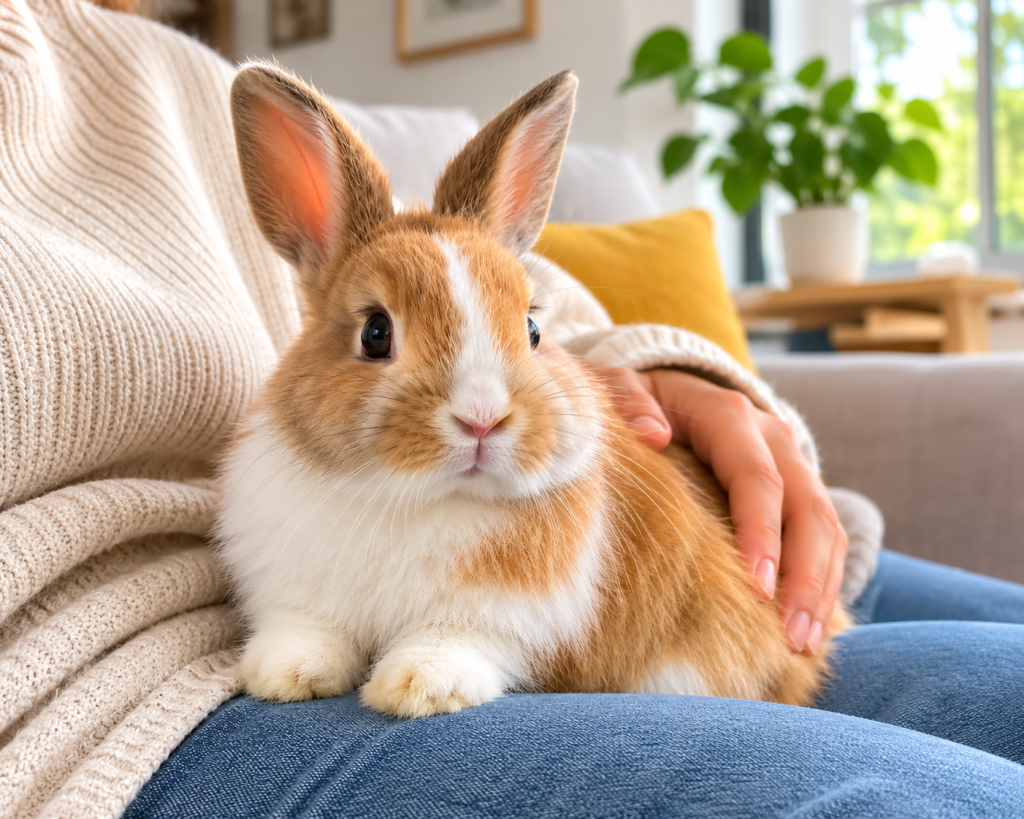
Rabbits are quiet, clean, and surprisingly affectionate once they warm up to you. They don’t bark, they rarely need walks around the block, and many of them can even be litter trained, much like cats.
What makes rabbits special is their personality. Every rabbit has its own quirks: some are cuddly lap pets, others prefer to flop nearby and observe. They’re intelligent animals that can learn their names, recognize routines, and form deep bonds with the people who care for them consistently.
That said, rabbits aren’t low-maintenance pets in the way many people assume. They require daily attention, a specific diet, and a safe living space. If you’re prepared for that commitment, though, the payoff is a gentle, expressive companion that can live well over a decade.
Things to know before getting a rabbit
Before you bring a rabbit home, it helps to understand what you’re signing up for. A few realities worth considering:
Lifespan: Rabbits can live 8 to 12 years with proper care, so this is a long-term commitment, not a short-term novelty pet. Cost: Beyond the initial setup, expect ongoing costs for hay, fresh vegetables, litter, and vet visits. Chewing: Rabbits chew instinctively. Cables, furniture legs, and baseboards are all fair game unless you rabbit-proof your space. Noise sensitivity: Rabbits are prey animals, so loud households or homes with boisterous dogs can cause chronic stress. Vet access: Not every veterinarian treats rabbits. You’ll want to find an exotic or rabbit-savvy vet before an emergency happens, not during one.
Taking a moment to plan for these factors now will save you a lot of stress later.
Choosing the right rabbit breed

Breed matters more than most beginners realize. Size, temperament, and grooming needs vary quite a bit across the roughly 50 recognized rabbit breeds.
| Breed | Size | Temperament | Best for |
|---|---|---|---|
| Holland Lop | Small (2 to 4 lbs) | Friendly, sociable | First-time owners, families |
| Mini Rex | Small-medium (3 to 4.5 lbs) | Calm, gentle | Apartment living |
| Netherland Dwarf | Very small (1 to 2.5 lbs) | Energetic, can be skittish | Experienced owners |
| Rex | Medium (7 to 10.5 lbs) | Docile, easygoing | Households with kids |
| Flemish Giant | Large (13 to 22 lbs) | Gentle, laid-back | Owners with more space |
| Lionhead | Small (2.5 to 3.75 lbs) | Playful, curious | Beginners who enjoy grooming |
If this is your first rabbit, breeds known for calm, people-oriented temperaments, like Holland Lops or Mini Rex, tend to be the easiest starting point. Whatever breed you choose, remember that individual personality often matters more than breed stereotypes.
Essential rabbit supplies
Before your rabbit arrives, get the basics sorted. Here’s a starter checklist:
- Spacious enclosure or exercise pen
- Litter box and rabbit-safe litter (paper-based, not clay or clumping)
- Hay rack or feeder
- Heavy ceramic food bowl (tip-proof)
- Water bottle or heavy bowl
- Unlimited timothy hay
- Age-appropriate pellets
- Chew toys (untreated wood, willow balls, cardboard)
- Nail clippers
- Soft-bristle grooming brush
- Rabbit-safe carrier for vet visits
Skipping any of these isn’t the end of the world, but having them ready on day one makes the transition smoother for both you and your rabbit.
How to set up the perfect rabbit habitat

Cage size is one of the most underestimated parts of rabbit care for beginners. Many commercial “rabbit cages” sold in pet stores are far too small for a rabbit to live in comfortably.
Minimum space requirements
As a general rule, a rabbit’s enclosure should be at least four times the length of its body when fully stretched, with enough height to stand on hind legs. Most house rabbit advocates recommend pairing a smaller sleeping area with a larger attached pen or rabbit-proofed room for daytime roaming.
Habitat essentials
- A solid, flat floor (wire flooring can injure rabbit feet)
- A quiet corner away from drafts and direct sunlight
- A separate litter area
- A hiding spot, like a cardboard box or tunnel
- Room-temperature environment (rabbits are sensitive to heat above 80°F)
Indoor vs. outdoor housing
Indoor housing is generally safer. It protects rabbits from predators, extreme weather, and parasites, and it also allows for closer bonding. If outdoor housing is your only option, the hutch needs to be predator-proof, insulated, and checked daily.
Rabbit diet explained
Diet is the single biggest factor in a rabbit’s long-term health. Get this right, and most other care tasks become much easier.
| Food type | Percentage of diet | Notes |
|---|---|---|
| Hay (timothy, orchard, meadow) | 80 to 85% | Unlimited access, essential for digestion |
| Fresh vegetables | 10 to 15% | Leafy greens daily |
| Pellets | 5% | Small measured portion, plain timothy-based |
| Fruit/treats | Less than 5% | Occasional only, high in sugar |
Hay isn’t optional. It’s the foundation of a healthy rabbit diet. It keeps their digestive system moving and wears down their continuously growing teeth. A rabbit without enough hay is at serious risk of dental problems and digestive blockages.
Safe vegetables and fruits
Fresh produce adds variety and nutrients, but portion control matters.
| Safe vegetables | Safe fruits (occasional treats) |
|---|---|
| Romaine lettuce | Apple (no seeds) |
| Cilantro | Banana (small amount) |
| Bell peppers | Strawberries |
| Basil | Blueberries |
| Carrot tops | Papaya |
| Broccoli (in moderation) | Pineapple (small amount) |
| Parsley | Melon |
Introduce new vegetables one at a time and watch for soft stool over the next 24 hours before adding more variety.
Foods rabbits should never eat
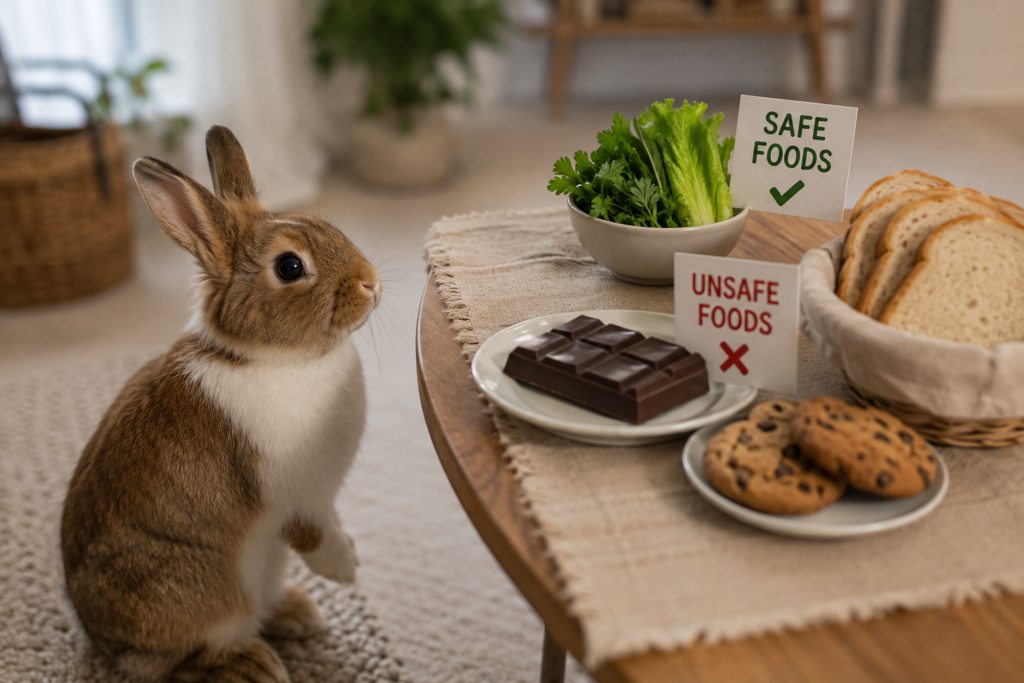
Some common human foods are genuinely dangerous for rabbits. Avoid:
- Chocolate
- Onions and garlic
- Avocado
- Iceberg lettuce (low nutrition, can cause diarrhea)
- Bread, pasta, and other starchy carbs
- Nuts and seeds
- Dairy products
- Rhubarb
- Any sugary or processed snack
If you’re ever unsure whether something is safe, the safest move is simply to leave it out.
Water requirements
Rabbits need constant access to fresh, clean water. A heavy ceramic bowl is often preferred over a bottle since it allows more natural drinking posture, though many rabbits do fine with either. Change the water daily and clean the bowl or bottle regularly to prevent bacterial buildup, especially in warmer months.
Daily rabbit care routine
Consistency matters to rabbits. They thrive on predictable routines.
| Time | Task |
|---|---|
| Morning | Fresh hay top-up, check water, small pellet portion |
| Midday | Playtime or supervised free-roam time |
| Afternoon | Fresh vegetables |
| Evening | Litter box clean-up, bonding time |
| Night | Final hay refill, quiet settling time |
Cleaning the habitat
A clean living space keeps your rabbit healthy and reduces odor significantly.
- Spot-clean the litter box daily.
- Fully replace litter and bedding 1 to 2 times per week.
- Wipe down surfaces with a pet-safe, unscented cleaner.
- Wash food and water dishes daily.
- Deep-clean the entire enclosure monthly.
Rabbits are naturally tidy animals, and most will consistently use a designated litter corner once trained, which makes upkeep easier than many beginners expect.
Rabbit grooming
Grooming needs vary by coat type, but all rabbits benefit from a regular routine.
- Brushing: Weekly for short-haired breeds, several times a week for long-haired breeds like Angoras.
- Nail trims: Every 4 to 6 weeks to prevent overgrowth and injury.
- Ear checks: Look weekly for wax buildup, odor, or redness.
- Bathing: Avoid full baths. Rabbits can go into shock from stress or get chilled easily. Spot-clean with a damp cloth instead.
During shedding season, brushing becomes especially important, since rabbits can develop dangerous blockages if they ingest too much loose fur while grooming themselves.
Exercise and enrichment
Rabbits need daily physical activity outside their enclosure, ideally a few hours of supervised free-roam time. Without it, they can become bored, overweight, or destructive.
Good enrichment options include:
- Cardboard tunnels and boxes
- Willow or seagrass chew toys
- Digging boxes filled with shredded paper
- Puzzle feeders
- Untreated wood blocks
Rotate toys every week or two to keep things interesting. A bored rabbit is often a mischievous one.
How to bond with your rabbit
Trust takes time, especially with a prey animal that’s naturally cautious. Sit at their level, let them approach you first, and offer treats from an open palm rather than reaching toward them.
Talking softly, moving slowly, and spending quiet time nearby, even without direct interaction, helps a nervous rabbit adjust. Most rabbits come around within a few weeks of gentle, consistent presence, though some take longer depending on their personality and history.
Rabbit behavior explained
Understanding rabbit body language makes daily care much easier.
| Behavior | What it means |
|---|---|
| Binkying (jumping and twisting) | Pure happiness and excitement |
| Thumping hind legs | Alarm or warning |
| Flattening body low | Fear |
| Circling your feet | Affection or attention-seeking |
| Nudging with nose | Wants attention or wants you to move |
| Grinding teeth softly | Contentment (like purring) |
| Grinding teeth loudly | Pain, worth investigating |
Learning these cues helps you respond appropriately and catch potential problems early.
Common beginner mistakes
Even well-meaning new owners make these errors:
- Feeding too many pellets and not enough hay
- Choosing a cage that’s too small
- Skipping spay/neuter, which affects both health and behavior
- Handling a rabbit incorrectly (never pick one up by the ears)
- Assuming rabbits are low-maintenance “starter pets” for young children
- Introducing new foods too quickly
- Ignoring subtle signs of illness until they become serious
Most of these mistakes come from good intentions paired with limited information, and a solid care routine helps prevent exactly that.
Rabbit health problems
Rabbits are generally hardy, but a few conditions show up often enough that beginners should know about them:
- GI Stasis: A dangerous slowdown of the digestive system, often triggered by low fiber intake or stress. Considered a medical emergency.
- Dental overgrowth: Since rabbit teeth grow continuously, insufficient hay chewing can lead to painful malocclusion.
- Ear mites: Cause head-shaking, scratching, and crusty buildup in the ears.
- Respiratory infections: Often linked to poor ventilation or dirty bedding.
- Obesity: Usually caused by too many pellets or treats and not enough exercise.
Signs your rabbit needs a vet
Contact a rabbit-savvy vet promptly if you notice:
- No appetite or reduced food intake for more than 12 hours
- No fecal droppings for 24 hours
- Labored or noisy breathing
- Head tilting or loss of balance
- Sudden lethargy or hiding
- Visible weight loss
- Discharge from eyes or nose
Rabbits are prey animals, which means they instinctively hide signs of illness until a problem is already serious. Quick action matters far more with rabbits than with many other pets.
Vaccinations and preventive care
Vaccination requirements vary by country and even by region, so it’s worth checking with a local exotic vet about what’s recommended where you live. In the UK, for example, vaccinations against myxomatosis and rabbit viral hemorrhagic disease (RVHD) are commonly advised for both indoor and outdoor rabbits. In the US, vaccination practices differ by state, and RHD vaccines have become more relevant in areas with recorded outbreaks.
Beyond vaccines, preventive care includes:
- Annual wellness exams
- Spaying/neutering (usually around 4 to 6 months old)
- Routine dental checks
- Parasite prevention as recommended by your vet
How long do rabbits live?
With proper diet, housing, and veterinary care, indoor pet rabbits commonly live 8 to 12 years, and some breeds have been known to live even longer. Spaying and neutering tends to improve lifespan and reduce the risk of certain cancers, particularly in female rabbits.
Rabbit care checklist
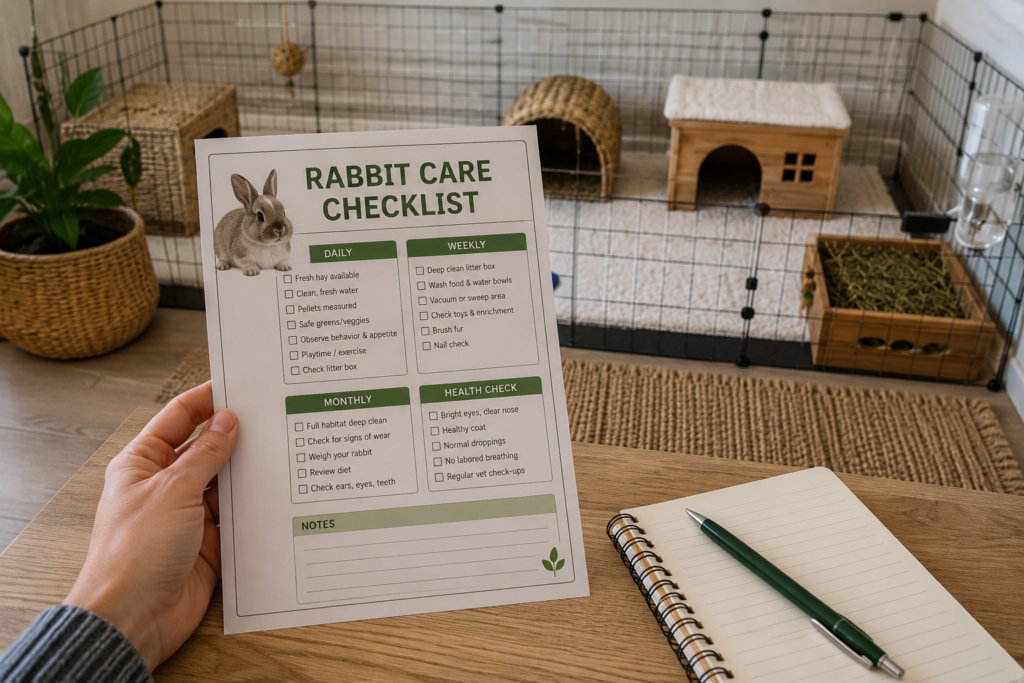
Print this out and keep it near your rabbit’s habitat for quick reference.
Daily
- Fresh hay (unlimited)
- Fresh water
- Fresh vegetables
- Measured pellet portion
- Spot-clean litter box
- Supervised exercise time
- Quick health/behavior check
Weekly
- Brush coat
- Full litter box clean
- Wipe down enclosure surfaces
- Check ears and eyes
- Rotate toys
Monthly
- Deep-clean habitat
- Nail trim check
- Weigh rabbit to monitor changes
As needed
- Vet checkup (annually, minimum)
- Restock hay, litter, and food supplies
Frequently asked questions
Are rabbits good pets for beginners? Yes, with the right preparation. Rabbits are quiet, intelligent, and can be litter trained, but they need daily care, a specific diet, and patience while they build trust. Beginners who research their needs beforehand usually adjust well.
How much does it cost to own a rabbit? Initial setup often runs a few hundred dollars for housing, supplies, and spay/neuter surgery. Ongoing monthly costs for hay, vegetables, litter, and pellets are relatively modest, though vet visits can add up.
Do rabbits need shots? Vaccination needs depend on your location and local disease risks, such as myxomatosis or RHD. Check with a local rabbit-savvy vet to find out what’s recommended in your specific area.
Can rabbits live alone? Rabbits are social animals and often thrive with a bonded companion. However, a single rabbit can live happily too, as long as their owner provides plenty of daily interaction and enrichment.
How often do rabbits need to see a vet? Healthy adult rabbits should have at least one wellness checkup per year. Senior rabbits or those with existing health conditions typically benefit from more frequent visits.
Do rabbits smell? Rabbits themselves have very little odor. Most smell comes from an unclean litter box or habitat, which is why regular cleaning matters so much in rabbit care.
Can rabbits be litter trained? Yes, most rabbits can be litter trained fairly easily, especially after being spayed or neutered. Placing the litter box where the rabbit naturally tends to go speeds up the process.
How much attention do rabbits need? Rabbits generally need at least a few hours of supervised out-of-cage time daily, along with social interaction. Isolated, ignored rabbits often become anxious or depressed over time.
What is the best bedding for rabbits? Paper-based bedding or fleece liners are safer choices than wood shavings, especially cedar or pine, which can irritate a rabbit’s respiratory system. Always choose unscented, dust-free options.
How do I know if my rabbit trusts me? A trusting rabbit will often flop down near you, allow petting without flinching, approach you voluntarily, or groom itself in your presence. These relaxed behaviors take time to develop but are strong signs of comfort.
Key takeaways
- Rabbits need significantly more space, attention, and dietary care than most beginners expect.
- Unlimited hay should make up the majority of a rabbit’s diet, not pellets.
- A rabbit’s habitat should allow room to hop, stretch, and stand fully upright.
- Learning rabbit body language helps you catch health issues early, since rabbits hide illness by instinct.
- Patience is essential. Trust-building with a rabbit happens gradually, not overnight.
Conclusion
Caring for a rabbit well isn’t complicated once you understand what they actually need: proper hay-based nutrition, enough room to move, a clean and quiet habitat, and patient, consistent bonding time. Good rabbit care for beginners comes down to paying attention to the small daily details.
If you’re just getting started, take it one step at a time: set up the habitat first, get the diet right, and let trust build naturally from there. For more on setting up their living space specifically, see our indoor rabbit care guide, and reach out to a rabbit-savvy vet whenever you’re unsure.
(Visit: petnestcorner.com)


0 Comments