Best Plants Safe for Cats and Dogs: The Complete Pet Parent’s Guide
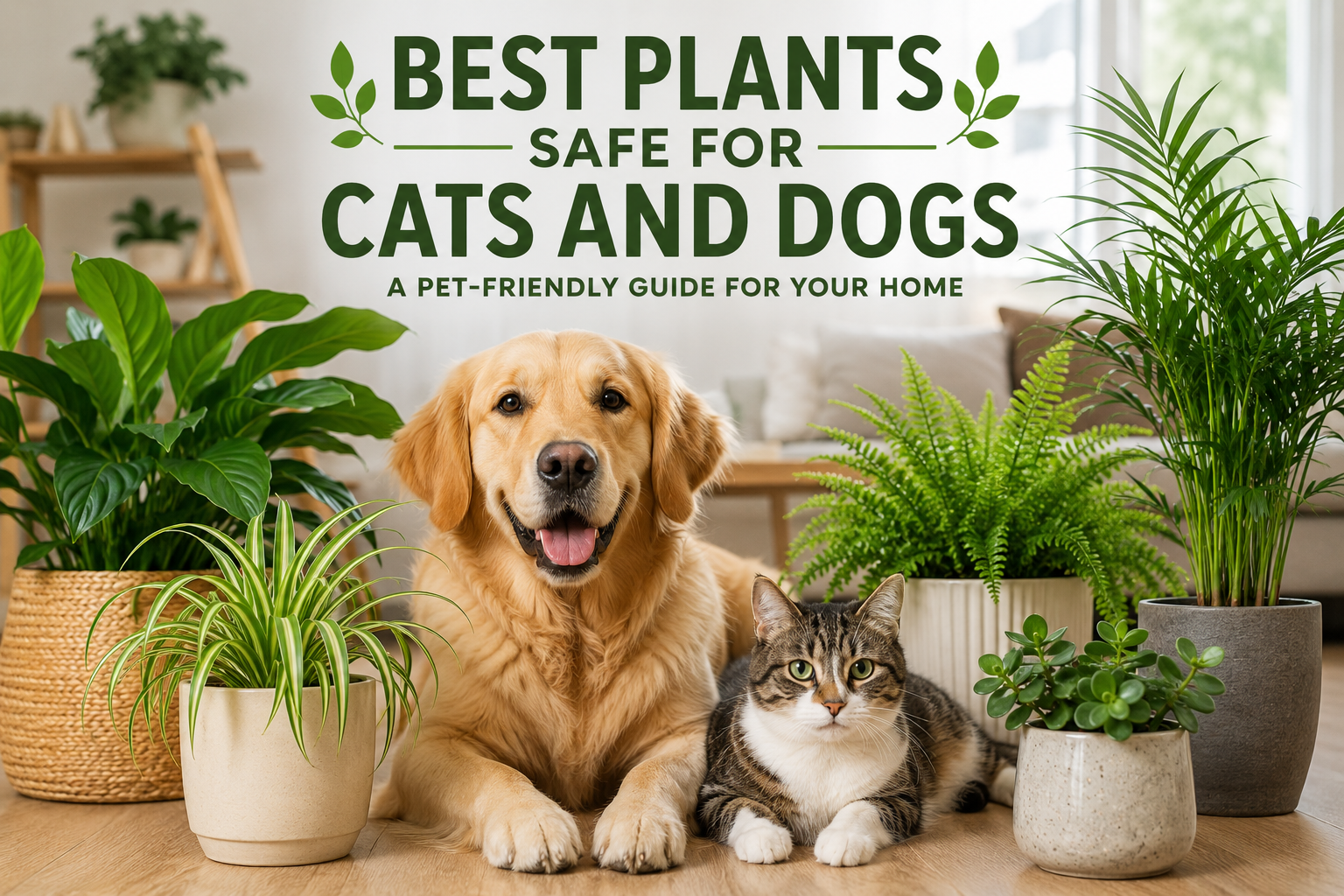
Best Plants Safe for Cats and Dogs
You brought home a new kitten, and three days later your favorite pothos has bite marks all over it. Sound familiar? If you’ve ever Googled “is this plant going to kill my dog” at 11 pm. with a half chewed leaf in your hand, you already know the stress of decorating a home that both you and your pets can enjoy.
Here’s the good news: you don’t have to choose between a green, plant-filled home and a safe one. Dozens of gorgeous, low-maintenance houseplants are genuinely non-toxic to cats and dogs, according to the ASPCA Animal Poison Control Center (APCC) the leading authority veterinarians turn to for plant toxicity data.
In this guide, we’ll walk through exactly which plants are safe, which popular houseplants you should rehome to a high shelf (or skip entirely), how to build a pet-safe indoor jungle, and what to do if your curious cat or dog takes a bite anyway.
Table of Contents
- Why This Topic Matters
- Benefits of Choosing Pet-Safe Plants
- The Best Plants Safe for Cats and Dogs
- Comparison Table: Pet-Safe vs. Toxic Lookalikes
- Tips for Building a Pet-Friendly Plant Collection
- Common Mistakes Pet Owners Make
- Expert Advice from Veterinary Sources
- Safety Tips for Multi-Pet Households
- Frequently Asked Questions
- Conclusion & Call to Action
Why This Topic Matters

Cats and dogs explore the world with their mouths. Kittens especially treat dangling leaves like toys, and dogs of any age may chew on low-hanging foliage out of boredom, curiosity, or plain old puppy instinct. According to the ASPCA, its Animal Poison Control Center fields tens of thousands of plant-related calls every year, and many of the most popular houseplants sold at garden centers pothos peace lilies, sago palms, and true lilies among them are actually toxic to pets.
This matters because plant toxicity isn’t always obvious. Some plants cause mild drooling and stomach upset. Others, like true lilies for cats, can cause acute kidney failure from a single nibbled leaf or even pollen groomed off fur. Knowing the difference before you buy a plant protects your pet and saves you a frantic, expensive trip to the emergency vet.
Benefits of Choosing Pet-Safe Plants
- Peace of mind. You can leave the room without mentally cataloging every leaf your dog could reach.
- Healthier pets. No emergency vet visits, no unexplained vomiting, no guessing games.
- A genuinely greener home. Pet-safe doesn’t mean boring many non-toxic plants are just as lush and eye-catching as their toxic cousins.
- Less plant damage. Ironically, pet-safe plants tend to be some of the toughest, most forgiving houseplants around, which means fewer casualties from curious paws.
- Better for multi-pet households. What’s safe for a dog isn’t automatically safe for a cat (and vice versa), so a verified pet-safe list protects everyone under your roof.
The Best Plants Safe for Cats and Dogs
Below are houseplants that the ASPCA lists as non-toxic to both cats and dogs. A quick note before we dive in: “non-toxic” means the plant won’t poison your pet. It doesn’t mean it’s meant to be eaten any pet that eats a large amount of plant material, toxic or not, can still get an upset stomach from the fiber alone.
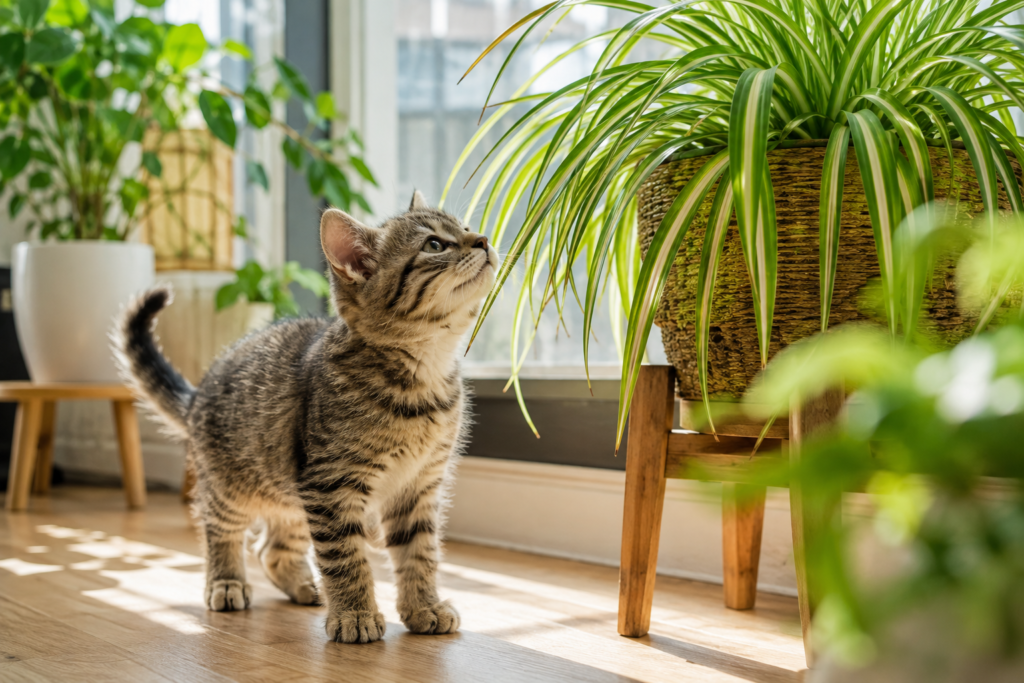
1. Spider Plant (Chlorophytum comosum)
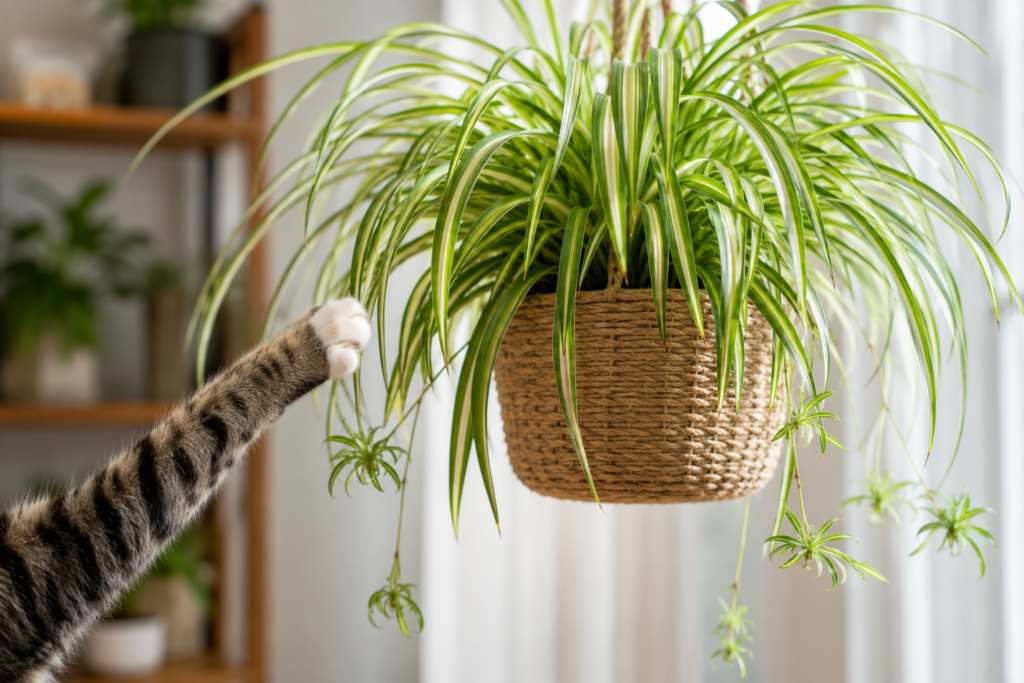
One of the most forgiving houseplants you can own, and a favorite chew toy for cats. It tolerates low light, bounces back from neglect, and sends out “babies” you can propagate endlessly.
2. Boston Fern (Nephrolepis exaltata)
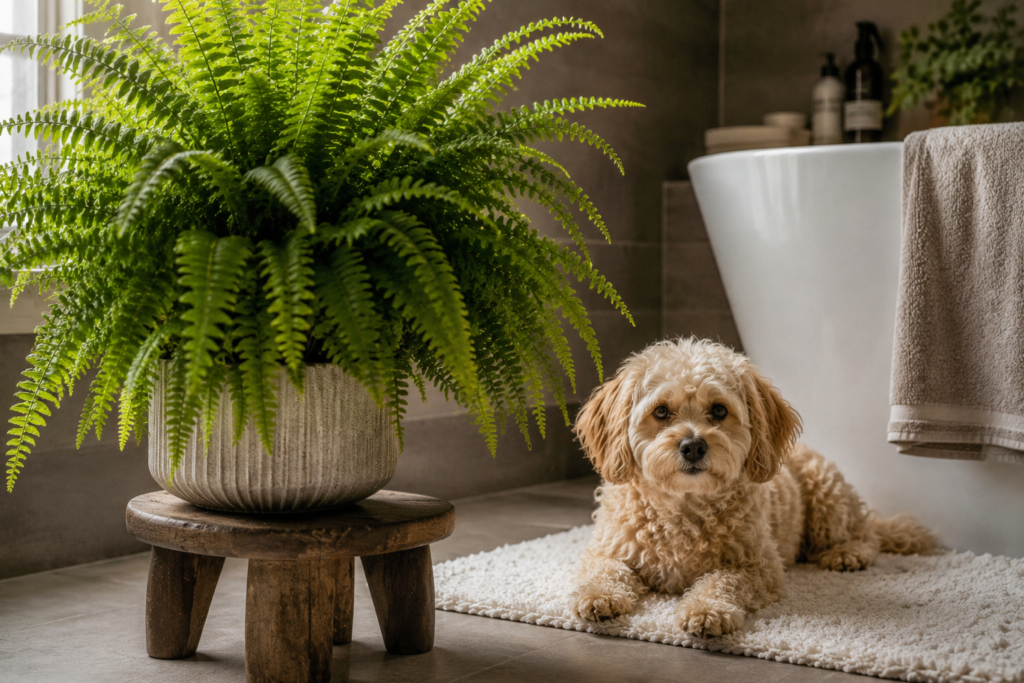
Lush, feathery, and completely non-toxic. Boston ferns love humidity, so they’re a great pick for bathrooms with a window. Keep the soil consistently moist for the fullest fronds.
3. Areca Palm (Dypsis lutescens)
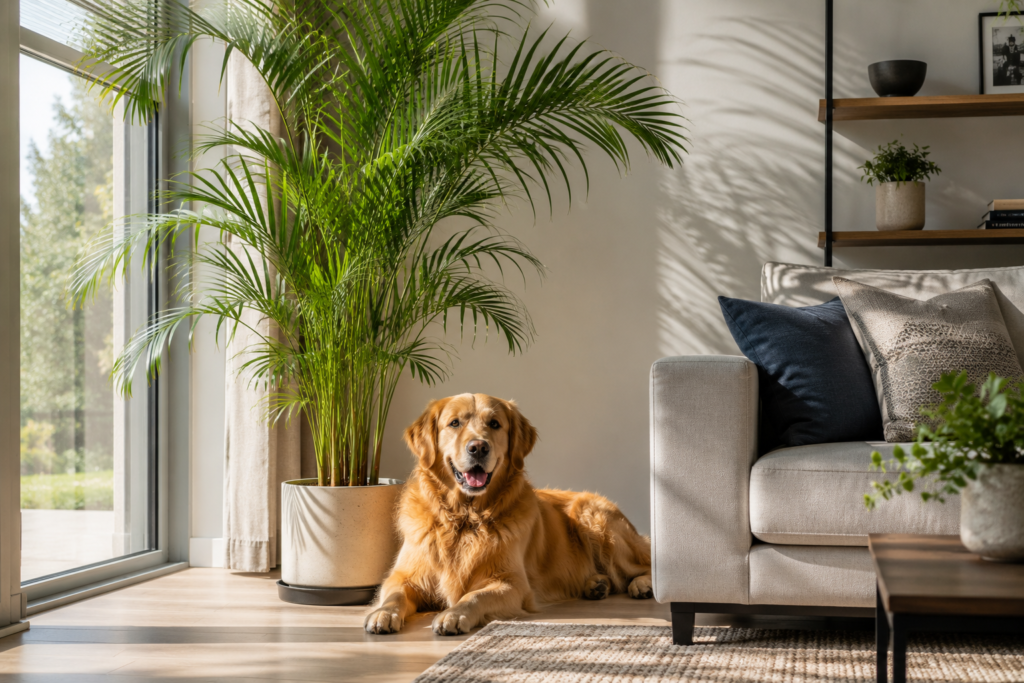
This graceful, feathery palm adds serious jungle energy to a living room and is safe for both species. It prefers bright, indirect light and regular watering.
4. Parlor Palm (Chamaedorea elegans)
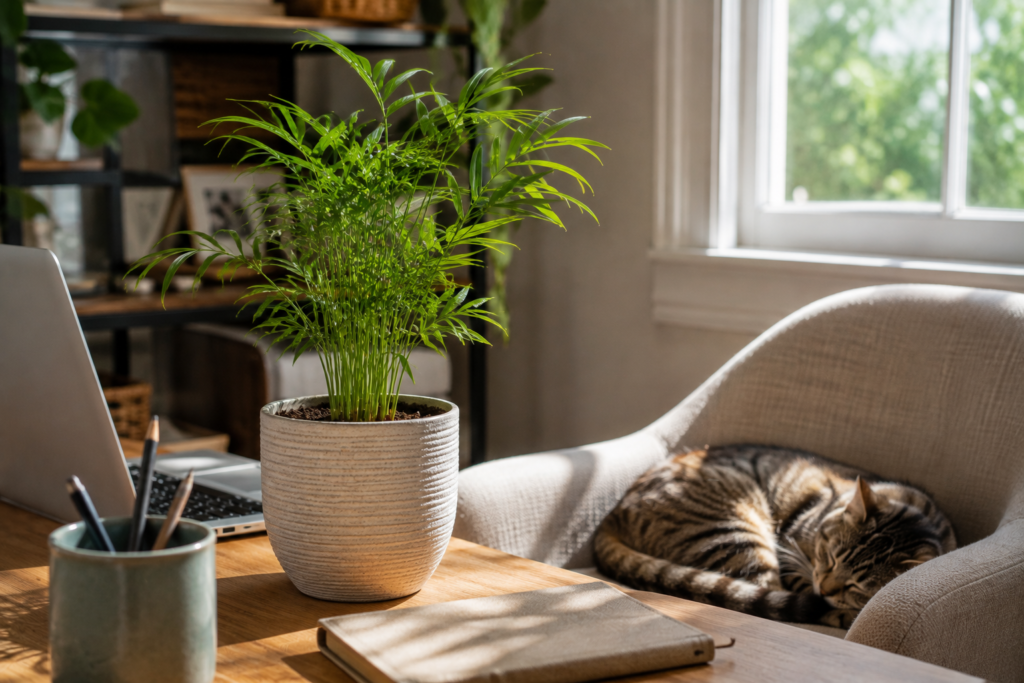
Compact, slow-growing, and famously tolerant of low light and dry indoor air. It’s a classic choice for offices and apartments with pets.
5. African Violet (Saintpaulia)
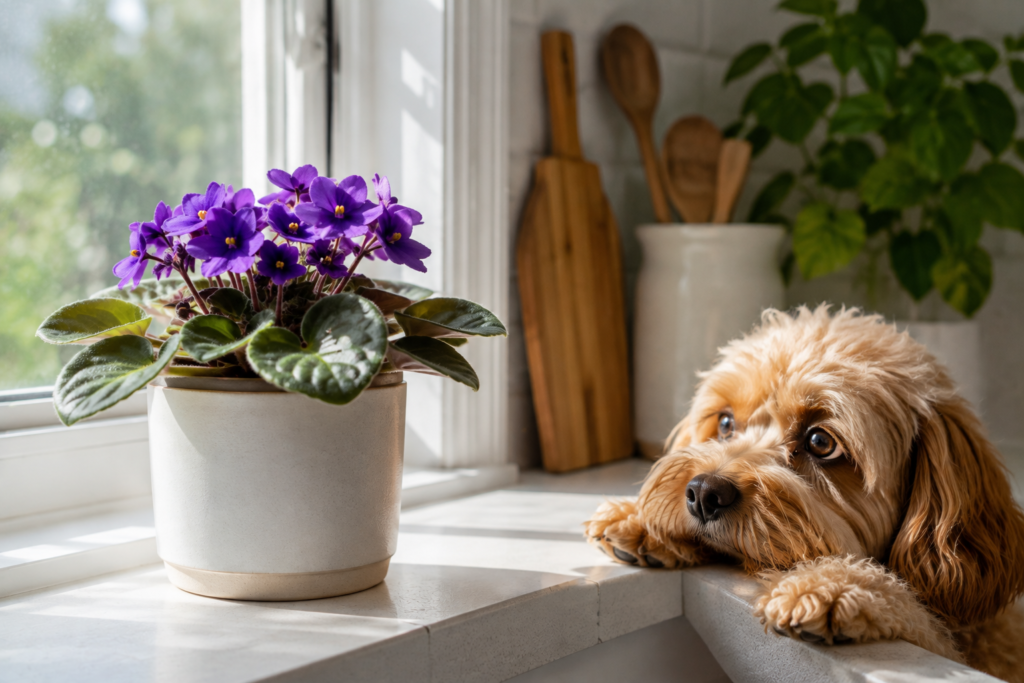
A flowering plant that’s actually safe a rare treat, since so many blooming houseplants are toxic. African violets like bright, indirect light and a light touch with watering.
6. Calathea (Calathea spp.), including the Rattlesnake Plant
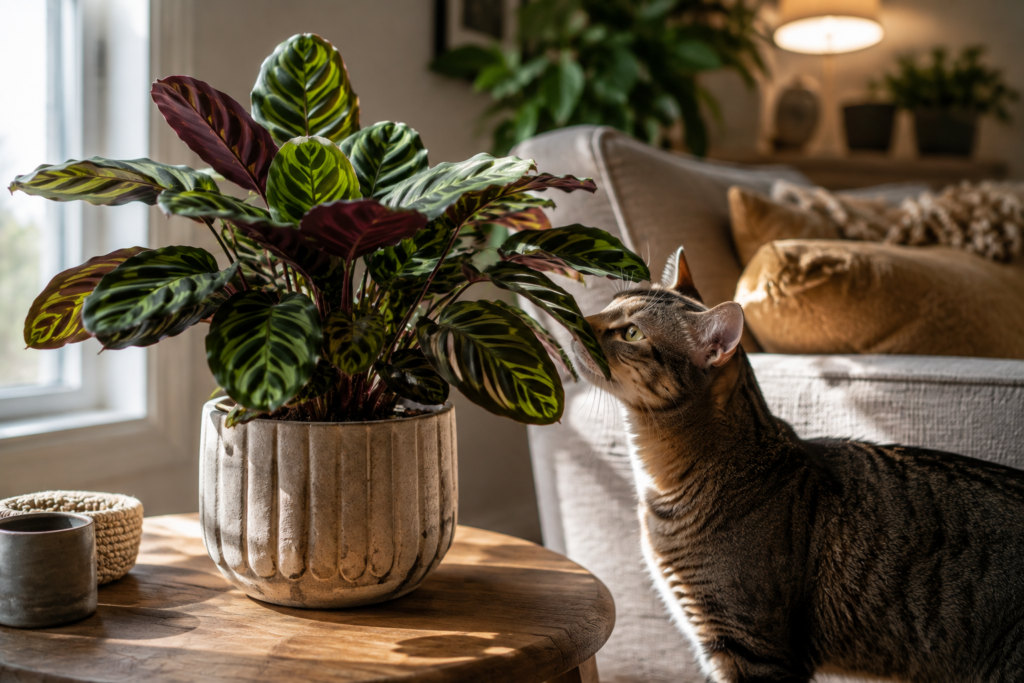
Known for their striking patterned leaves that fold up at night, calatheas are non-toxic and add serious visual drama to a shelf or side table.
7. Peperomia (Peperomia obtusifolia)
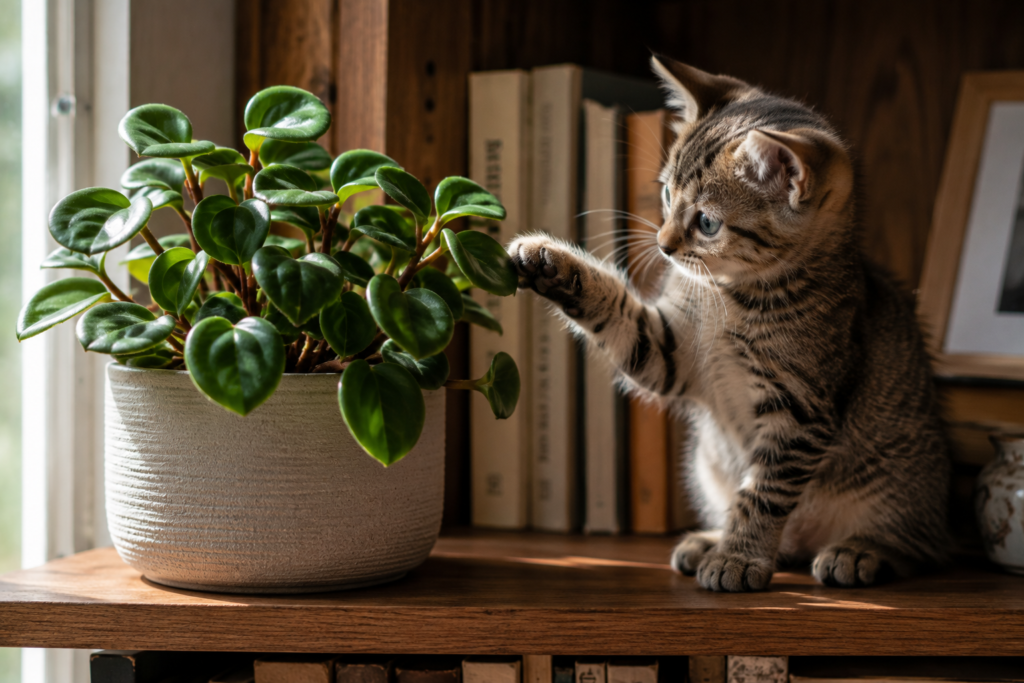
Sometimes called the baby rubber plant, peperomia is compact, easygoing, and has thick, glossy leaves that hold up well against curious noses.
8. Polka Dot Plant (Hypoestes phyllostachya)
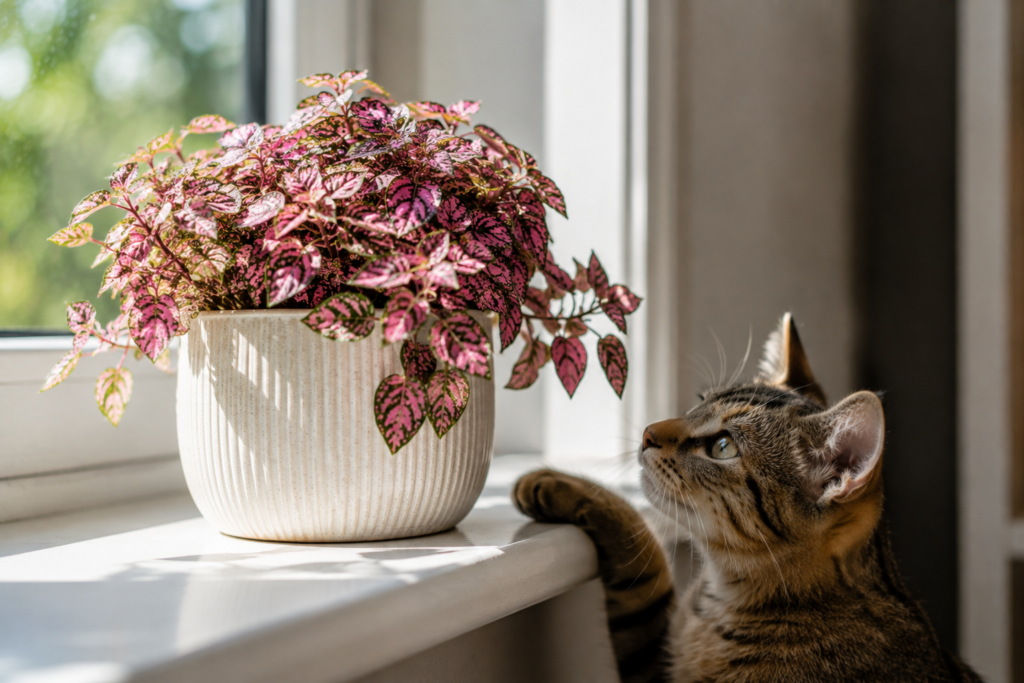
Bright, speckled pink or white foliage that’s completely pet-safe. It’s a fun, colorful addition for a windowsill.
9. Bromeliad (Neoregelia spp.)
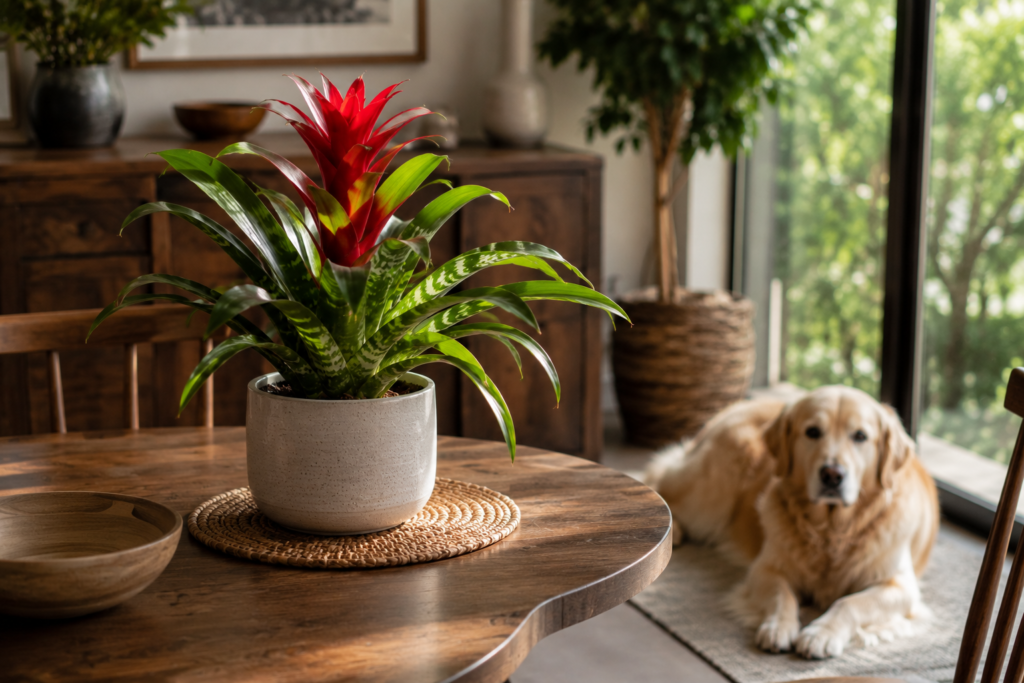
These striking rosette-shaped plants come in bold colors and are non-toxic to cats and dogs, making them a statement piece you don’t have to hide.
10. Echeveria (select varieties, e.g., Echeveria glauca)
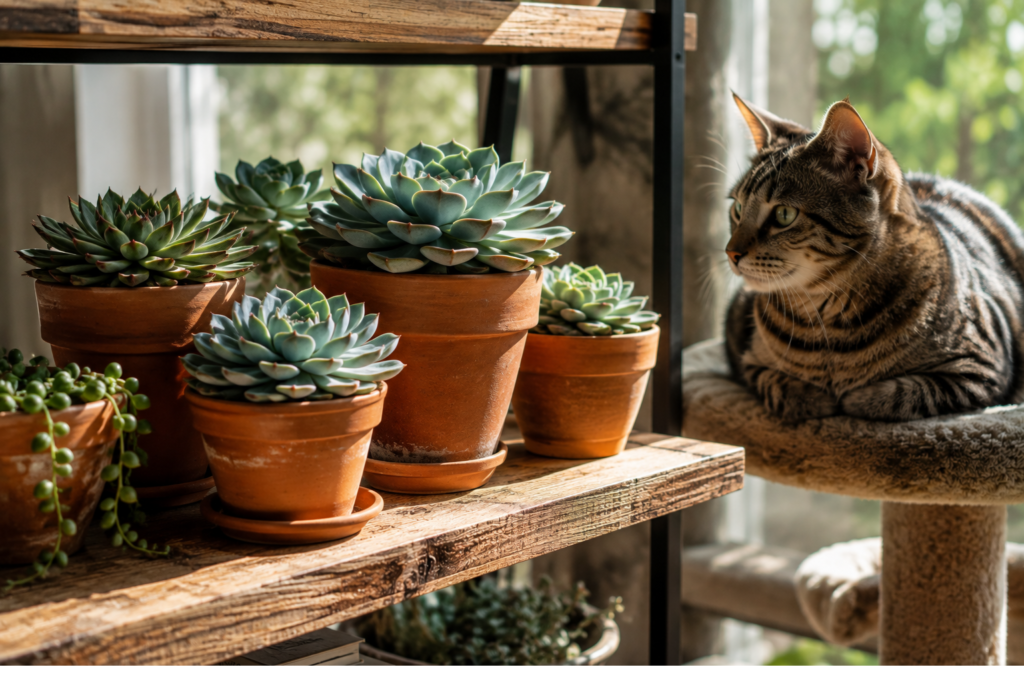
For pet owners who want succulents without the toxicity risk, certain echeveria varieties are ASPCA-verified safe. Always double-check the specific species before buying, since not all succulents are created equal (more on that below).
Vet tip: Even with plants on this list, it’s smart to keep them somewhere pets can look but not graze all day a determined kitten can still turn any plant into a salad bar, and repeated overeating of fibrous leaves can cause vomiting regardless of toxicity.
Comparison Table: Pet-Safe vs. Toxic Lookalikes
Plant shopping gets confusing because many pet-safe plants have toxic look-alikes with similar names or appearances. Here’s a quick-reference cheat sheet.
| Pet-Safe Plant | Often Confused With (Toxic) | Why It’s Confusing |
|---|---|---|
| Spider Plant | Snake Plant | Both are common “beginner” plants sold side by side |
| Areca Palm | Sago Palm | Both are labeled “palm,” but sago palm is a cycad and extremely toxic |
| Calathea | Dieffenbachia | Both have large, patterned leaves |
| Peperomia | Pothos | Both are compact trailing/tabletop plants |
| Echeveria (select types) | Jade Plant / Aloe | All are marketed as “easy succulents” |
| Boston Fern | Asparagus Fern | Both are labeled “fern,” but asparagus fern is toxic |
Tips for Building a Pet-Friendly Plant Collection
- Always check the species, not just the common name. “Palm” and “fern” are used loosely in plant nurseries, and toxicity varies wildly within those groups.
- Cross-reference every plant against the ASPCA’s official toxic and non-toxic plant lists before you buy — bookmark it, it’s the gold standard.
- Quarantine new plants for a few days somewhere your pet can’t reach, so you can observe whether they’re interested in chewing it at all.
- Use hanging planters and high shelves for plants you’re less sure about, especially in homes with agile cats.
- Add texture and greenery pets can’t easily reach, like trailing pothos in a hanging basket well out of paw range — but only if your pet truly can’t access it.
- Offer a “yes” plant. Cat grass (wheat, oat, or barley grass) gives cats something safe and satisfying to nibble, which can redirect them away from your other plants.
- Rotate and refresh soil toppers with pet-safe materials like decorative stones instead of cocoa mulch, which is toxic to dogs.
Common Mistakes Pet Owners Make
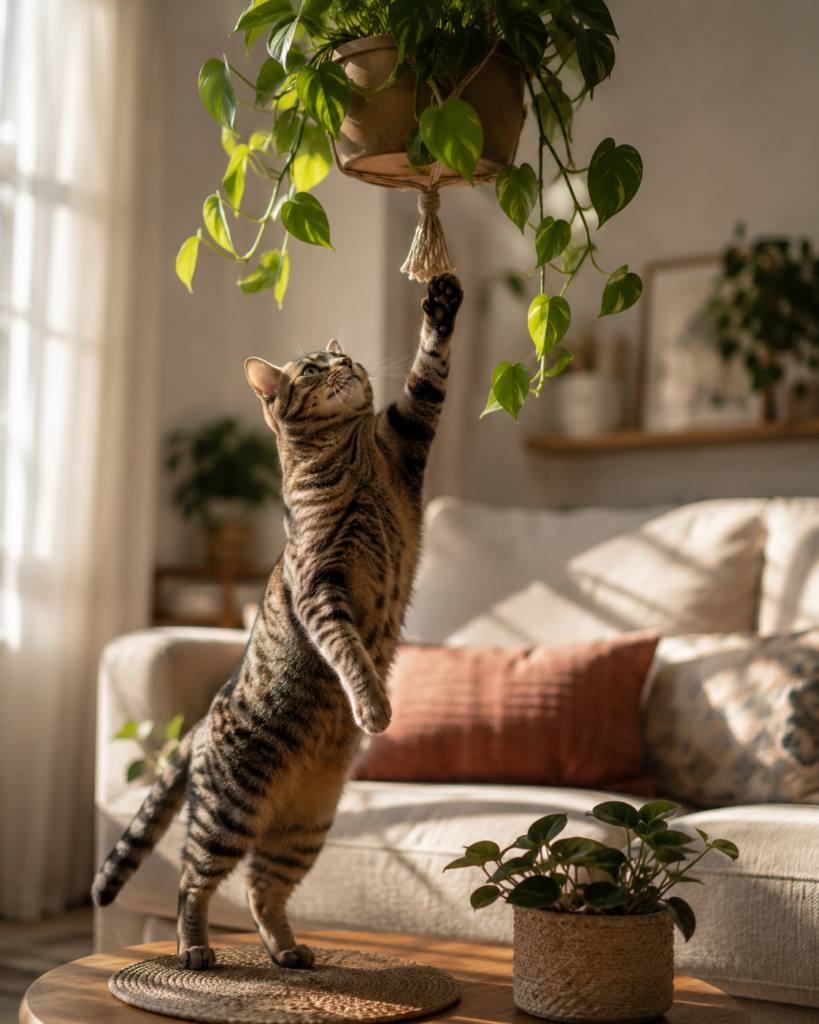
- Assuming “natural” means “safe.” Toxicity has nothing to do with whether a plant is organic, wild, or store-bought it’s about the plant’s chemistry.
- Trusting outdated or unofficial lists. Random blog posts and social media graphics often mix up cat and dog toxicity data. Always verify against the ASPCA database.
- Forgetting about pollen and sap. Some plants, like true lilies, are dangerous even if a pet just brushes against the pollen and later grooms it off.
- Placing toxic plants “out of reach” cats can jump remarkably high, and determined dogs can knock pots over.
- Ignoring cut flowers and bouquets. Many people plant-proof their homes but forget that a grocery store bouquet can contain lilies, tulips, or other toxic stems.
- Not researching outdoor landscaping. Garden beds, mulch, and yard plants need the same scrutiny as houseplants if your pet has outdoor access.
Expert Advice
Veterinary toxicologists consistently recommend cross-referencing any new plant against the ASPCA Animal Poison Control Center’s database before bringing it home, since it’s maintained using real clinical case data. If you already own plants and aren’t sure whether they’re safe, take a photo of the plant (including leaf shape and any flowers) to your veterinarian or use a plant identification app, then check that identified species against the ASPCA list.
If you ever suspect your pet has eaten a toxic plant, don’t wait for symptoms to appear. Contact your veterinarian or the ASPCA Animal Poison Control Center immediately, since early treatment dramatically improves outcomes for plant toxicity cases.
Safety Tips for Multi-Pet Households
- Check plants against both cat and dog toxicity lists. A plant safe for dogs isn’t automatically safe for cats, and vice versa.
- Watch young and senior pets more closely. Kittens, puppies, and older pets with reduced mobility or vision are more likely to investigate plants with their mouths.
- Keep the ASPCA poison control number saved in your phone: (888) 426-4435. A consultation fee may apply, but it’s a small price for fast, expert guidance.
- Store bulbs and seed packets securely. Many spring bulbs (tulips, daffodils) are toxic even before they’re planted.
- Supervise outdoor time near landscaped beds, especially in yards you don’t fully control (like shared building courtyards).
Frequently Asked Questions
1. Is aloe vera safe for cats and dogs? No. Despite its reputation as a soothing plant for humans, aloe vera is toxic to both cats and dogs and can cause vomiting, diarrhea, and lethargy if ingested.
2. Are succulents generally safe for pets? It depends on the species. Some, like echeveria and haworthia, are commonly considered pet-safe, while others, like jade plant and aloe, are toxic. Always verify the exact species before buying.
3. Is the pothos plant toxic to cats? Yes. Pothos (also called Devil’s Ivy) contains insoluble calcium oxalate crystals that can cause oral irritation, drooling, and vomiting in cats and dogs.
4. What houseplant is most dangerous to cats? True lilies (Lilium species), including Easter lilies and tiger lilies, are considered one of the most dangerous plants for cats. Even small amounts can cause fatal kidney failure.
5. Can dogs safely chew on spider plants? Yes, spider plants are non-toxic to dogs and cats. Some pets may still get mild stomach upset from eating large amounts of any plant fiber, but there’s no poisoning risk.
6. Are Boston ferns safe for pets? Yes, Boston ferns are ASPCA-verified non-toxic to both cats and dogs, making them one of the safest lush, leafy options for pet owners.
7. Is the peace lily toxic to cats and dogs? Yes, despite the name “lily,” peace lilies (Spathiphyllum) contain calcium oxalate crystals that irritate the mouth and digestive tract of both cats and dogs.
8. What should I do if my pet eats a toxic plant? Contact your veterinarian or the ASPCA Animal Poison Control Center immediately. Try to identify the plant and note how much was eaten, but don’t attempt home remedies without professional guidance.
9. Are herbs like basil and rosemary safe for pets? Yes, most common culinary herbs, including basil, are non-toxic to cats and dogs in normal amounts, making them a pet-friendly addition to a kitchen windowsill.
10. Is cat grass different from regular grass? Cat grass typically refers to wheat, oat, rye, or barley grass grown specifically for cats to chew safely, offering fiber and satisfying their natural grazing instinct.
Conclusion
Building a plant-filled home doesn’t mean gambling with your pet’s health. With a bit of research and a reliable reference like the ASPCA’s toxic and non-toxic plant database you can fill your space with spider plants, Boston ferns, calatheas, and more, all without worrying every time your cat sniffs a leaf or your dog brushes past a pot.
The key takeaways: always verify plants by their scientific name, double-check both cat and dog toxicity separately, and keep the ASPCA poison control number on hand just in case. A little diligence up front means a lot less stress down the road.
Call To Action
Loved this guide? Petnest Corner has more pet safety essentials waiting for you from toxic food lists to room-by-room pet-proofing checklists. Browse more pet care articles on Petnest Corner and keep your furry family safer, one room at a time.


0 Comments